A Small Nightstand Should Solve a Real Bedside Problem
The best nightstand for a small bedroom is the one that gives your nightly essentials a dependable home without making the bed harder to reach. A table can look impressively narrow in a product photograph yet fail once a lamp base occupies most of its top, or its drawer opens into the bedding. Start by noticing what you use from bed and what currently collects on the floor. That short list will tell you whether you need a closed drawer, an open shelf, a slim surface, or something mounted on the wall. The strongest choice is usually a particular form matched to your room, rather than whichever product carries the most storage claims or the smallest advertised width.
A: A usable top and one accessible drawer suit many modest bedside routines.
A: It clears the floor, but its projecting shelf still needs checking beside the bed.
A: Yes, when your routine needs a stable surface rather than closed storage.
A: They can differ when the two sides have different space or storage needs.
A: Check depth, height, drawer travel, bedding overhang, plugs, curtains, and the lamp.
A: Only if its visible contents remain limited and easy to reset.
A: Compare base sizes or consider an appropriately installed wall reading light.
A: No. Follow its assembly, load, and anchoring instructions.
A: Do not rely on ordinary furniture as a transfer support.
A: Compare the same bedtime tasks against each table's actual dimensions.
Measure the Space You Can Actually Use
Measure beside the bed with the mattress, pillows, and normal bedding in place. The available gap may be smaller than the distance between the bare frame and the wall, especially where a duvet hangs over the side. Include baseboards, outlets, curtains, and any bed drawers. A table that fits the floor outline can still interfere with these features once it is positioned for everyday use.
Mark a proposed footprint with removable tape or a cardboard shape. Walk around it, get in and out of bed, and open nearby furniture. Check the depth as carefully as the width, since a narrow but deep cabinet may project into the route beside your knees. These simple tests show which dimensions need to shrink and which could remain generous without affecting movement.
Choose One Drawer When Privacy Matters Most
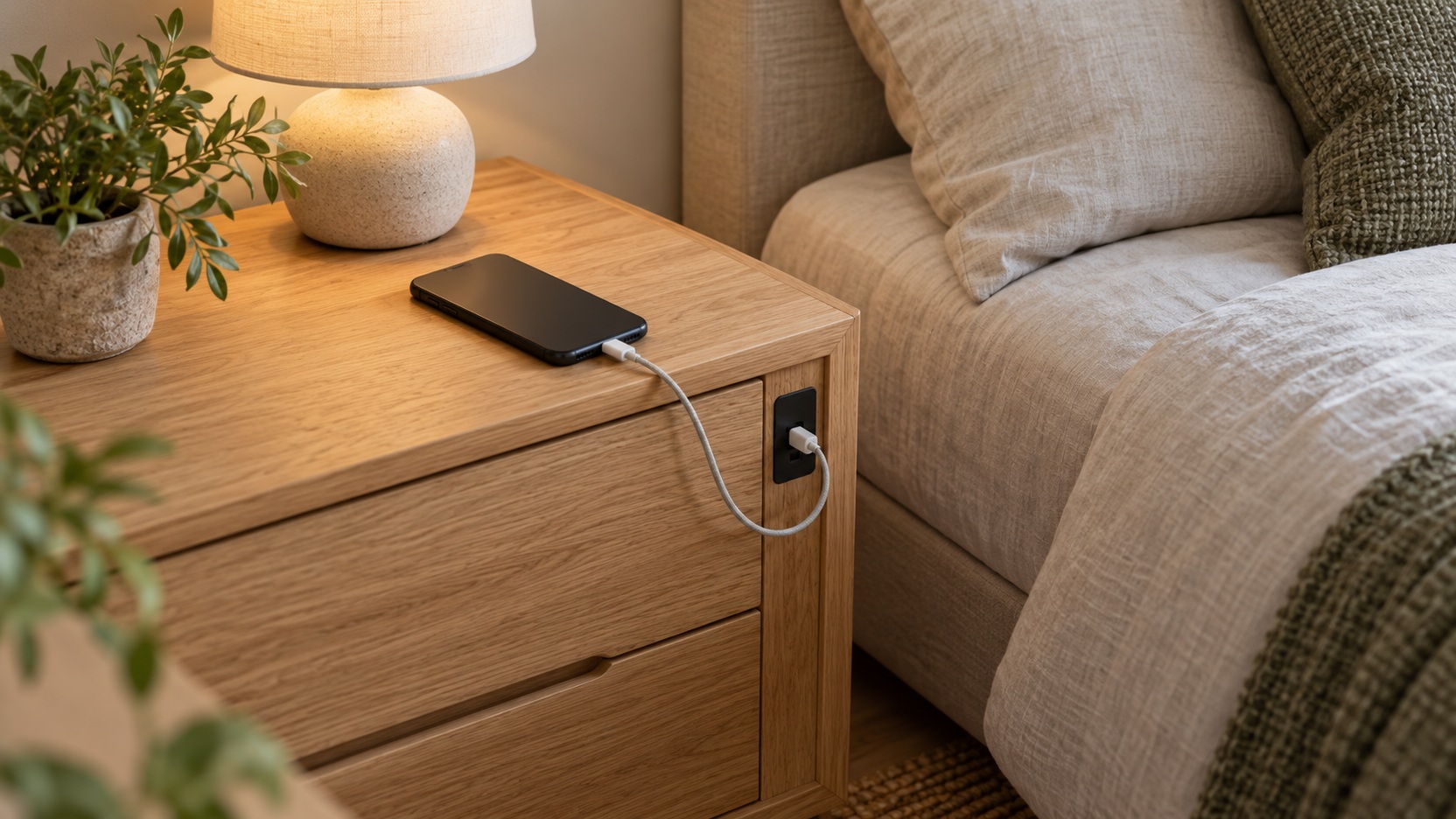
A compact nightstand with one drawer and a usable top is a strong all-round choice when the bedside collects glasses, medicine, charging cables, or other small belongings. The drawer hides visual clutter while the top stays available for immediate needs. Look at the drawer’s internal dimensions rather than assuming its front indicates its capacity. Thick sides, hardware, and the back panel can substantially reduce the space inside.
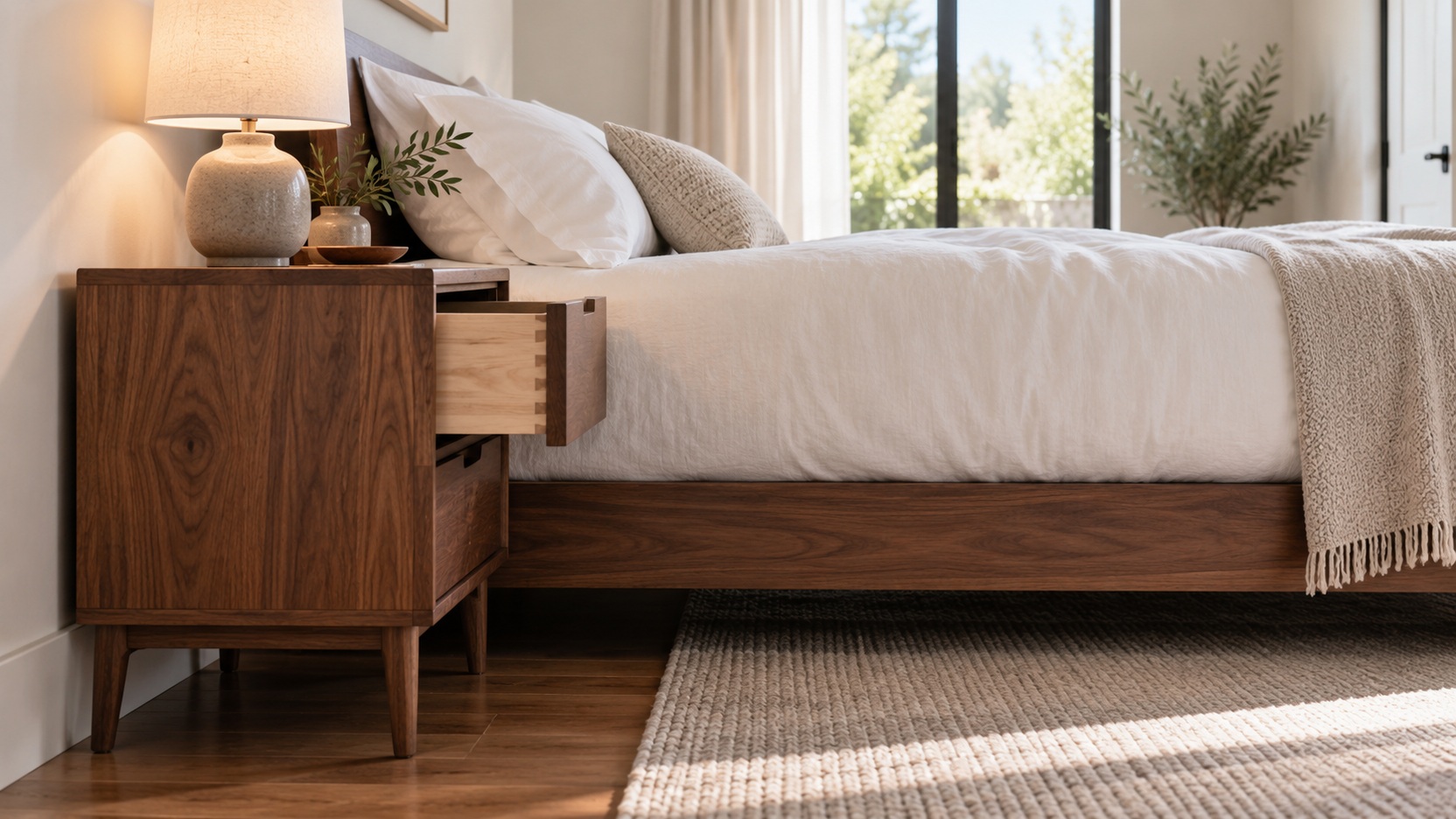
Check the handle and opening action in relation to the bed. A protruding pull can catch clothing in a tight gap, while an awkward finger groove may be difficult to use from a lying position. Test whether the drawer can open without pushing aside the duvet. The right small cabinet should make access easier, not require a little rearrangement each time you need something.
One closed drawer may be more useful than several tiny compartments. Dividing a narrow cabinet too aggressively can leave each space too small for the objects you own. Keep the intended contents nearby when comparing dimensions. A simple drawer that holds your actual belongings is a better space-saving result than a complicated unit with more advertised storage sections.
Pick an Open Shelf for Visible, Frequently Used Items
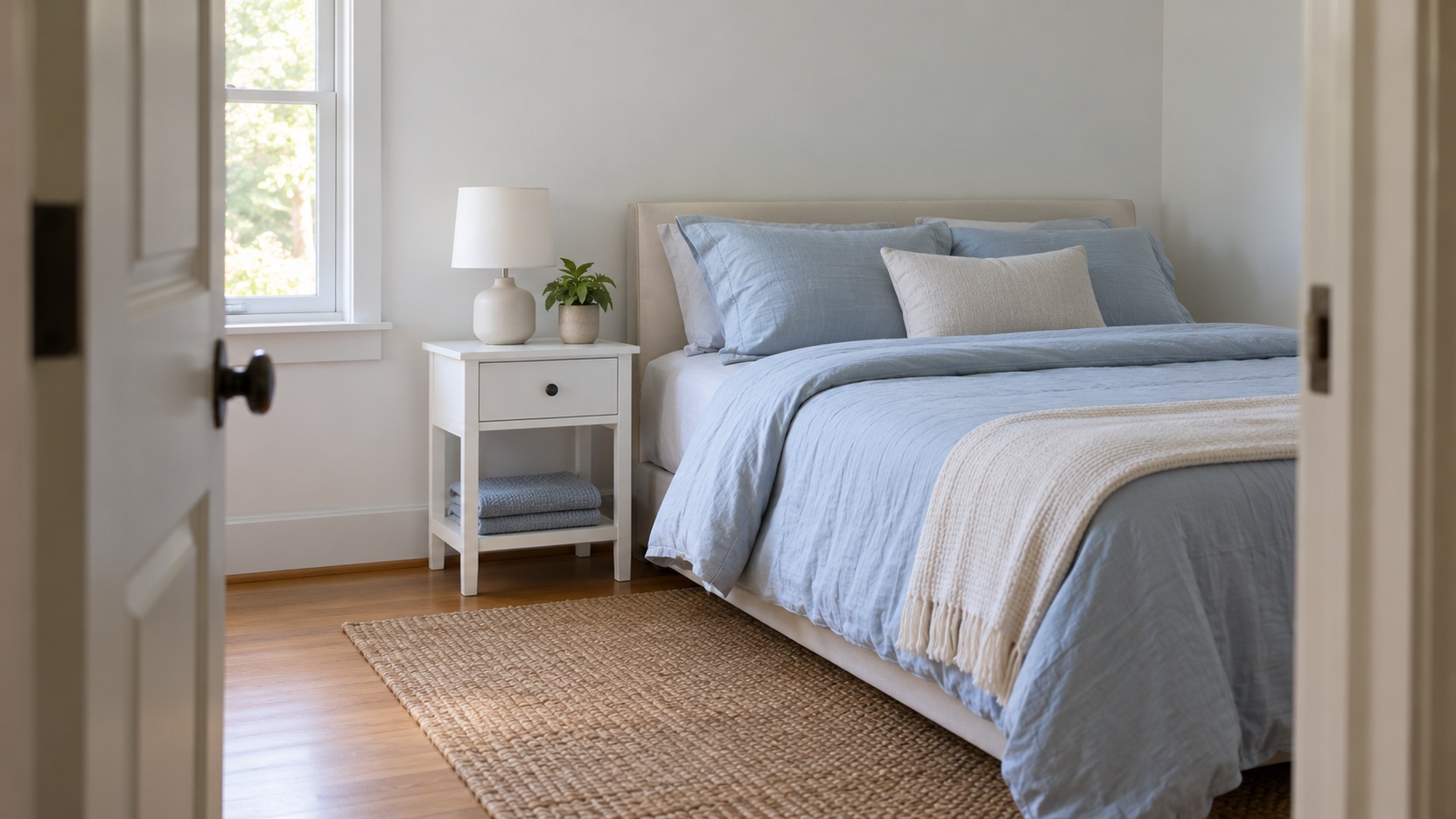
A slim table with an open lower shelf can suit someone who wants a book, tissue box, or small basket within easy reach. The open structure may also look lighter than a closed cabinet of similar size. It works best when the contents remain limited and you are comfortable seeing them. A shelf full of unrelated items can make the bedside feel busier even if the furniture itself has a delicate frame.
Measure the shelf opening and consider how you will reach into it from bed. A low shelf may be convenient when standing but awkward when lying down. A basket can group small belongings, although it needs enough clearance to slide out without scraping the frame. Leave room for cleaning beneath the unit if that area would otherwise become difficult to reach.
Use a Wall-Mounted Nightstand When the Floor Needs Relief
A floating nightstand is particularly useful where a small cabinet would interfere with a baseboard, a tight walking route, or cleaning equipment. Its installation height can be matched to the actual bed rather than accepted as a fixed product dimension. The clear floor can make the arrangement feel less crowded, but the shelf still projects into the room. Check that projection beside your shoulder and the path you take when getting up.
Wall mounting introduces installation requirements that a freestanding table does not have. Identify the wall construction and follow the product’s fixing and load instructions using suitable hardware. A lightweight appearance is not evidence that the shelf can hold any load. Include the weight of the lamp, books, and other belongings when deciding whether the proposed arrangement is suitable.
Consider future changes before installing. A new mattress or bed frame can alter the ideal surface height, and a different layout may leave fixing holes visible. This does not make a floating design a poor choice; it simply means its benefits depend partly on how settled the room arrangement is. In a rental, confirm what installation changes are permitted before buying.
Consider a Narrow Pedestal When You Need Only a Surface
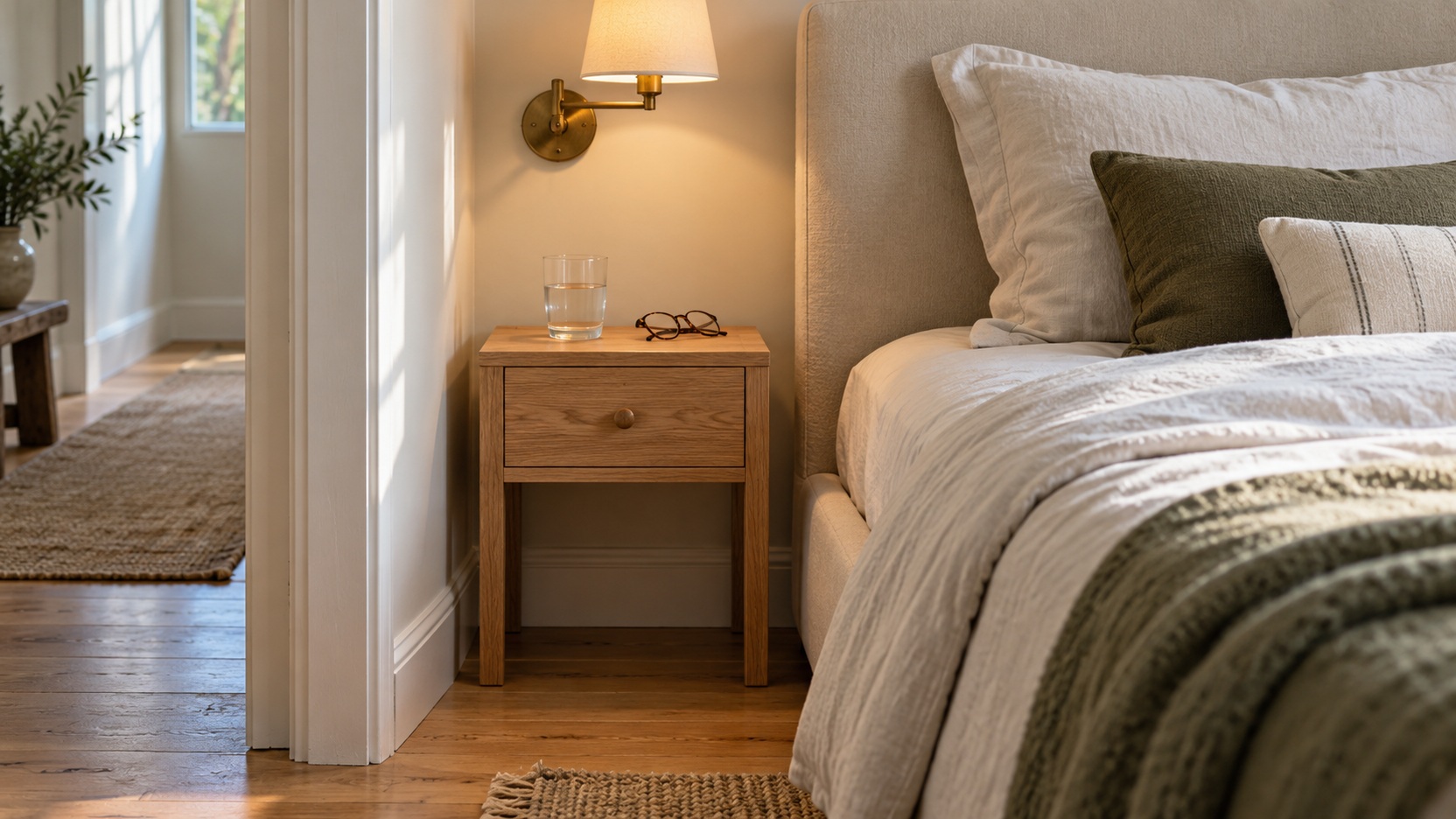
A small pedestal or compact side table can provide a useful landing place without pretending to be a storage cabinet. This form suits a bedside routine involving only a glass, glasses, or a single book, particularly if lighting is supplied elsewhere. Check the usable top, since a rounded edge or central lamp can leave less flat space than the overall diameter suggests. A stable base matters more than decorative slenderness.
Think about how easily the table could move if touched while getting out of bed. Very light furniture may shift on a smooth floor, while a top-heavy design can feel less dependable in a narrow space. Do not use bedside furniture as a transfer support unless it is specifically designed for that purpose. If you need physical support when rising, choose an appropriate solution rather than relying on an ordinary small table.
Let the Lamp Decision Shape the Furniture Decision
A lamp can occupy a surprisingly large share of a compact nightstand. Compare its base dimensions with the surface before buying either piece. A smaller base may solve the problem, or a suitable wall-mounted reading light may free the top for other belongings. The aim is enough useful light and a clear landing place, rather than the smallest possible table paired with a lamp that overwhelms it.
Look at switches and cables from the position in which you will use them. A switch hidden behind the bed may make a seemingly efficient arrangement inconvenient every night. Route cords so they do not cross a walking path or become trapped by moving furniture. Keep the plug and relevant connections accessible rather than filling the rear gap so tightly that maintenance becomes difficult.
Also check the lamp’s height relative to your eyes and pillows. A shade that exposes the bulb from a seated position can create glare even if it looks attractive standing beside the bed. A practical light arrangement should work with the nightstand’s surface height. Evaluating the pair together prevents a later attempt to fix one unsuitable dimension by compromising another.
Use Different Solutions on the Two Sides of the Bed
Two sleepers do not always have the same space or the same bedside needs. One side may have room for a drawer cabinet while the other needs a shallow wall shelf. Coordinating their color, material, or visual weight can connect the pair without requiring identical furniture. This is often more functional than squeezing two matching cabinets into unequal gaps.
Keep the shared bed as the main reference point. Surface heights that are comfortable for each user can still look related even when the forms differ. If the room feels visually unbalanced, adjust the lamps or artwork before assuming the furniture must match. A considered asymmetry can make an awkward layout feel intentional while preserving access on both sides.
Compare Construction Instead of Counting Features
Check whether the table sits evenly and whether joints, drawer runners, and shelf fixings appear appropriate to the intended use. A small unit still needs to tolerate repeated opening, cleaning, and the load placed on top. Read the assembly instructions before purchase where they are available. They can reveal how the cabinet goes together and whether you have the tools, space, and wall access required.
Look closely at edges and surfaces. A bedside table may encounter water, a warm drink, skincare products, and regular wiping. Follow the care guidance rather than assuming a finish can tolerate standing moisture. A protective coaster is useful, but it cannot compensate for a surface that is already lifting, damaged, or poorly suited to the household’s routine.
Follow any anchoring instructions supplied with the furniture, and use suitable wall fixings where restraints are required. Keep heavy items positioned sensibly and avoid creating reasons for children to climb. Compact dimensions do not remove stability concerns. Installation and everyday use deserve the same attention you give the piece’s appearance.
Keep Bedside Storage From Expanding Into a Second Dresser
Decide what belongs within reach at night and move the rest elsewhere. A compact nightstand works best when its capacity matches a small, stable collection of belongings. If you are trying to store spare bedding, paperwork, and an entire reading backlog beside the pillow, the furniture may be solving the wrong problem. A separate storage location can make a smaller bedside solution much more effective.
Give each type of item a simple position so resetting the surface takes little effort. Keep frequently used belongings easy to reach and avoid filling the entire top immediately. A little clear space is useful when you temporarily set down a phone or cup. The room will feel more spacious when the nightstand supports a routine rather than displaying everything the routine might involve.
Test the Finalists in a Normal Bedtime Sequence
Compare your preferred forms by imagining the same sequence for each: switch on the light, put down a drink, reach for glasses, open storage, and get up in the morning. Check those actions against the marked footprint and proposed height. This turns a vague choice between attractive products into a comparison of real use. For some rooms, the winner will be a narrow one-drawer cabinet; for others, a wall shelf or open table will serve better. Favor the form that solves your most important problem with the fewest new inconveniences. Saving a little width is worthwhile only when the resulting furniture remains stable, reachable, and pleasant to use.
Work Through a Narrow-Gap Example
Suppose one bedside gap is wide enough for a small cabinet, but the curtain falls into its rear corner. Moving the cabinet forward would clear the curtain while bringing its front into the walking route. Before searching for an even narrower cabinet, compare a shallower one. The constraint in this example is the relationship between depth and position, rather than the advertised width alone.
Now suppose the smaller top cannot hold both the existing lamp and a drink. A different lamp base or suitable wall light could preserve the useful cabinet without demanding more floor area. Compare those combined changes with a simple open table before deciding. The best answer may involve two modest adjustments rather than a highly specialized piece of furniture.
Picture two different bedside routines in the same narrow room. One sleeper needs glasses, water, and a lamp; the other also stores medication and a reading device. A slim open table can serve the first side, while a modest drawer cabinet gives the second side more useful capacity. Similar lamp shapes can connect their appearance without forcing equal widths. That combination is a better selection than buying a matched pair that fits only one side well. Compactness earns its value through the particular routine the furniture supports.