Make a Small Nightstand Budget Buy Something Useful
A nightstand under $100 can be a sensible purchase when its size, construction, and storage match a modest job. The challenge is distinguishing an uncomplicated piece that offers good value from one whose appealing photograph hides flimsy details, awkward assembly, or a surface too small to use. At this budget, every extra feature competes with the basic furniture you need: a stable top, useful access, and a finish you can maintain. Compare the complete delivered cost rather than the headline price, and decide which compromises your room can comfortably accept. A plain table with the right proportions may serve longer than a crowded list of features attached to a cabinet that never quite works beside the bed.
A: Not necessarily. Include delivery, applicable tax, and any required extras.
A: No. Judge the complete design, joints, finish, and intended use.
A: A wood-effect layer may be printed, while veneer is a thin layer of real wood.
A: They are a different format and should be assessed for their intended loads and storage.
A: Any optional feature that compromises the basic size, stability, or storage you need.
A: Yes. Confirm the exact quantity in the selected listing.
A: No. Check correct assembly and seek support if it does not perform as intended.
A: When condition, safe setup, transport, and any repairs work within your full budget.
A: Investigate repeated specific issues and compare the described use with your own.
A: You can explain what you are giving up and why the essential functions still work.
Decide What the Budget Must Include
Set a limit for the whole purchase, including delivery, applicable tax, and anything needed for the intended installation. A listing below $100 may exceed that amount by the time it reaches your room. If your limit is strict, compare final checkout totals before treating two options as equally affordable. Keep some flexibility for a necessary fitting rather than spending the full amount on a decorative detail.
Check whether the price refers to one nightstand or a pair. Product photographs often show a complete bed arrangement even when only one cabinet is included. Confirm the selected color, size, and quantity as well, since a low advertised starting price may belong to a different version. Reading the actual order details prevents a value comparison built on mismatched products.
Assembly is another part of the cost even when you do it yourself. Consider whether you have the required tools, a suitable work area, and time to follow the instructions. Paying for assembly can change the budget substantially. A simpler piece that arrives in a manageable form may be better value for your circumstances than a more elaborate flat-pack cabinet.
Choose the Simplest Form That Meets the Need
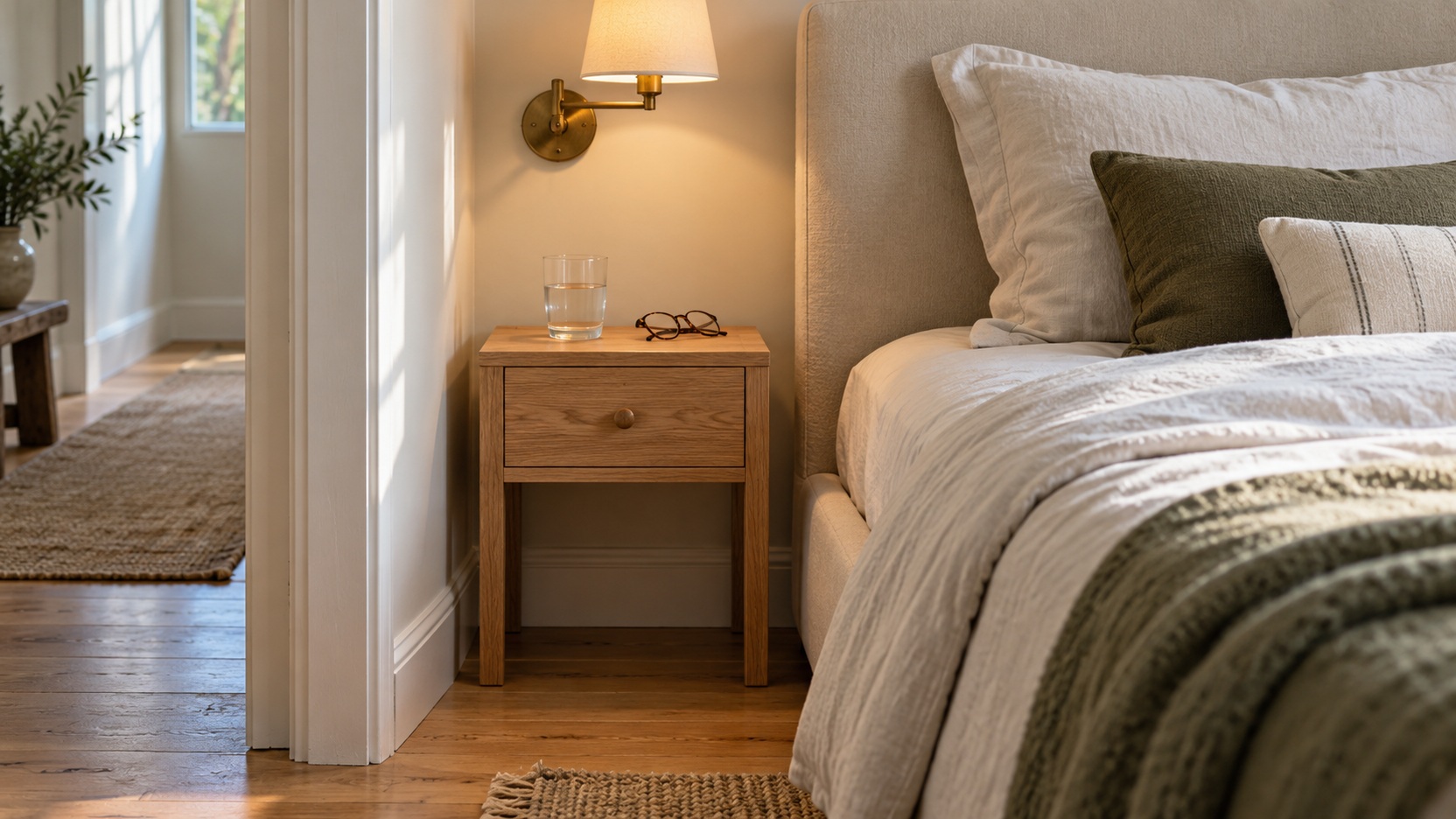
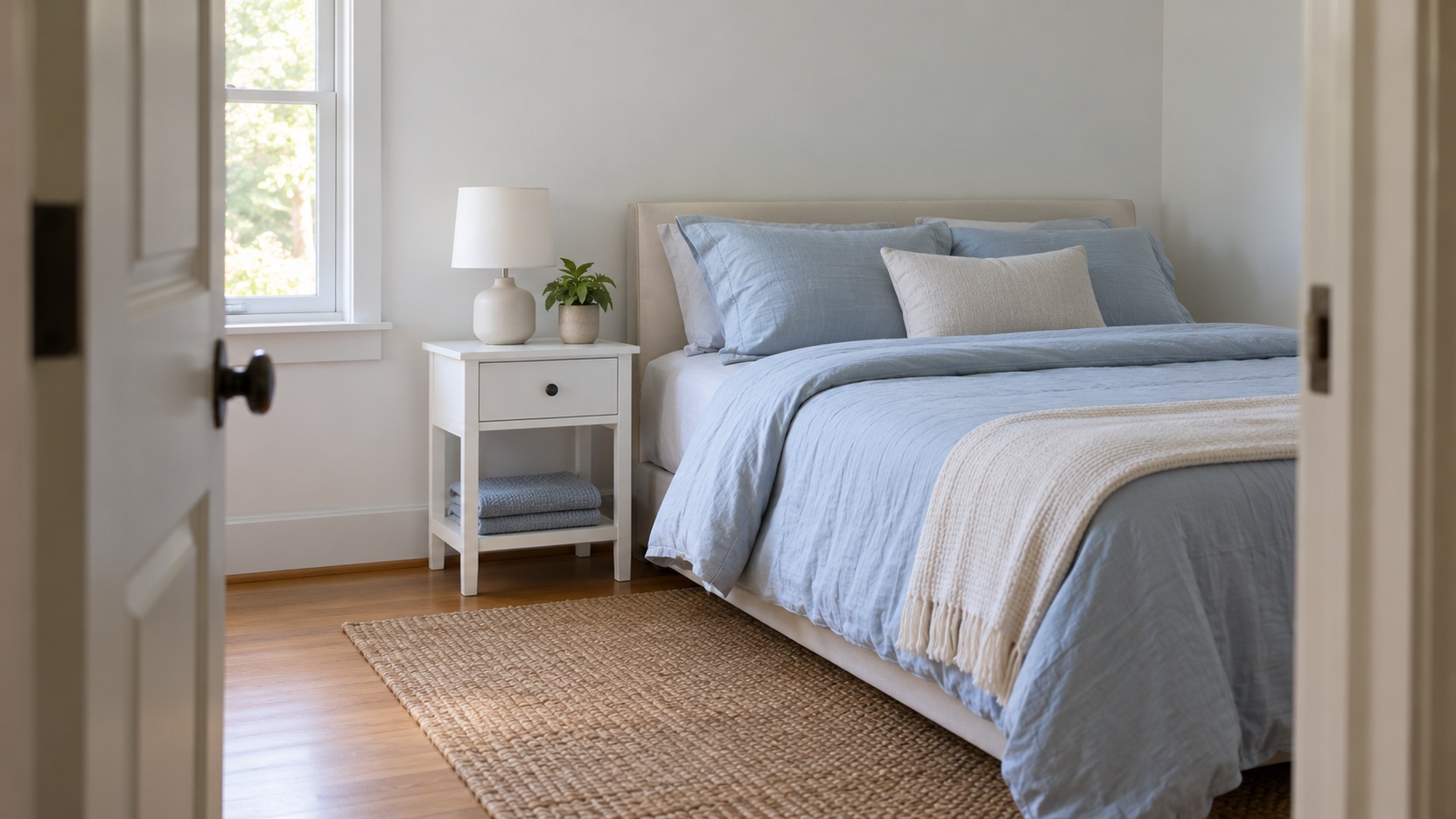
An open bedside table can offer good value when you need a top and perhaps a shelf rather than private storage. Fewer moving parts mean fewer details to assess, though joints and shelf support still matter. This form can suit a guest room or a lean bedside routine. Its success depends on keeping the visible contents controlled rather than filling every opening.
A single-drawer cabinet may justify a little more complexity when concealing small belongings is important. Look for useful internal dimensions and a clear opening method. Several very small drawers can be less practical than one larger compartment, particularly if their runners are awkward. Count the storage you can actually reach, not the number of panels visible on the front.
Understand the Materials Without Dismissing the Whole Category
Budget furniture may use particleboard, MDF, plywood, solid wood, metal, fabric bins, or combinations of these. The material name alone does not establish the quality of the complete piece. Panel thickness, joints, hardware, edge treatment, and intended loading also matter. A well-designed engineered-wood cabinet can suit a modest bedside role, while poorly assembled solid-wood furniture can still disappoint.
Read surface descriptions carefully. A wood-effect finish may be a printed decorative layer rather than a real wood veneer, and a veneer is not the same as a solid-wood panel. These distinctions affect appearance, repair options, and how edges may age. Choose with an understanding of what the product is, rather than treating every warm brown finish as equivalent wood construction.
Think about the expected exposure beside your bed. Water glasses, skincare products, and regular wiping can test a surface, especially around edges. Follow the stated care instructions and use suitable protection where needed. A finish that requires avoiding standing moisture can still work if that care fits your routine; it is a poor bargain if you know the surface will regularly stay wet.
Treat Fabric-Drawer Units as Their Own Type of Furniture
A lightweight frame with fabric storage bins can be useful for soft, light belongings, but it should not be judged as though it were a conventional wooden drawer cabinet. Check the frame’s stability, the stated load limits, and the firmness of the top. Consider whether the bins slide comfortably and whether their handles will tolerate repeated use. This format may suit temporary or flexible storage better than heavy bedside loading.
Inspect the Parts You Will Touch Every Day
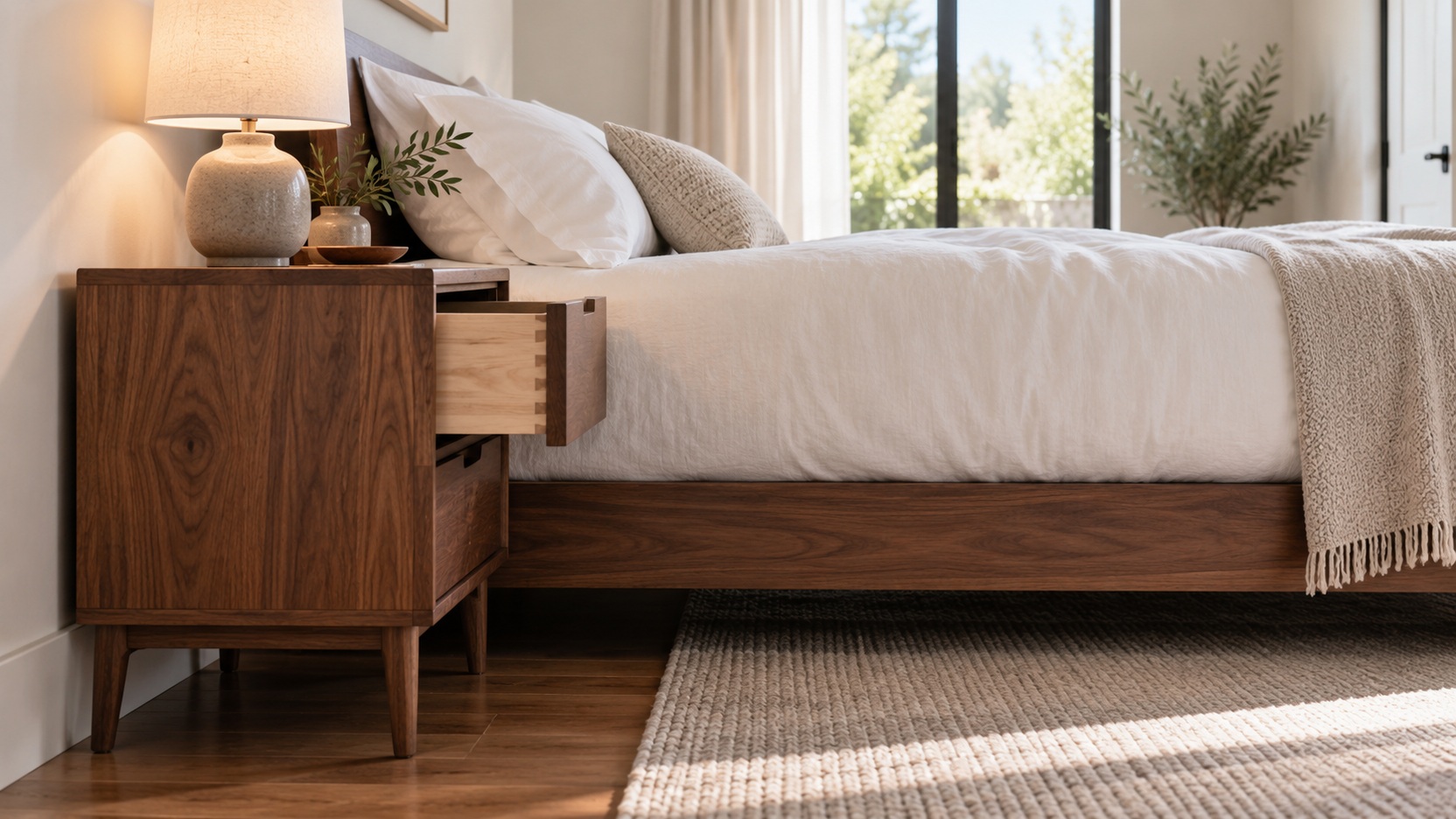
Drawer runners and pulls influence the daily experience more than many decorative details. A drawer that binds, tilts, or opens reluctantly can make a low price feel less attractive very quickly. Read specifications and look for clear views of the hardware where possible. Reviews can help identify repeated reports of the same practical problem, although isolated comments need context.
Check exposed edges, corners, and the way the top attaches to the base. A sharp projecting corner may be awkward in a tight bedside route, while poorly protected edges can show wear early. Look for a design whose surfaces and joints suit the intended use. A small piece still needs to withstand ordinary opening, wiping, and moving of lightweight belongings.
Inspect the furniture promptly after delivery and document damage before assembly. Compare all parts and hardware with the supplied instructions. Missing or damaged pieces are easier to address while packaging and order details are available. Avoid improvising a structural fix merely because the item was inexpensive; the assembled furniture should still match its intended design.
Use Dimensions to Prevent an Expensive Cheap Mistake
A bargain is not good value when it creates an inconvenient bedside. Measure the completed mattress height, available gap, and route around the bed before choosing the nightstand. Check depth as well as width, and include the space needed behind plugs or baseboards. The actual position can be farther into the room than the cabinet’s listed dimensions suggest.
Compare the usable top with the lamp and objects that must fit there. A very small surface may save money but require buying a different lamp, which changes the overall calculation. Mark the outline and arrange the essentials before ordering. This simple test can eliminate unsuitable choices without needing to compare dozens of nearly identical listings.
Assess Assembly Complexity Before It Arrives
Look for accessible assembly instructions and a clear parts list. They can show whether the cabinet uses an arrangement you are comfortable building and whether access to the final location is sufficient. Check any wall-restraint requirements at the same time. A low purchase price does not remove the need for correct assembly or suitable installation hardware.
Set aside enough space to lay out the parts and protect the finish during assembly. Follow the specified sequence and tightening instructions rather than forcing a misaligned panel into place. Check the finished unit for level seating and normal drawer movement. If something does not assemble as described, seek the appropriate support instead of assuming the resulting wobble is an unavoidable budget compromise.
Keep the instructions and spare hardware identified after completion. They are useful if you move, adjust the unit, or need to understand how a component attaches. Repeated disassembly may not suit every construction, so factor likely moves into the initial choice. A simple table could be more practical for a frequently changing room than a complex cabinet with many small connections.
Pay for Storage Before Decorative Electronics
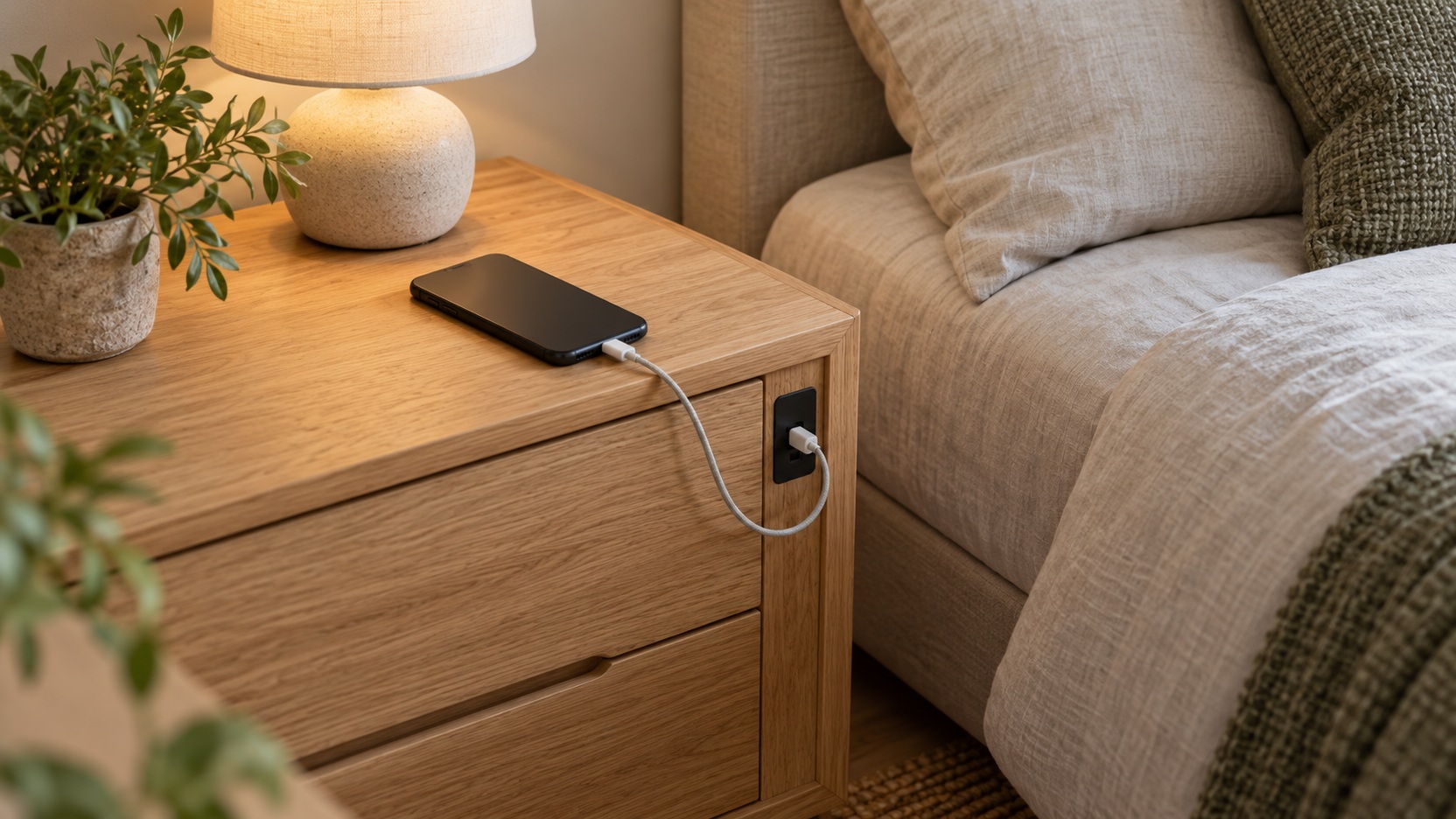
Integrated charging, colored lighting, and elaborate trim can make a budget cabinet appear feature-rich. Evaluate whether those additions improve your actual routine and whether their specifications are clear. If they force you to accept poor dimensions or weak storage access, a simpler piece may be the stronger purchase. Optional electronics also create another component that may need service before the furniture wears out.
Compare a plain nightstand plus accessories you already own with the fully equipped alternative. A separate charger can be replaced independently, while a familiar lamp may already provide the light you need. Spend where the difference will be felt each day. For many buyers, that means a better-fitting top, a dependable drawer, or a finish that suits the room.
Read Returns and Reviews as Part of the Specification
Check the return window, the condition required for a return, and who pays shipping if the product does not suit the room. Assembled furniture can be awkward to repack, and a low-priced item may be costly to send back. These terms do not necessarily make the purchase poor value. They simply belong in the comparison before you choose a seller.
Use reviews to investigate repeated, specific issues. Several accounts of missing hardware, inaccurate dimensions, or the same drawer problem deserve attention. A complaint about color may reflect photography or personal expectations rather than a universal defect. Compare the reviewer’s situation with your intended use and avoid treating a high average score as a substitute for checking the details.
Look for evidence that the listing describes the product clearly. Useful dimensions, care information, assembly details, and responsive support make the purchase easier to assess. If basic information is missing, the apparent savings come with more uncertainty. You are buying a usable object, so clarity about that object has practical value.
Consider Secondhand Furniture With a Careful Inspection
A secondhand nightstand may offer substantial materials or an interesting design within the budget, but inspect its condition and suitability rather than assuming older furniture is automatically better. Check joints, drawer movement, odors, surface damage, and any signs that require further investigation. Confirm that it can be transported safely and fits the planned position. Include transport and necessary repairs in the total.
Check available product identification and relevant recall information before using a secondhand piece. Obtain appropriate restraint hardware where required and follow suitable installation guidance. Avoid relying on a seller’s assurance that a cabinet is too heavy to tip. An inexpensive used purchase deserves the same careful setup as a new one.
Choose a Compromise You Can Describe Clearly
A good budget decision has an understandable tradeoff: perhaps a simpler finish in exchange for useful drawer space, or an open shelf instead of closed storage to preserve a stable top. An unclear compromise sounds more like hoping that weak dimensions or uncertain construction will somehow work out. Make the comparison explicit before committing.
The strongest under-$100 nightstand is the one that meets your essential requirements at an acceptable complete cost. It does not need to resemble expensive furniture in every detail. It needs to fit, function, and remain reasonable to care for. When those basics are secure, a modest bedside purchase can feel considered rather than temporary from the day it arrives.
Keep a short written shortlist rather than reopening every listing after each comparison. Record the total cost and the compromise attached to each candidate. This makes a genuinely suitable simple option easier to recognize when a more elaborate promotion appears.
Adjust Value to How Often the Room Is Used
A hypothetical $100 allowance shows how the comparison works without implying a current retail offer. Suppose a plain cabinet costs $65, delivery is $10, applicable tax is $6, and suitable required fittings cost $4. The planned total is $85, leaving $15 of the ceiling unused. A $90 cabinet with the same additional costs would total $110 and would not meet the brief. These illustrative figures are not product recommendations or tax estimates for your address. They show why a modest complete option can be the better budget purchase even when another listing initially looks affordable.