Choose Storage That Leaves the Bedroom Usable
A small-bedroom dresser should earn its floor space by holding the clothes you need in a form you can access comfortably. A narrow footprint alone does not guarantee that result. Shallow drawers may hold less than expected, tall storage may place daily belongings out of reach, and a deep cabinet can consume the route between the bed and the door. Begin with the wardrobe you are storing and the room’s actual movement patterns, then compare dresser forms against those two realities. The most useful option may be a modest horizontal dresser, a narrow chest, or a low cabinet used for a specific category of clothing. The right choice adds reachable storage while preserving the space needed to dress, clean, and move around the room.
A: Choose according to clothing needs, available wall width, reach, and circulation.
A: It may save wall width, but check depth, reach, and safe installation.
A: Measure representative folded clothes and compare their arrangement with internal drawer dimensions.
A: Only when the clothing fits its reduced depth without awkward storage.
A: Include drawer travel and the position needed to stand or sit while using them.
A: Check sill height, curtains, ventilation, heating clearances, and window access first.
A: Follow their restraint and installation instructions; size does not remove stability concerns.
A: Use divisions only where they improve access without wasting needed space.
A: Capacity should account for the complete wardrobe, including clothes temporarily in the wash.
A: Clothes remain reachable and easy to reset while the room's movement routes stay usable.
Measure the Clothing Before Measuring More Furniture
Gather the categories that genuinely need drawer storage. Separate everyday folded clothes from hanging garments, bulky bedding, and items that could live elsewhere. A dresser becomes less efficient when it is expected to hold everything without a clear division of jobs. Editing the contents first can reveal that you need fewer but better-proportioned drawers rather than the largest cabinet the room will accept.
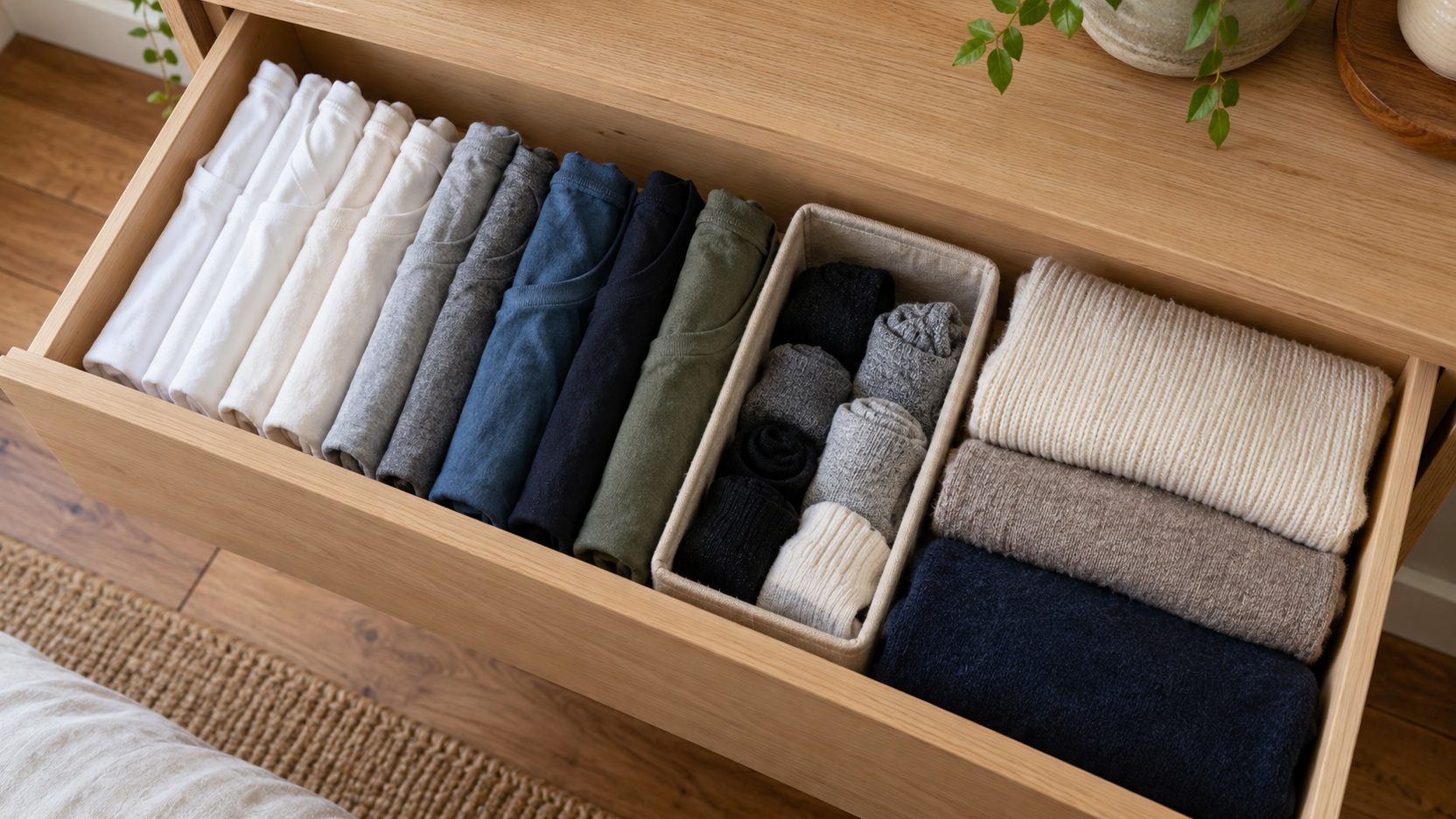
Fold a representative group of shirts, trousers, or knitwear the way you intend to store them. Measure the folded footprint and approximate stack or row height. Compare those measurements with internal drawer dimensions where available. External cabinet width tells you little about whether two useful clothing rows will fit beside one another without wasting a narrow strip of space.
Allow some working space inside the drawers. Clothing should be easy to see and remove without compressing every fold into a tight block. A dresser filled to the point of friction may have adequate theoretical volume but poor daily access. Buy around the usable arrangement you can maintain, including the way clothes return from the laundry.
Map the Dresser With Its Drawers Open
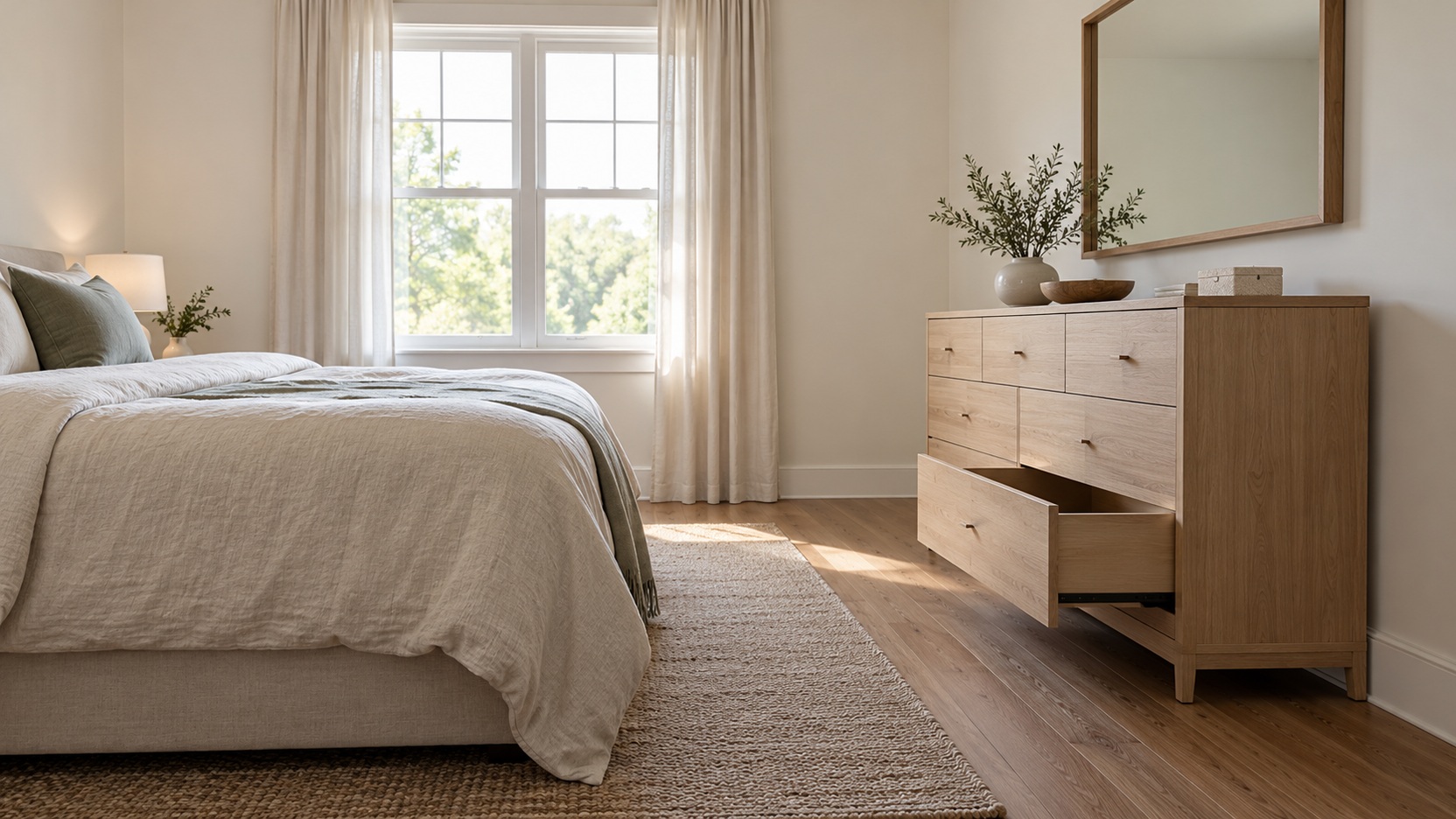
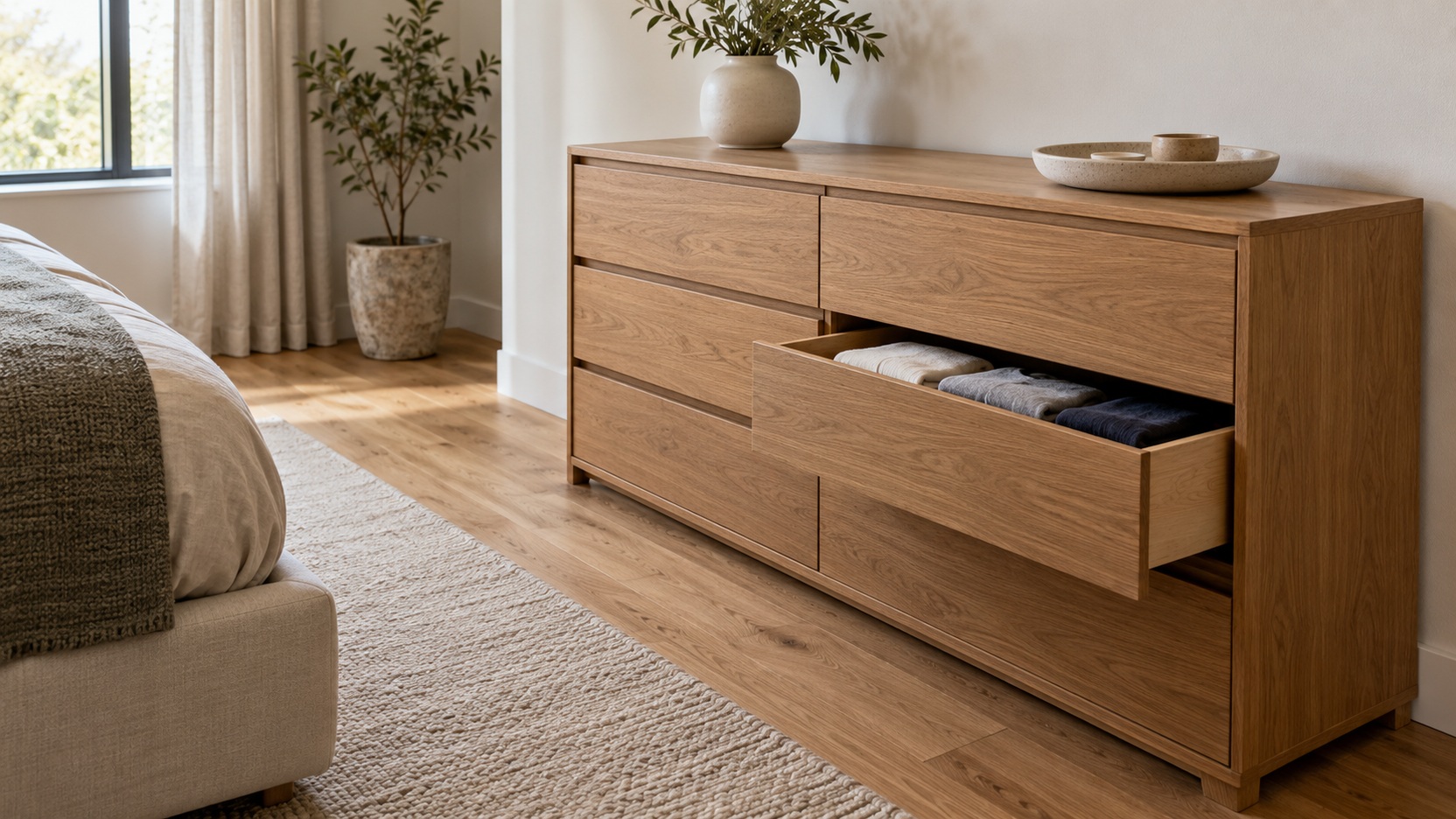
Mark the proposed closed footprint, then add the drawer’s opening travel and the place where a person will stand. Check the bed, wardrobe doors, room door, and normal walking route against that complete arrangement. Open drawers do not need to leave every route permanently clear, but they should not trap you in an awkward position or require moving other furniture to reach clothing. Test with the bed made as usual, since overhanging covers can change the practical gap.
Choose a Compact Horizontal Dresser for Broad, Reachable Storage
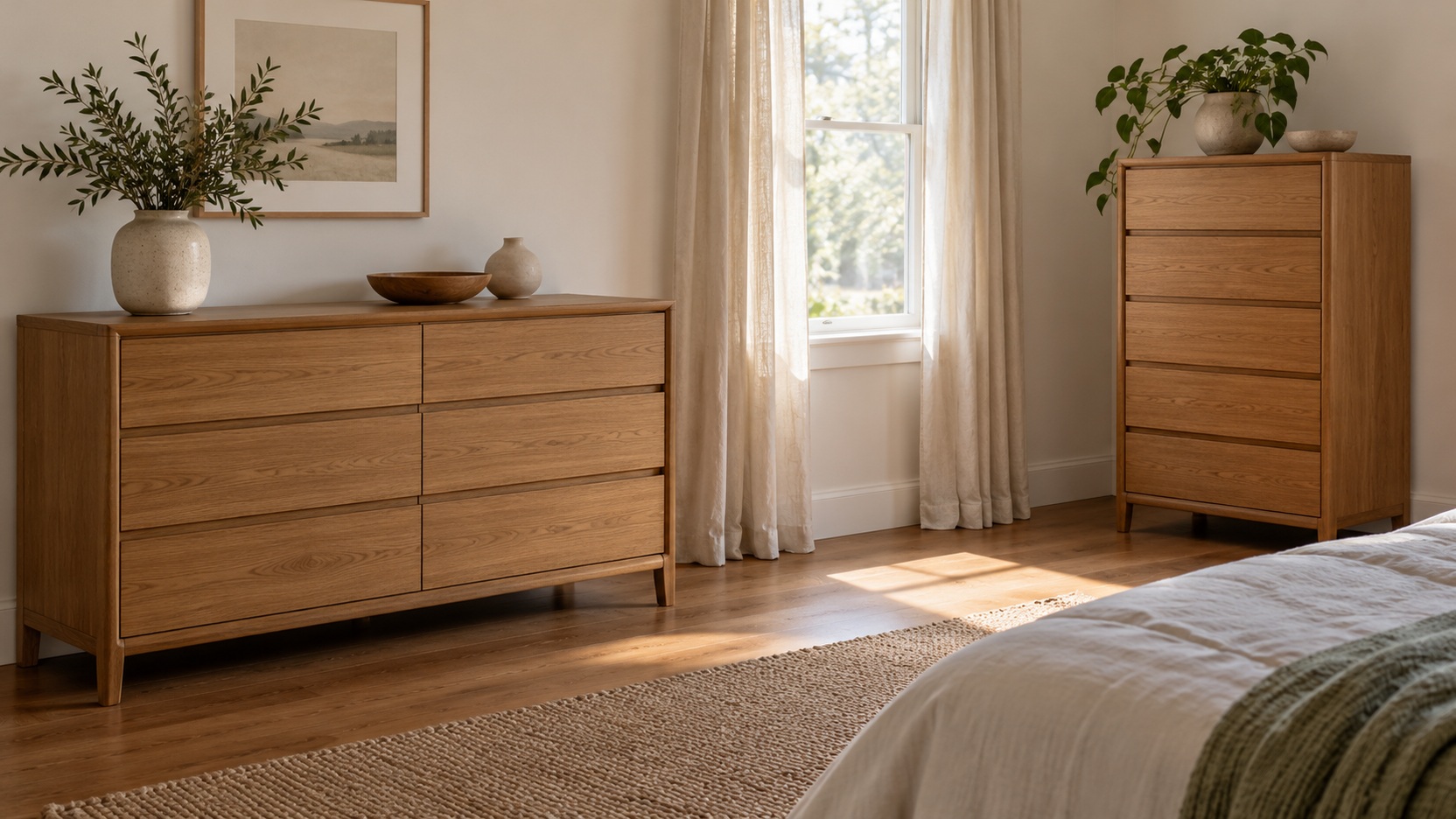
A low or medium-height horizontal dresser can suit a room with a clear wall and a need for several drawers at comfortable heights. Its top may also provide a useful landing surface, although that benefit should not justify buying a cabinet that overwhelms the route beside the bed. Compare the storage gained with the wall length it occupies. A broad cabinet works best when its drawers match the actual clothing categories.
Look at internal divisions and center supports. Two dressers with similar external widths may have different usable drawer arrangements, especially when several columns of drawers are involved. A shallow top row may be excellent for small items while deeper lower drawers hold knitwear. The important question is whether the combination supports your wardrobe rather than merely producing an attractive symmetrical front.
Consider a Narrow Chest When Wall Width Is Scarce
A chest can concentrate storage vertically when there is little uninterrupted wall width. It may preserve more space for another function, such as a chair or door swing, than a broad dresser would. Height introduces its own limitations, however. Check whether the upper drawers are easy to see into and whether frequently used clothing would end up above a comfortable reach.
Evaluate the cabinet’s depth rather than assuming narrow means space-saving in every direction. A tall chest can project into a walking route just as much as a wider dresser. Mark the footprint and test the upper drawers from your normal standing position. A compact external outline is only useful when the storage inside remains practical.
Follow the furniture’s anchoring and installation instructions using suitable wall hardware. Do not assume that weight or a small footprint makes a chest resistant to tipping. Keep children from climbing furniture and avoid placing enticing objects where they encourage climbing. Stability planning belongs in the decision from the start, not as an optional step after the room is styled.
Use a Shallow Dresser for Narrow Circulation
Reducing depth can help preserve the route along the side or foot of a bed. This is particularly useful when the room has adequate wall width but little space between opposing furniture. Check the resulting drawer capacity carefully. A shallow cabinet may suit smaller folded garments but require a different folding arrangement for larger pieces.
Compare depth against the intended contents before treating it as a universal advantage. If clothes need to be compressed or stacked in awkward layers, the smaller footprint may simply transfer the problem inside the drawers. A shallower dresser is strongest when the categories suit it naturally. Otherwise, a different location or furniture form may provide a better balance.
Let Drawer Proportions Match the Wardrobe
Small top drawers can keep socks, underwear, or accessories from spreading through a large compartment. Medium drawers can hold common folded clothing, while deeper ones may suit bulkier pieces. These are starting roles rather than fixed assignments. Assess the actual internal height, width, and depth against your belongings instead of assuming a particular drawer count guarantees enough storage.
Dividers can improve access, but they also occupy space. Measure the compartment after adding the organizer you intend to use, especially in a compact drawer. Avoid buying a large organizer collection before seeing the assembled interior. A small number of well-fitting divisions may be easier to maintain than a rigid layout that leaves no room for changes in the wardrobe.
Check whether drawers extend far enough for the back to remain useful. A deep compartment that opens only partway may conceal clothing behind the visible rows. Better access can make a smaller volume more effective. The useful comparison is not simply storage liters or drawer count, but how easily the contents can be found and returned.
Use Awkward Walls Without Creating New Obstacles
A dresser beneath a window may use a wall that cannot accommodate a tall wardrobe, but check the sill, curtains, ventilation equipment, and access to the window. The cabinet top should not interfere with the functions that area already serves. Include any required clearances around heating equipment. A promising location needs more than sufficient width.
Sloping ceilings and alcoves also need careful measurement at several heights. A cabinet can fit at floor level while its upper corners meet a narrowing wall or roof line. Allow for baseboards and the access needed during installation. A tight visual fit is less attractive when drawers cannot open fully or the furniture cannot be secured as instructed.
Decide Whether the Top Surface Has a Real Job
A dresser top can serve a mirror, a small tray, or a few daily belongings, but it should not become an excuse to accumulate another layer of storage. Decide what will sit there before choosing the cabinet’s height. A surface used for dressing or grooming needs a comfortable relationship to the user. A display-only top may have different priorities.
If a mirror is involved, check its placement and appropriate installation independently. Do not assume that resting a heavy mirror on a cabinet is suitable without following the relevant instructions. The visual combination also needs room around it. A large mirror can make a small dresser feel more substantial, while an overly crowded top can reduce the impression of usable space.
Leave a clear area for temporary use, such as setting down folded clothes while putting laundry away. This working space can make the whole storage routine smoother. If the top is permanently filled with small objects, the room may need another surface whenever clothes are sorted. A restrained setup protects the dresser’s everyday usefulness.
Compare Construction for Repeated Drawer Use
Assess the joints, runners, drawer bottoms, and handle attachments in relation to the expected contents. Clothing storage is used repeatedly and can become heavy when drawers are overfilled. Follow the stated load limits rather than testing how much can be forced inside. A smooth mechanism and suitable construction can matter more than an ornate front or an unusually high drawer count.
Read the assembly and care guidance before purchase. Consider the workspace needed to build the cabinet and the route by which the package or assembled unit will reach the bedroom. A dresser that fits its final wall may still be difficult to move through a narrow staircase. Include those practical requirements while alternatives remain easy to compare.
Avoid Buying Storage for Clothes You No Longer Use
Before finalizing the purchase, review the contents one more time. Clothing kept out of habit can make the room appear to need a larger cabinet than it actually does. Separate items awaiting repair, pieces that no longer fit your life, and seasonal belongings that could use a different storage location. This is not a requirement to pursue minimalism; it is a way to make the new furniture answer the current wardrobe.
Consider the laundry cycle as part of capacity planning. A drawer that looks spacious while half the clothing is in the wash may be full when everything returns. Test a representative complete collection rather than the smallest weekly snapshot. Leave enough room for ordinary variation without assuming the cabinet must accommodate unlimited future buying.
Once the dresser is in use, keep the categories simple enough to reset. If a drawer constantly becomes difficult to close, investigate its contents and arrangement rather than immediately adding another storage piece. A small bedroom benefits when each cabinet continues to perform its intended job. Extra furniture should solve a clear need instead of absorbing an unresolved organization problem.
Choose the Form That Protects the Whole Room
Compare the shortlisted dresser forms against the same clothing collection and the same marked room layout. A broad dresser may provide the easiest daily reach, a narrow chest may preserve wall space, and a shallow cabinet may protect circulation. There is no single form that wins in every small bedroom. The best one gives your wardrobe a practical home while leaving the room comfortable to inhabit.
Complete the installation, including any required restraints, before loading the drawers. Then check the storage routine with the cabinet in its final position and the bed made normally. You should be able to open, see, and use the contents without negotiating a series of obstacles. That everyday ease is the real measure of gaining more storage without adding unnecessary bulk.
Compare One Broad Cabinet With Two Small Ones
A drawer-capacity trial can begin with six folded shirts arranged in two rows of three on an existing surface. Measure the group’s footprint and height, then compare that shape with a candidate drawer’s usable interior. Repeat the exercise for the bulkier category rather than assuming every drawer will hold an equal share. A low dresser with three genuinely useful compartments may outperform a taller chest whose shallow drawers divide the clothing awkwardly. The purchase brief becomes a description of the wardrobe that must fit, with the room’s remaining wall width acting as a separate limit.