Choose the Storage Shape Around Your Routine
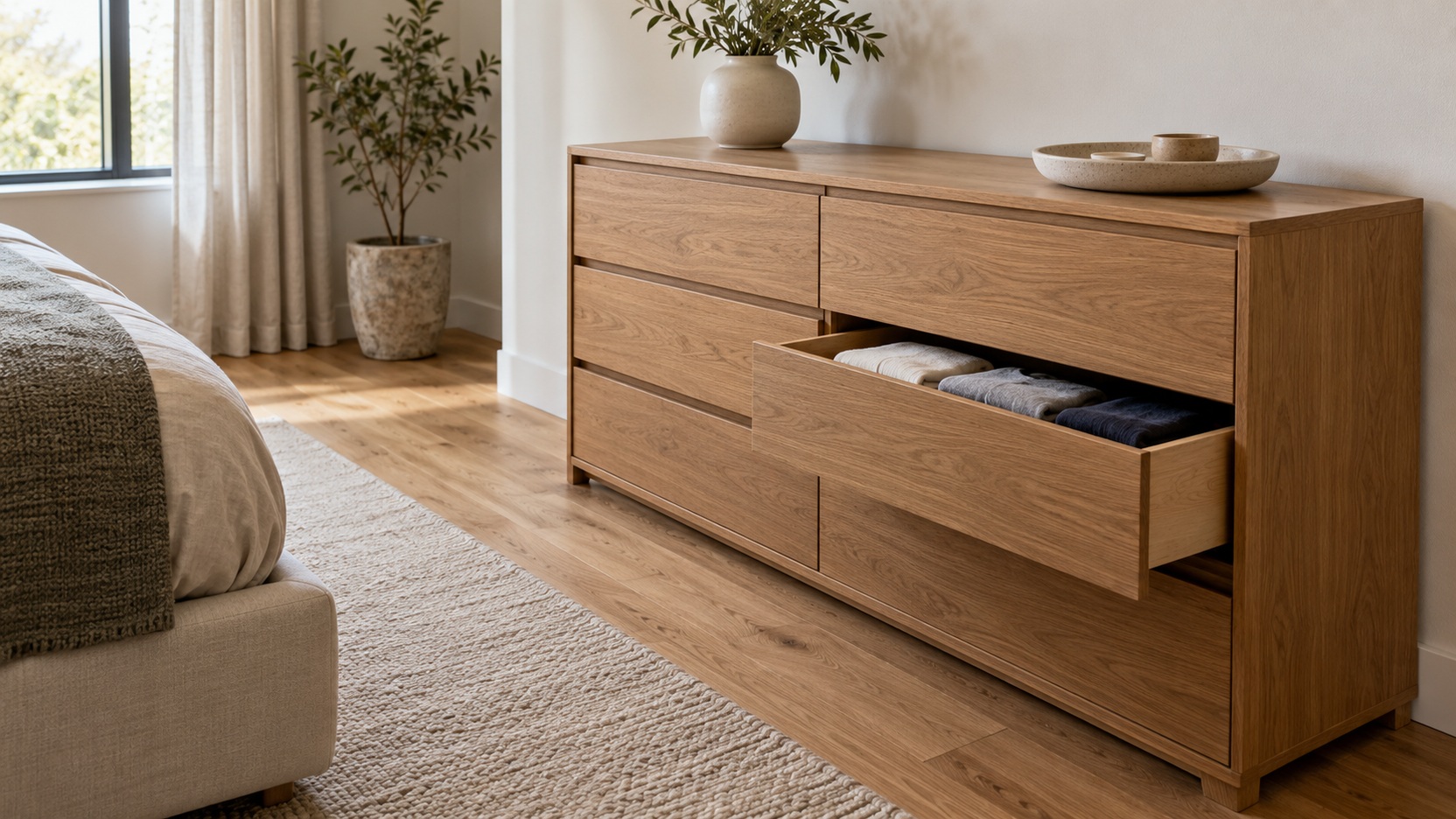
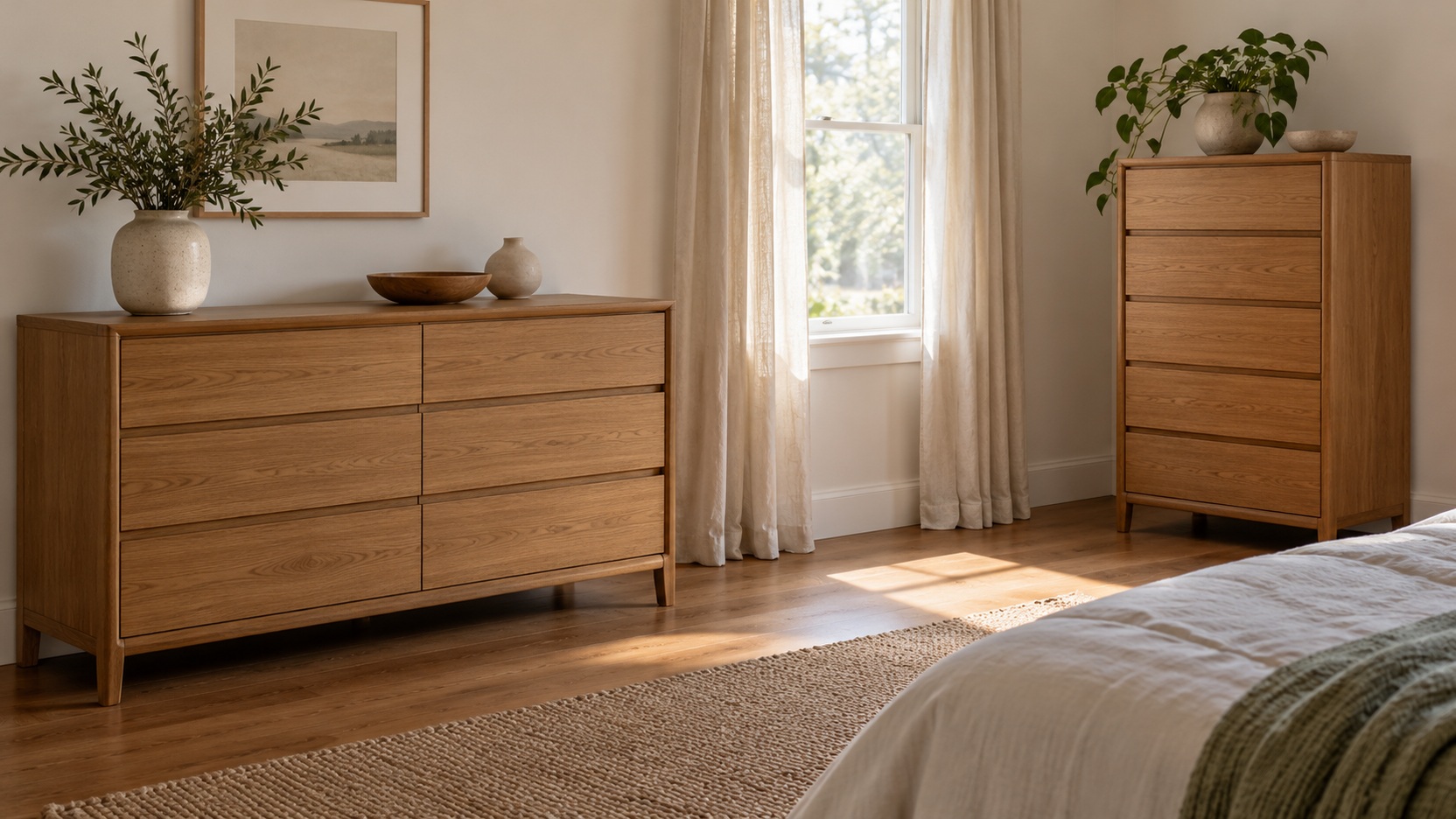
A dresser and a chest of drawers can hold similar categories of clothing while changing the room in very different ways. A dresser generally spreads storage across a wider, lower form; a chest generally stacks it within a narrower, taller outline. Those familiar names are useful starting points, but individual products vary enough that the actual dimensions and drawer arrangements matter more than the label. The better choice depends on the wall space you have, the heights you can use comfortably, and whether a broad top surface would serve a real purpose. Compare both forms with the same wardrobe and the same room layout so the decision reflects daily use rather than an assumption that one shape always stores more.
A: Dressers generally spread storage wider and lower; chests generally stack it taller and narrower.
A: No. Compare usable internal drawers and the heights you can comfortably access.
A: When reachable drawer columns and a working top justify the wall width.
A: Yes. Follow the actual product's restraint and installation instructions.
A: No. Its best location may be elsewhere based on space, lighting, and suitable installation.
A: Compare ownership zones, reach, and room for both people's dressing routines.
A: No. Measure its depth and final wall-to-front projection separately.
A: Internal proportions, access, and how the complete clothing collection will fit.
A: View the actual designs with the bed and other furniture from normal room positions.
A: Test both complete arrangements against the same daily activities and room constraints.
Start With the Wall You Can Give to Storage
Identify the uninterrupted wall space available after doors, windows, heating equipment, and existing furniture are considered. A broad dresser may fit neatly along one wall while making another layout impossible. A narrow chest can preserve width for a chair or another function, but its extra height may conflict with a window or sloping ceiling. Measure the usable area rather than the room’s total wall length. Mark both proposed footprints on the floor and include the space behind them where baseboards or fittings prevent flush placement. Walk between the storage and the bed with the bedding in place. Notice whether one form changes the route you use to dress or leave the room. A storage shape that protects these movements can be more valuable than a small increase in nominal capacity.
Compare Internal Storage Rather Than Exterior Volume
External cabinet measurements include the frame, drawer sides, runners, and any internal divisions. Two units with similar overall volume can therefore provide different usable storage. Request internal dimensions where available and compare them with representative folded clothes. The number of drawers is only meaningful when those drawers are proportioned for the belongings you actually need to keep.
A dresser may divide its width into multiple columns, making each drawer narrower than the cabinet’s broad front suggests. A chest may offer deeper stacks of drawers but place some of them at less convenient heights. Neither pattern is automatically superior. Look for a useful match between the drawer layout and your clothing categories before deciding which product makes better use of space.
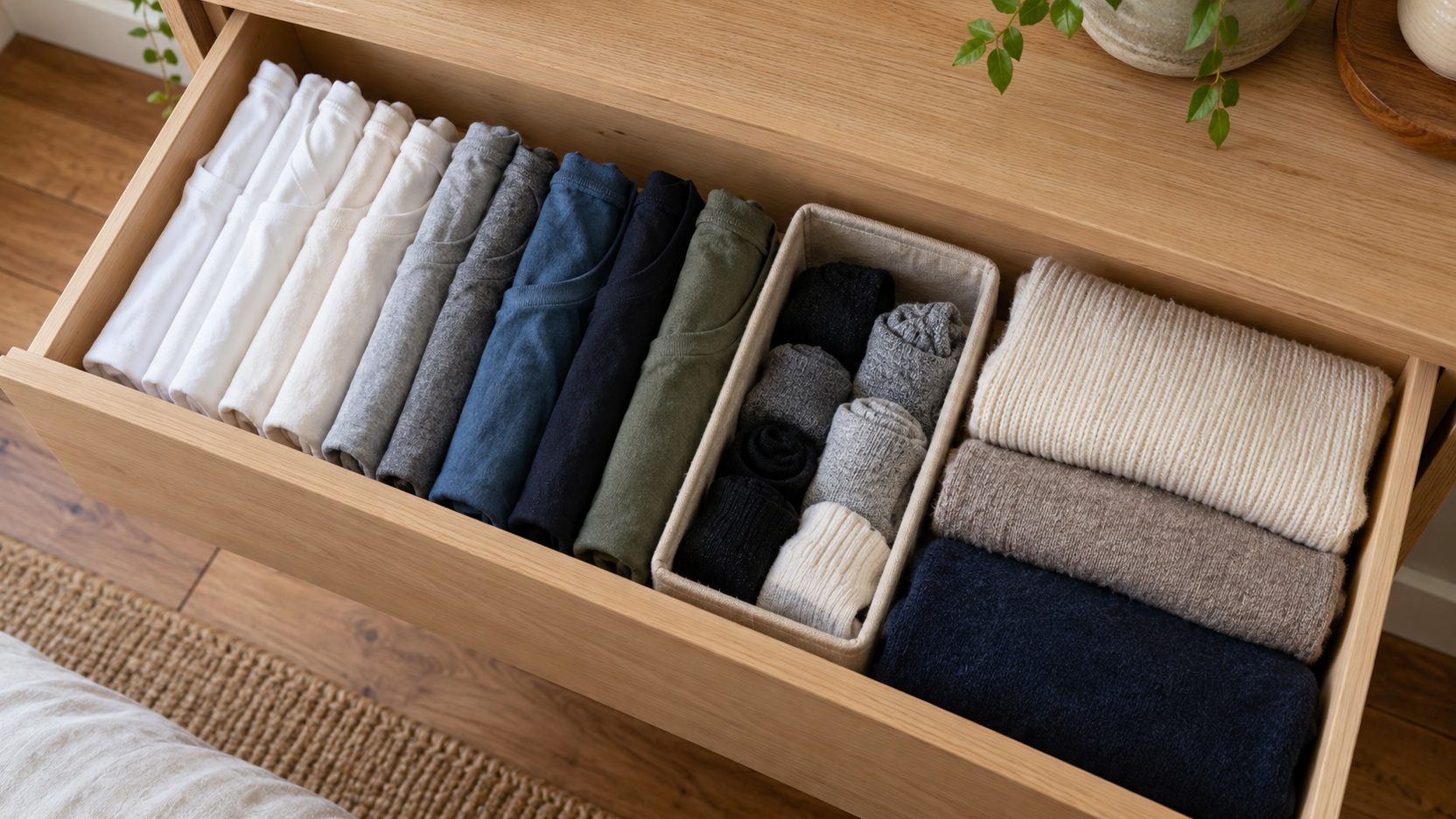
Include enough spare room to remove and return items without compression. A tightly packed drawer can hold a lot while remaining frustrating to use. Compare the way each candidate would be organized when all regular clothes are clean and stored. This gives a more realistic picture than counting capacity while part of the wardrobe is in the wash.
Favor a Dresser When Broad Reach Matters
A lower dresser can place several drawers within a comfortable band of reach. That may be helpful when you prefer to see multiple clothing categories without reaching high, or when more than one person shares the storage. Check the lower drawers as well, since a low cabinet may require more bending. The useful reach range depends on the person, not simply on the furniture’s name.
The broad top can provide a convenient place to sort a small laundry group or set out clothing. It may also support a properly installed mirror arrangement or a limited grooming setup. These are real benefits when the surface has an assigned role. If it is likely to become a permanent pile of miscellaneous objects, treat that risk honestly in the comparison.
Favor a Chest When Wall Width Is the Main Constraint
A chest can concentrate clothing storage within a narrower wall section. This may make it easier to preserve a bedside route or keep another function in the room. Measure the depth carefully, however. Saving width does not guarantee a smaller forward projection, and a deep chest can still occupy much of the gap beside a bed.
Test the upper drawers at their likely installed height. Can you see the contents, reach the rear comfortably, and open them without stretching awkwardly? The highest compartment may be suitable for occasional belongings but inconvenient for everyday clothing. Do not count storage that you will avoid using as though it were equivalent to a comfortably placed drawer.
Think about the wall above the chest too. A tall unit may remove the opportunity for a window treatment, artwork, or accessible shelf in that area. This could be an acceptable exchange if clothing storage is the priority. The choice becomes easier when you recognize what the vertical space was otherwise going to do.
Decide Whether a Mirror Belongs in the Plan
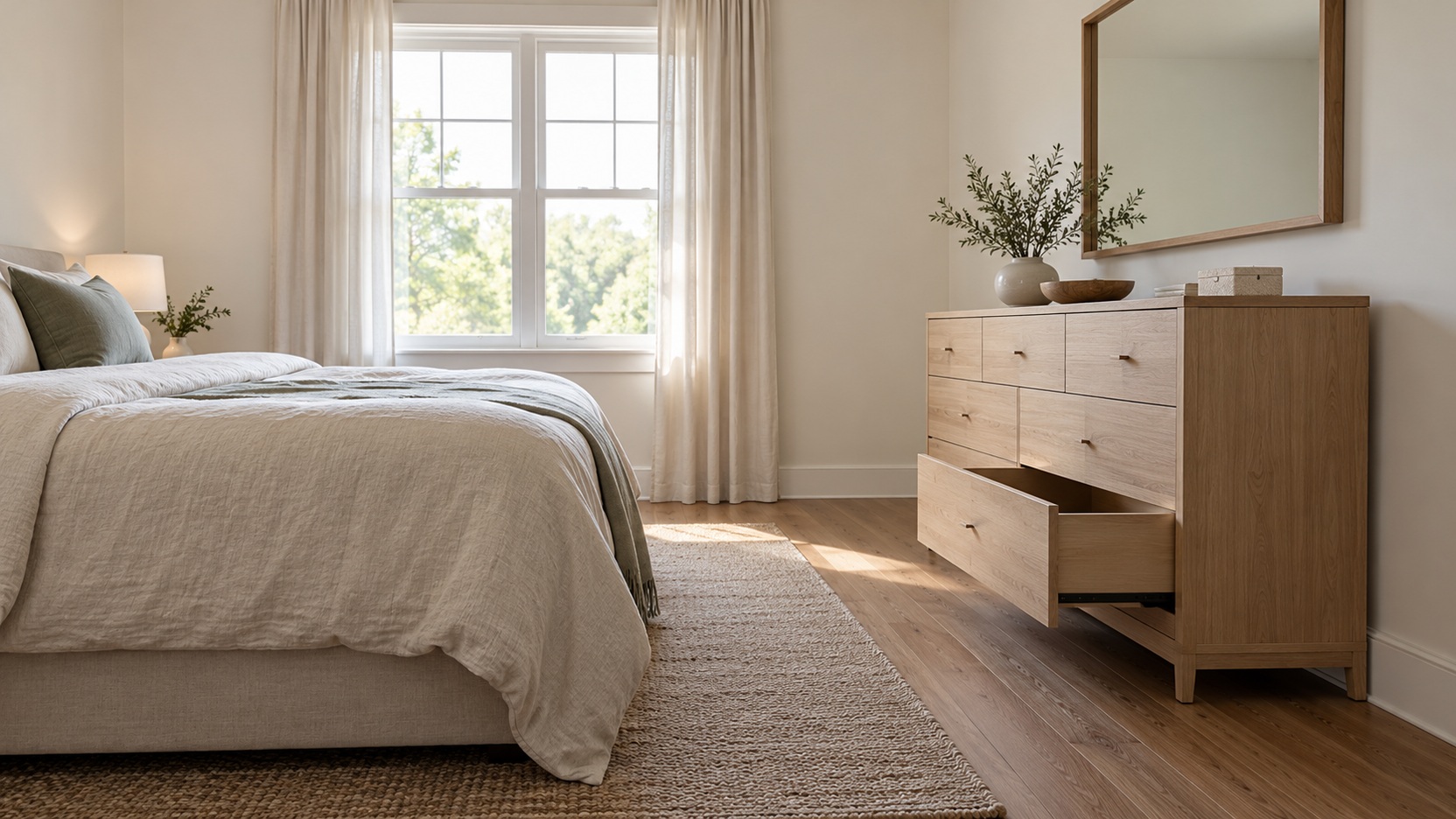
A dresser often appears with a mirror in product photography, but a mirror is a separate functional and installation decision. Check the cabinet’s suitability, the mirror’s fixing requirements, the user’s position, and the surrounding wall. Do not assume a leaning mirror is appropriate simply because it looks relaxed in an image. Follow the relevant installation guidance for the actual products.
A chest can work with a wall mirror elsewhere in the room, which may be preferable if the best grooming light or standing space is not beside the clothing storage. Separating the two functions can also keep the cabinet top clear. Compare the complete arrangement rather than treating a matching mirror as an automatic advantage of the wider form.
Fit the Drawer Mix to Specific Clothes
Small drawers can keep underwear and accessories from spreading through a large space, while larger compartments may accommodate folded trousers or knitwear. The right mix depends on how much you own in each category and how you prefer to fold. Lay out a representative arrangement before buying. A beautiful symmetrical front is less important than useful internal proportions.
Consider whether clothing needs to sit in visible rows, shallow stacks, or separate bins. A deep drawer is not automatically a benefit if it encourages several hidden layers. A narrower compartment may improve organization for one category while limiting another. Test the storage method against the candidate rather than assuming the same organizers will work in every unit.
Leave flexibility for seasonal variation without buying excessive storage for hypothetical future needs. A drawer that handles light summer items may need a different arrangement for bulky winter clothing. Some households solve that change through rotation to another storage location. Others need the cabinet to hold the complete wardrobe year-round, which changes the comparison between forms.
Check Opening Space With a Person in Front
The open drawer and the user occupy space together. Mark the likely full extension and stand where you would sort or retrieve clothing. Check the nearby bed, door, and any other opening furniture. A cabinet can fit when closed yet become uncomfortable to use if the standing position overlaps a narrow pinch point.
Try the same test for both a broad dresser and a chest. The dresser may spread activity across a longer wall, while the chest concentrates access in one vertical column. That difference can affect two people getting ready at the same time. A clear shared routine may matter more than a small difference in the amount of clothing each piece can hold.
Give Stability Equal Attention in Both Forms
Follow anchoring, assembly, and loading instructions for the actual furniture, whether it is a low dresser or a tall chest. Do not assume that a wider or heavier unit cannot tip. Suitable wall fixings and correct restraint installation are part of the setup where required. Plan for that installation before choosing a location that makes it difficult.
Keep children from climbing drawers or reaching for objects placed above them. Arrange the room so frequently wanted belongings do not create a reason to climb. Opening multiple drawers or overloading compartments may also conflict with the intended use. The product’s safety guidance should shape everyday habits as well as the initial assembly.
With secondhand furniture, check its condition, identification, and relevant recall information before use. Missing restraints or unclear assembly details deserve resolution rather than guesswork. A visually attractive used cabinet is not ready for service until it can be installed appropriately. Apply the same care to either furniture shape.
Consider How Each Form Affects the Room’s Appearance
A wide, low dresser can create a horizontal visual line that relates to the bed, while a chest adds a more vertical shape. Either may balance the room depending on the other furniture. Look at the composition from the main doorway and the bed. The aim is a comfortable relationship between forms, not a rule that small rooms always need low furniture.
Color, legs, handles, and surface finish also influence visual weight. A pale chest on visible legs may feel lighter than a dark dresser with a solid base, even if their storage capacity is similar. Judge the actual designs rather than treating the categories as fixed appearances. A simple photograph of the room can help reveal which shape already dominates the setting.
Plan for Delivery, Assembly, and Future Moves
Check the packaged and assembled dimensions against stairs, doorways, and tight turns. A wide dresser may be difficult to maneuver even when its intended wall is large enough. A tall chest may have its own handling constraints. Include the assembly space and any access needed behind the cabinet before assuming the bedroom can accommodate the installation.
Think about likely future rooms if moving is part of your plans. A narrow chest may fit more wall sections, while a lower dresser might serve another room later. These possibilities are useful only when the furniture still meets the current need. Avoid accepting a poor everyday fit solely because an imagined future use sounds flexible.
Compare complete purchase costs, including delivery, assembly where needed, and suitable installation hardware. Neither form is inherently the cheaper choice at equivalent quality and capacity. The useful value comparison includes how much accessible storage you gain and what room functions you preserve. A low price does not compensate for an arrangement that remains awkward each morning.
Use a Shared-Wardrobe Example to Clarify the Choice
Suppose two people need separate drawers for daily clothing and share a wall opposite the bed. A broad dresser with two clear drawer columns may make that division easy, provided the room allows both users to stand comfortably. If the wall also contains the room door, the same dresser could restrict access. A chest in another position might protect movement but require a different division of categories.
Work through the complete routine rather than comparing fronts alone. Identify who uses which drawers, where laundry is sorted, and whether a mirror is needed in the same location. Then test the marked footprints and opening space. The stronger option will usually emerge from these specific activities, even when both furniture forms initially appear equally suitable.
Choose the Better Arrangement, Not the Better Label
A shared wardrobe can make the difference tangible. One person may want two shallow drawers for small garments and a clear top for folding; another may need a narrower stack for clothing that already has a separate sorting surface. A broad dresser can serve the first brief while a tall chest suits the second. Compare them against those same tasks before judging which looks more substantial. The useful choice is the one whose interior and top perform the required work without taking wall width away from another essential activity.