Make a Small Shelf Arrangement Do a Clear Job
Floating shelves can make a small bedroom feel more useful when their placement is tied to a real activity. A shallow bedside landing place, a compact reading stack, or a contained display above a dresser can release space elsewhere without adding another floor-standing piece. Their clean appearance does not make every wall suitable, and a clear floor does not guarantee that the projection will stay out of the way. Start with the objects and the action you want to support, then choose the shelf depth, length, spacing, and location together. The most successful arrangement looks intentional because it has a purpose, not because it fills every available patch of wall.
A: Use a suitable ledge for a limited routine and test reach, projection, lighting, and support.
A: Only when their offsets and spacing help the actual contents and access.
A: A clear boundary and related contents with enough breathing room.
A: Yes, when they release working space without obstructing seated movement or equipment.
A: Measure the objects and test the projection at the height where people move.
A: No. Its usable shape, reach, and support must suit a real storage job.
A: Consider body movement and displaced-object risks; unsuitable collections belong elsewhere.
A: No. Assess the compatible shelf, bracket, fixings, wall, and documented loading.
A: Lengths, spacing, projection, and the approximate objects, while structural checks remain separate.
A: It releases useful space or improves a routine without creating new obstacles.
Begin With the Surface You Want to Free
Identify the crowded surface that could benefit from moving a limited collection onto the wall. A desk may need relief from supplies, a dresser from a few display objects, or a bedside from books. Choose the items deliberately before adding shelf length. This prevents the new arrangement from becoming a general overflow area with no clear limits.
Keep the original surface’s useful function visible in the plan. If the shelf releases a dresser top for sorting clothes, leave that working space available after decorating. If it clears a desk, avoid replacing the removed supplies with another permanent display. The benefit should survive ordinary use rather than disappearing as soon as the room is restyled.
Check whether a floating shelf is the best form for that job. A shallow wall surface may suit a few small objects, while heavier or more varied storage could need another system. Compare the complete support requirements and access with alternative furniture. The clean visual line is valuable only when the practical arrangement remains suitable.
Use a Bedside Ledge for a Lean Nighttime Routine
A compact wall-mounted ledge can replace a nightstand when only a few essentials need a landing place. Position it around the finished bed and the user’s reach, not an assumed standard height. Mark its projection and test sitting up, getting out of bed, and changing bedding. A small shelf should not become a sharp obstacle beside the shoulder or head.
Lighting often determines whether this arrangement works. A wall reading light or another suitable solution can leave more room on the ledge, while a broad lamp base may occupy most of it. Compare the complete setup with a small freestanding table. The strongest option supports the real bedside routine without asking the surface to hold more than it can comfortably accommodate.
Stack a Few Shelves Beside a Reading Chair
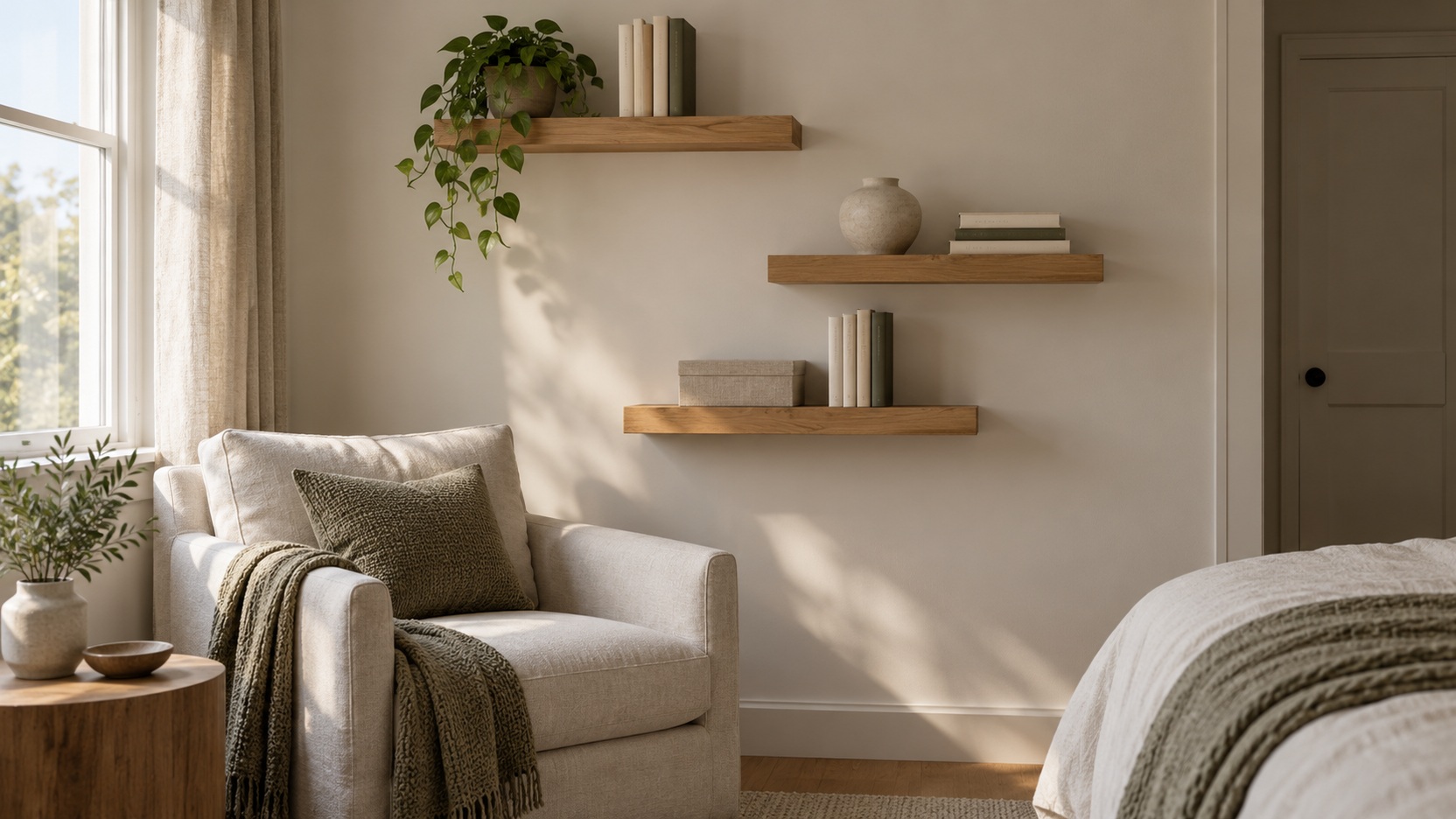
A short vertical stack can create a defined home for a manageable reading collection. Choose spacing around the actual book heights and the room needed to remove them. The lower levels can serve the active group while suitable upper positions hold occasional items. Do not count every extra level as useful if reaching it would be inconvenient.
Keep the chair, lamp, and side surface comfortable to use. A shelf above the place where your head moves may be less suitable than one to the side. Check the seated position and the route into the chair before deciding. The books should become easier to access without making the reading area feel enclosed or awkward.
Account for the real weight of the intended collection when selecting the shelf and support system. A few books can place different demands on a shelf from a lightweight decorative object. Follow the product’s loading and mounting guidance for the actual wall. Visual delicacy is not evidence of suitable capacity.
Group Shelves Above a Dresser With a Defined Boundary
A modest shelf group can use the wall above a dresser while leaving the top useful. Relate its overall width and spacing to the cabinet beneath rather than letting individual shelves spread without a clear edge. The arrangement does not need exact symmetry, but it should read as one considered area. View it from the bedroom doorway as well as close up.
Allow room for objects on the dresser and for any mirror or lighting already serving the area. Shelf placement should not obstruct those functions or encourage an overloaded top beneath it. Consider how objects will be removed and cleaned. A wall arrangement that requires reaching across delicate items may be less practical than a smaller group in another position.
Try One Longer Shelf When the Collection Is Cohesive
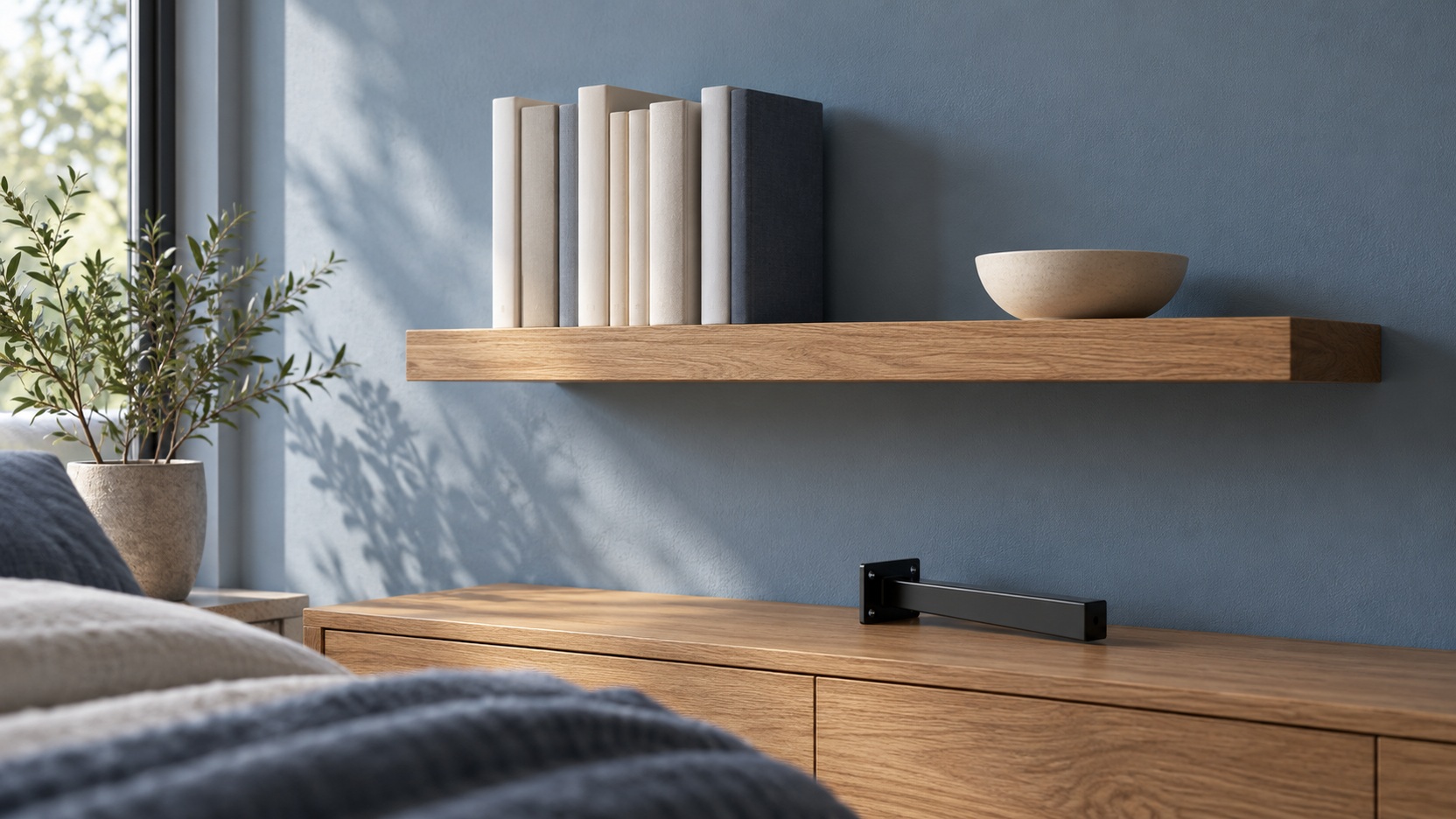
A single longer shelf can create a calm horizontal line for a small related collection. It may appear less fragmented than several short shelves, especially on a busy wall. Its length, depth, supports, and wall fixing must all suit the intended load. Do not extend a shelf beyond a system’s documented arrangement simply to achieve the preferred visual line.
Group the contents so the shelf remains readable. A few books, one vessel, and a deliberately empty section can have more clarity than many unrelated small objects. The aim is not to follow a fixed styling formula. It is to leave enough space for the actual belongings to be recognized and handled without constant rearranging.
Check how the long projection affects nearby doors and movement. A shelf can span a wall attractively while creating a collision point at one end. Mark both ends and the front edge before installation. The full outline should cooperate with the room, not only its central portion.
Use Staggering to Fit Objects, Not to Add Random Motion
Staggered shelves can accommodate different object heights and make a compact wall area more flexible. Begin with the contents and a clear outer boundary so the offsets have a reason. Random differences in length and height can make a small room feel busier. A limited number of deliberate changes is often easier to compose than a large scattered arrangement.
Leave enough space between levels to lift items out normally. A close gap may look tidy when the shelves are empty but make the finished storage awkward. Test with representative objects before fixing the positions. The most useful spacing is the one that makes the collection accessible while preserving the wall’s visual calm.
Give a Bedroom Desk a Small Vertical Storage Zone
Floating shelves near a desk can hold light supplies or reference material that would otherwise occupy working space. Position the most used items where the seated user can reach them appropriately. Keep the screen, task light, and head movement clear. A shelf beside the main work area may serve better than one directly over the user’s most active position.
Contain work-related belongings so the bedroom can feel less occupied by work after the session ends. A modest box or a small clearly assigned shelf area may be enough. Avoid adding storage equipment before the workflow is understood. The arrangement should reduce the number of loose items competing for attention rather than create another complex system to maintain.
Include cable access if devices are involved, but do not improvise a hidden powered enclosure. Equipment needs to be used according to its instructions, including ventilation and connection requirements. A simple shelf should not obscure those practical needs. If the intended setup is complicated, another storage form may provide more appropriate support.
Choose Shelf Depth Around the Objects and the Body
A shallow shelf can be useful for small display objects or a limited landing place, while larger books and containers need more support area. Measure the contents rather than selecting depth from appearance alone. Objects should sit securely within the intended arrangement. A narrow shelf is not efficient if the belongings overhang awkwardly or cannot be removed comfortably.
Consider the projection at the height where people move, not just the floor below it. A shelf near a door, pillow, or seated position may intrude into personal space. Mark the depth with a temporary outline and rehearse the normal activity. Clear floor area and clear body movement are related but different benefits.
Use Corners Only When Their Geometry Helps
A corner arrangement can make a small recess useful, but angled shelves may offer less practical surface than their dimensions suggest. Test the objects and the reach into the back. A few suitable items can work well, while a deep crowded corner can hide belongings. Choose the form because it serves a collection, not because the corner looks empty.
Confirm the actual mounting requirements for the two walls and selected system. Meeting two surfaces does not automatically make a shelf stronger or remove the need for suitable fixings. Follow the product’s instructions and address uncertainty before installation. The shape of the room is only one part of the support arrangement.
Check surrounding curtains, doors, and furniture from their normal positions. A corner shelf can be easy to overlook when concentrating on the center of the room. Its front edge may still project into a route. A successful corner solution remains accessible and unobtrusive during ordinary movement.
Keep Sleeping Positions Free of Unsuitable Overhead Storage
Before placing shelves around a bed, consider sitting up, reaching, and the consequences of an object being displaced. Heavy or unstable collections may belong on another wall or in different storage. A shelf arrangement should support a restful, usable bed area rather than create a worry above the pillows. Other locations can often serve the same objects more comfortably.
Do not assume a successful installation makes every content arrangement appropriate. The shelf’s load, the stability of the objects, and the position of people still matter. Keep the specific use within the product guidance and the room’s practical needs. A restrained arrangement can be both more useful and easier to live with than an ambitious overhead display.
Match the Finish Without Making the Room Too Uniform
A wall-related finish can make shelves feel quieter, while visible wood can connect them with existing furniture. Consider their thickness and edge profile along with color. Several chunky shelves may look more substantial than expected on a small wall. Choose a scale that suits the collection and the surrounding pieces rather than assuming all floating shelves have the same visual lightness.
Exact matching is unnecessary when materials have a clear relationship. A warm wood shelf can sit comfortably near another warm finish without being identical. Use actual samples or reliable product details where the color relationship matters. Screen images can guide the direction, but the installed room will show the real surfaces together.
Let the contents contribute to the final balance. A very quiet shelf can support more varied objects, while a strongly grained or contrasting shelf may need a simpler collection. View the arrangement from the bed, doorway, and active area it serves. The most important perspective is the one you experience regularly.
Test the Layout Before Committing to Holes
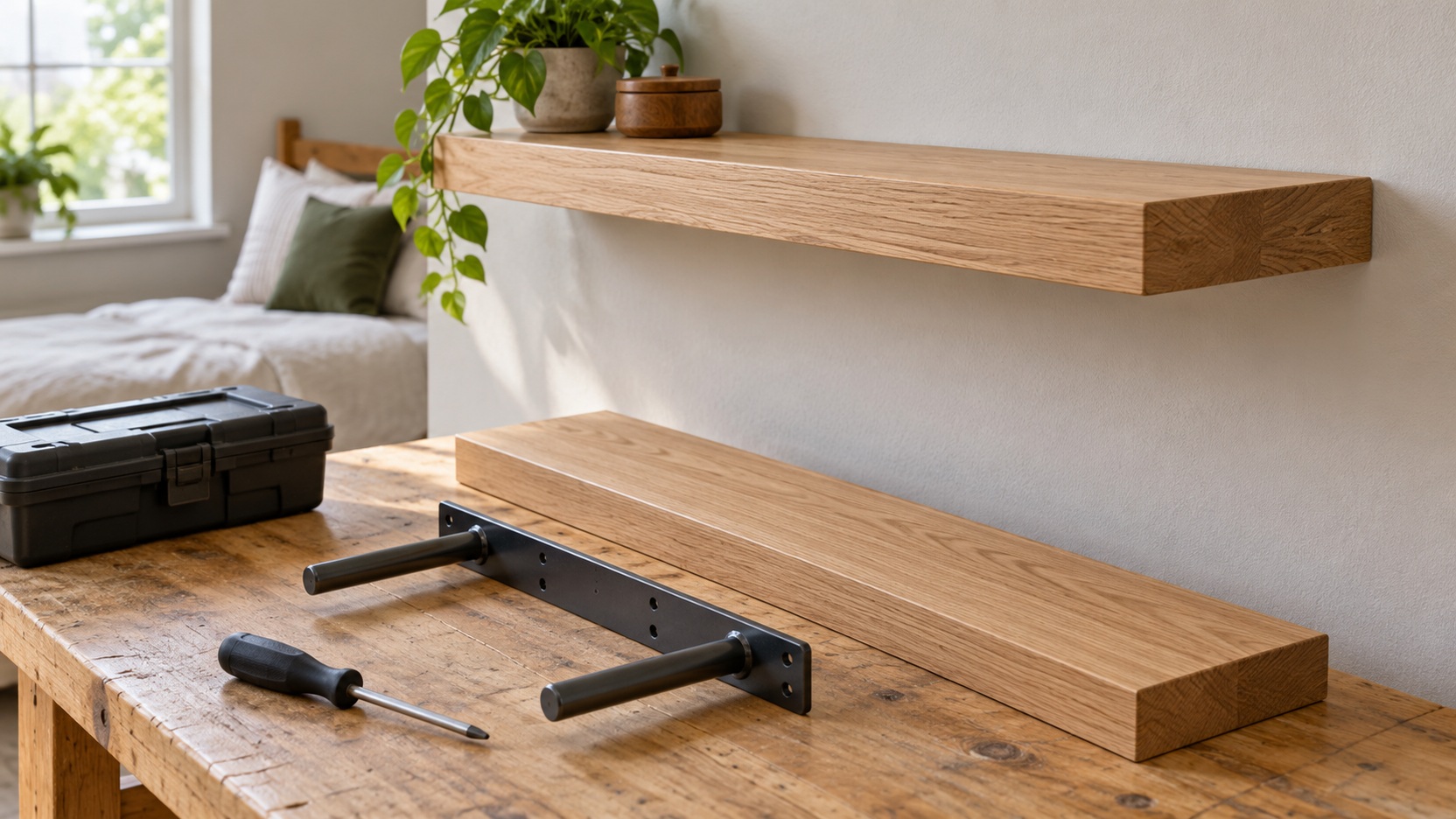
Use paper outlines or suitable temporary marks to compare shelf lengths, depths, and spacing. Include the objects’ approximate heights, not just the boards. This helps reveal crowding and access problems before installation begins. Keep the test separate from the structural assessment; an attractive outline does not prove a fixing method is suitable.
Three compositions illustrate different uses of floating shelves. One restrained bedside ledge holds only the evening essentials, with useful reading light handled separately. A longer shelf above a dresser groups a few framed objects while leaving the dresser top available for sorting. At a desk, two appropriately supported shelves can separate current references from occasional supplies. Their positions follow the contents and the person using them. None needs staggered offsets simply for variety, and none should be chosen before its projection and complete mounting arrangement suit the actual location.