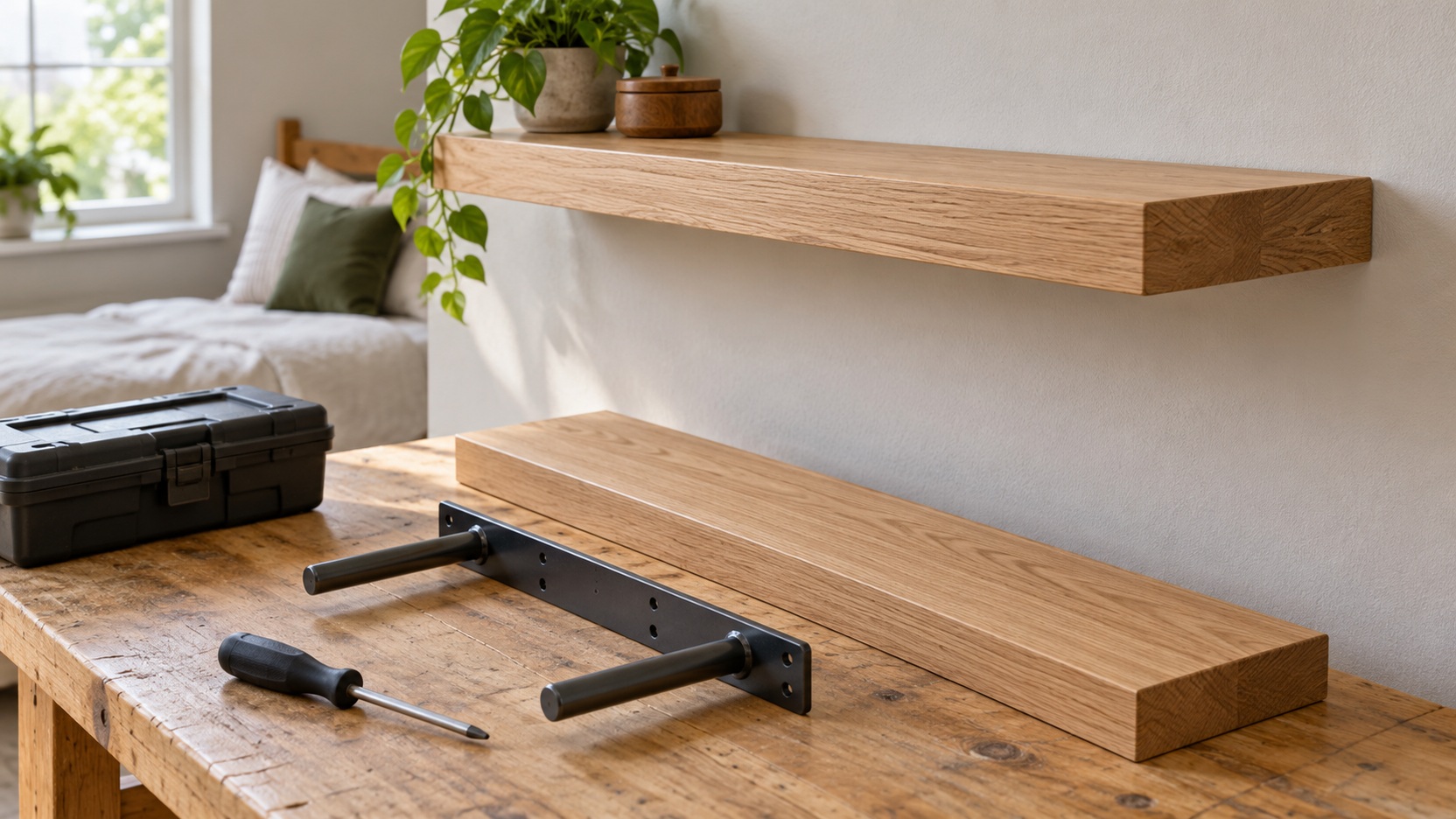
Choose Floating Shelves as a Supported Storage System
The best floating shelf for a bedroom is the one whose size, support, and finish suit a clearly defined collection in an appropriate location. A thick board is not automatically strong, a high anchor rating is not a complete shelf rating, and a low price may exclude the hardware or work needed to install it. Start with what you want to store and where you will use it, then compare complete systems rather than attractive boards alone. A light decorative ledge, a book shelf, and a wall-mounted bedside surface can place different demands on the same room. The useful purchase gives you dependable, reachable storage without paying for capacity or visual bulk that the intended job does not require.
A: Its complete support, size, placement, and cost match a defined collection and activity.
A: No. Assess the documented complete system rather than its appearance.
A: Only after checking their installation, distribution, and product conditions.
A: No. Construction, brackets, connections, and wall suitability still determine the usable arrangement.
A: All required components, suitable fixings, delivery, and any installation assistance.
A: It may be the most visible face from a bed or chair.
A: Use documented compatibility rather than a visual fit assumption.
A: When extra length adds no useful capacity or conflicts with the wall and room.
A: Reassess the complete loading and installation before changing its role.
A: The product identity, instructions, relevant fixing details, and documented load conditions.
Define the Collection Before Comparing Products
Bring together representative objects and measure their depth, height, and combined footprint. Books may need more support area than a few small decorative pieces, while a container adds its own weight and handling requirements. Leave room to take objects off the shelf normally. A board that barely accepts the collection may be awkward once those belongings need cleaning or rearranging.
Decide whether the shelf is active storage or primarily display. Items used every day deserve comfortable reach, while suitable occasional objects can occupy a less immediate position. That distinction can change the ideal length and height considerably. Buying the longest shelf available is rarely a useful starting point when the collection and activity are still unclear.
Keep likely changes in mind without treating the shelf as unlimited future storage. A small display may later attract books simply because space remains. Choose a system whose documented use fits the planned role, then reassess if the contents change. Good value includes a clear understanding of the storage you are actually buying.
Read Capacity With Its Installation Conditions
A published load allowance may depend on the wall type, fixing arrangement, distribution of contents, and exact shelf configuration. Read those conditions alongside the number. Two products with similar advertised capacities may have been described for different installation circumstances. Compare them only after checking whether their stated requirements can be met in your bedroom.
Do not create an assumed system capacity by adding individual anchor ratings together. The bracket, board, wall, and connections work as a complete arrangement. If the documentation is unclear, seek a specific answer from the supplier or an appropriate installer. A useful specification explains the conditions under which the shelf is intended to perform.
Compare Concealed Brackets as Carefully as the Shelf
Concealed supports vary in their attachment pattern, projection, engagement with the board, and retention method. A broad mounting plate and a pair of rods are not interchangeable with every shelf that appears to fit them. Check the components supplied for the exact model. Compatibility should be documented rather than inferred from a similar diameter or convenient screw position.
Look for clear instructions explaining how the board seats and locks into place. Retaining screws, clips, or other parts may be important even when the shelf initially feels secure. The clean appearance comes from hiding a functioning connection, not from eliminating it. A system that is straightforward to understand can be easier to assess before purchase and maintain afterward.
Consider installation access as well as the finished appearance. Some retaining parts need room beneath or beside the shelf, which can affect closely stacked layouts. A shelf positioned too near another surface may be difficult to fit correctly. Check the installation sequence before choosing a spacing that only works in a styled image.
Distinguish Material Construction From Surface Appearance
Floating shelves may use solid wood, engineered panels, hollow constructions, metal, or combinations of materials. Their performance depends on the design and support system rather than the material name alone. A lightweight hollow shelf can be appropriate for its documented role, while a substantial solid-wood board still needs compatible brackets and wall fixings. Compare the complete product’s intended use.
Read finish descriptions carefully if appearance and repair options matter. A printed wood-effect surface differs from a real wood veneer or a solid board, even when photographs show similar grain. Edges and underside details can reveal how the shelf will look from bed or a seated position. Those views may matter more than the top surface in a high installation.
Choose Depth Around Both Objects and Movement
Measure the usable surface needed by the collection rather than assuming a deeper shelf always offers better value. Excess projection can crowd a small bedroom at shoulder or head height while leaving the floor apparently clear. Test the proposed outline near doors, chairs, and the bed. A suitable depth supports objects securely without intruding into normal movement.
Check the actual front-to-back space after any lip, edge treatment, or unusual profile is considered. A small ledge may be designed for a specific kind of display rather than general storage. Choose according to its intended role. An attractive narrow shelf is not an efficient purchase if the assigned belongings overhang or are difficult to handle.
For a bedside position, compare the shelf with the lamp and other essential objects together. A wall reading light may release surface area, while a broad lamp base can consume most of a compact ledge. The shelf should be evaluated as part of that arrangement. A slightly different lighting choice may provide more benefit than increasing the shelf depth into the route beside the bed.
Use Length to Create a Clear Storage Boundary
A short shelf can define a focused bedside or reading collection; a longer one can connect a wider group across a wall. Relate the length to the furniture and contents beneath it, and verify the documented support arrangement for that exact size. Do not extend or combine boards beyond the approved configuration merely to obtain a continuous line. The desired appearance must remain compatible with the system you select.
Evaluate the Wall Before Committing to the Purchase
The mounting location needs an appropriate assessment of construction, available support, and concealed services. A painted surface does not establish the material behind it. Where the shelf system requires particular structural support, that requirement should guide the location. If the room cannot accommodate the selected method, compare another suitable system instead of assuming a convenient anchor will solve the mismatch.
Include permissions and access constraints where relevant. A rental may permit some changes and restrict others, while a high or awkward location may require appropriate installation help. These conditions influence the complete cost and practicality of the product. Resolve them before purchasing a shelf whose main attraction is a location you cannot appropriately use.
Keep uncertainty separate from decorative planning. Paper outlines can show whether a layout looks balanced, but they cannot establish the safety of a fixing method. Both decisions matter, and neither should replace the other. A good shelf purchase has a convincing visual role and a support arrangement that can actually be installed as intended.
Count the Cost of the Installed Result
Compare what is included in each price: board, bracket, retention parts, compatible fixings where specified, delivery, and any installation assistance. Some products leave wall fixings to be selected separately for the actual substrate. A low starting price may therefore represent only part of the arrangement. The useful comparison is the complete cost of the working shelf.
Consider how much usable storage the selected size provides rather than comparing price by length alone. A cheaper long shelf may be unnecessary for a limited collection or impractical on the available wall. A shorter system that fits and can be installed appropriately may offer better value. The purchase should solve a specific need with an understandable total commitment.
Inspect the Finish for Bedroom Use
Think about the contact the surface will receive. A bedside shelf may encounter a drink, skincare products, and regular wiping, while a display shelf may mainly collect dust. Read the actual care instructions and check whether the edges and surface suit that routine. A decorative finish can be perfectly appropriate when its limitations are understood and respected.
Look at visible end caps, underside holes, and the transition to the wall. These details can be prominent from a bed or chair even if a listing photograph hides them. Choose a finish and profile that look considered from those everyday views. A shelf’s value includes how well it fits the room after the mounting hardware disappears.
Inspect the delivered pieces before installation and document damage promptly. A bent bracket, chipped edge, or missing retention component deserves attention before it is incorporated into the wall. Do not treat a low price as a reason to improvise around damaged parts. The finished shelf should match the product’s intended construction.
Consider Adjustment and Replacement Information
Keep the product identification and instructions where you can find them. They can clarify later care, component replacement, or reassessment if the storage role changes. A shelf moved to another wall needs a new installation decision because the construction and conditions may differ. The previous successful fit does not establish suitability everywhere else.
Ask about support or replacement components before buying if those details influence the decision. A clearly identified system is easier to discuss with a supplier than an anonymous board and bracket combination. This does not mean complexity is desirable. It means the product’s ownership path should be understandable beyond the first installation day.
Choose the Best Form for the Actual Bedroom
For a few lightweight objects, a compact ledge may be sufficient; for books, prioritize documented support and usable depth; for a bedside, assess reach and the whole lamp arrangement. These forms serve different jobs rather than forming one universal ranking. Compare the finalists against the same collection and wall conditions. The strongest choice will make its tradeoffs clear.
A floating shelf should earn its place by releasing another surface, grouping a collection, or improving a routine. If it mainly adds a new display area to maintain, reconsider the need before purchasing more length or hardware. A restrained system can be a more effective addition than an ambitious arrangement. Useful storage remains the measure of value.
Once fitted, load and use the shelf according to its documented conditions, and watch for unexpected movement or damage. Reassess before changing to heavier contents. The best purchase continues to be a complete supported system throughout its use, with a size and location that still make sense for the bedroom.
Compare One Shelf With Another Storage Method
Suppose the intended collection is a short row of books beside a chair. Compare the installed floating shelf with a small bookcase or a suitable existing cabinet surface. The wall option may release floor space, but it also introduces fixing requirements and a particular reach. The alternative may be easier to relocate while occupying a larger footprint. Use the same collection in each comparison so the preferred appearance does not hide a practical mismatch.
Compare two suitable shelf proposals through the same ten books rather than two attractive catalog photographs. One may provide only the documented capacity for a light display; another may be intended for the collection under specified mounting conditions. If the first cannot support the job, its lower price is irrelevant to this comparison. If both qualify, usable length, projection, finish care, and complete fitting cost can settle the choice. A clear product role makes the shortlist smaller without pretending that a thick board or an expensive finish proves the whole installation is better.