Fall Comfort Starts Where You Settle In
A room begins to feel like fall when it becomes somewhere you want to linger: the chair has a soft throw within reach, the light beside it feels gentle, and the colors have enough depth to hold their own on a gray afternoon. Pumpkins and leaf garlands can be enjoyable additions, but they are only one way to express the season. The most satisfying autumn rooms usually combine useful comfort with a few changes in texture, color, and natural shape. You can create that feeling in a neutral apartment, a colorful family room, or a small bedroom without replacing furniture or filling every shelf. Start with the parts of the home you use during longer evenings, then build a fall atmosphere around the way you actually relax, cook, gather, and come in from the weather.
A: Try a muted warm accent such as rust, camel, or plum and check it in the room's evening light.
A: Yes. Texture, deeper color, comfortable seating, and suitable lamps can establish the season.
A: Use color and material changes while keeping bedding and seating layers light enough for comfort.
A: Use the number people enjoy using and can reset easily; one may be sufficient.
A: Consider allergies, reach, upkeep, and pets before choosing natural or artificial materials.
A: Choose one main silhouette and remove small accessories that compete with it.
A: Keep the centerpiece low, contained, and movable so the surface remains useful.
A: Only if a change serves your room; smaller textiles often provide enough seasonal difference.
A: Certainly. Change its setting or contents if the vessel suits the room's fall materials.
A: Consider the room's existing visual weight and the amount of contrast you enjoy.
Find Your Version of an Autumn Palette
Look first at the colors your room already contains. A brown leather sofa might welcome olive and cream, while a gray sectional could work with rust, muted plum, or camel. Blue upholstery can feel autumnal beside tobacco brown or a warm ivory throw. Choosing accents in relation to existing furniture produces a more settled effect than introducing a traditional orange palette that has nothing else to connect with.
Decide how much contrast you enjoy. A low-contrast room of oatmeal, mushroom, and pale wood can feel cozy through texture, while burgundy or forest green adds a more enclosed, dramatic mood. Neither approach requires coating the entire room in a seasonal color. Try a borrowed textile or a small sample of fabric in the intended position before buying larger pieces, and see how it looks in your evening lighting.
Make One Seat Especially Inviting
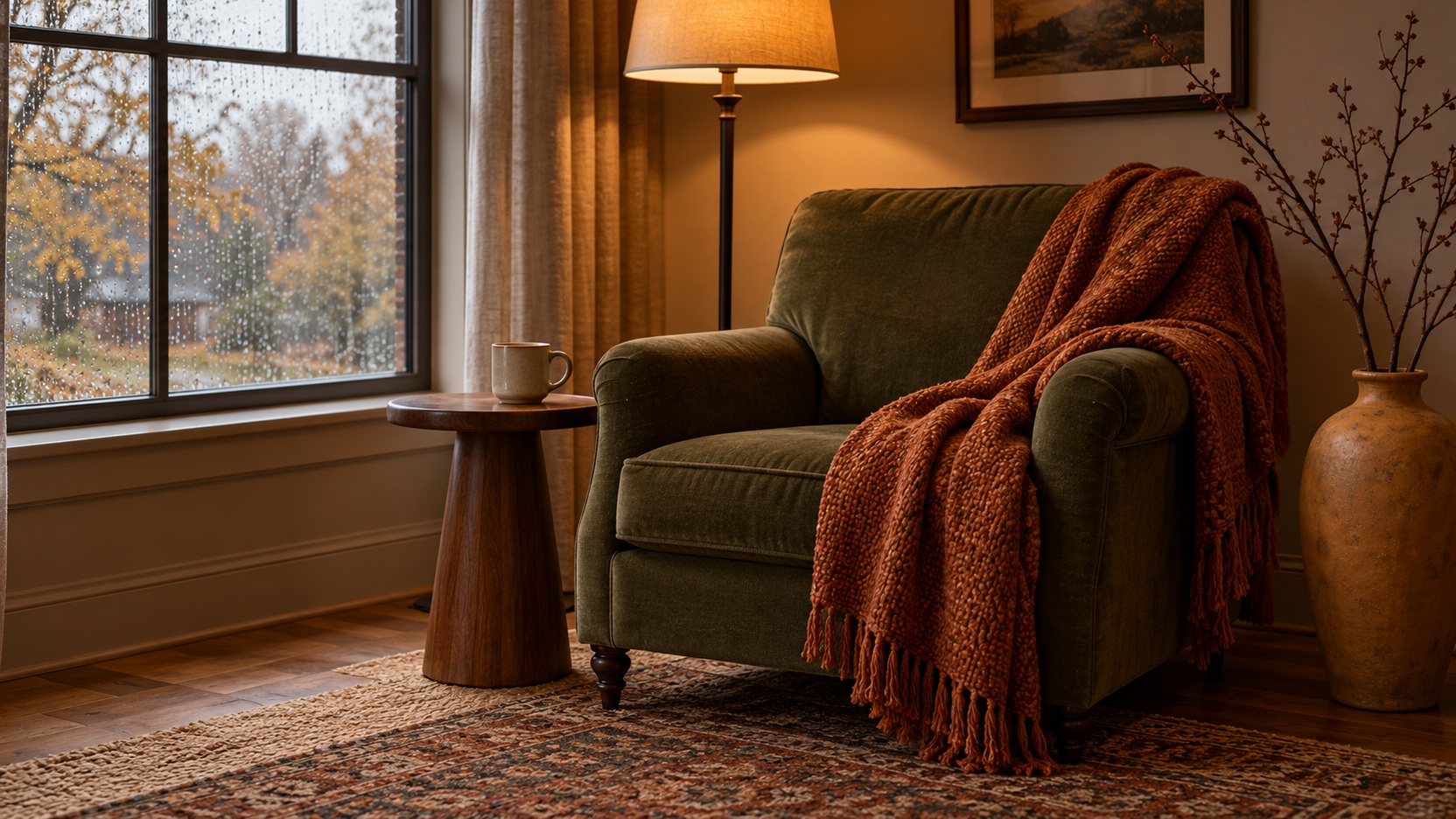
Choose a chair or one end of the sofa and improve the experience of sitting there. Put a lamp where it serves reading, give a mug a stable landing place, and add a throw that feels pleasant against your skin. A beautiful blanket that sheds heavily or needs care you dislike may be less useful than a simpler washable one. Practical comfort makes this corner feel seasonal every day, even when no decorative objects are present.
Use cushions to support the position in which you actually sit. A small lumbar cushion might be more comfortable than a tall stack of oversized squares, especially on a shallow chair. Mix a smooth fabric with something more tactile if the room needs depth. You do not need several competing textures; a distinct woven cover beside familiar upholstery can be enough to register the change.
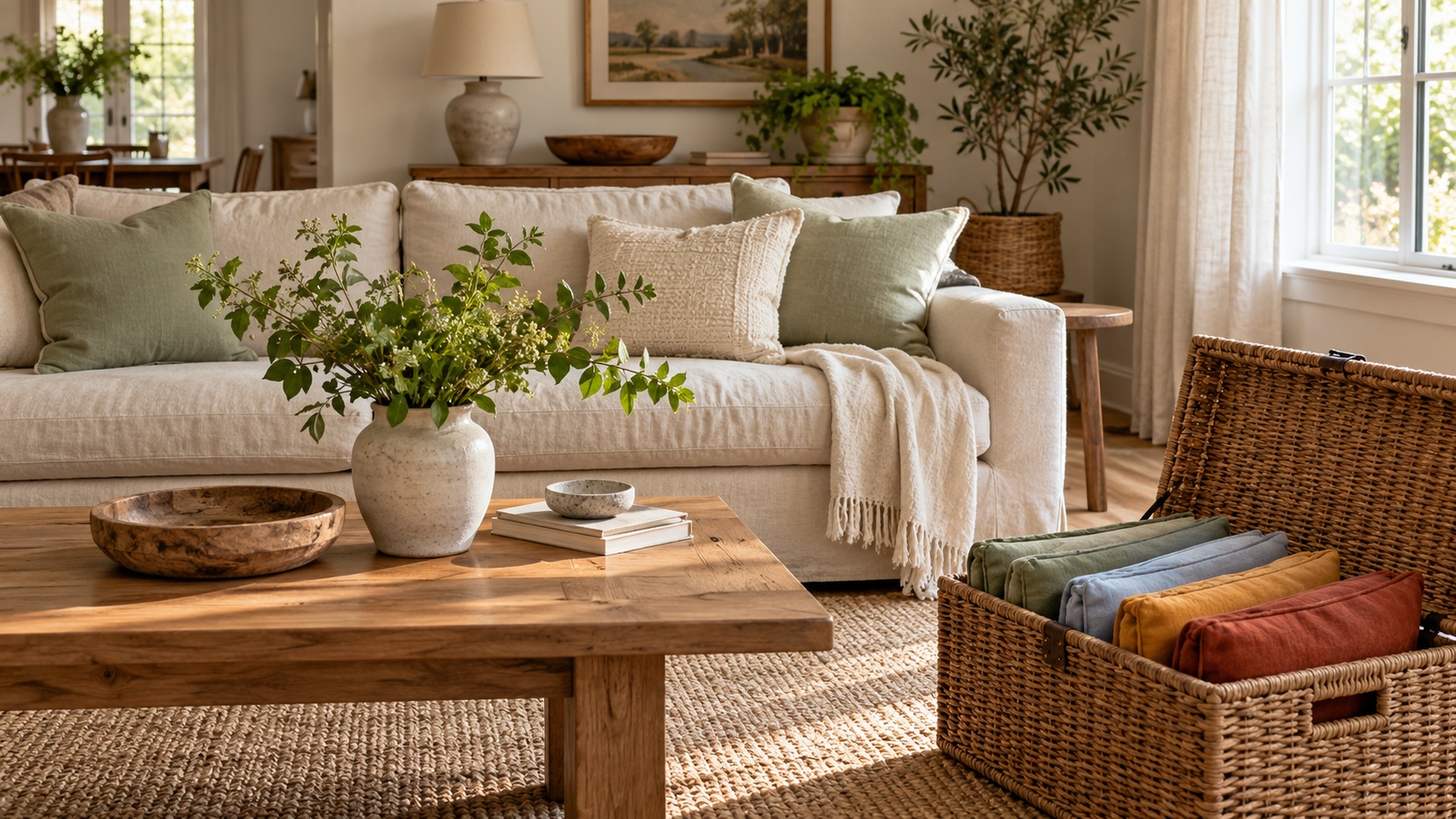
Keep the arrangement easy to reset. A basket can hold a folded throw if there is room for it without narrowing the walking route. On a small sofa, one useful blanket may be better than a decorative pile that must move every time someone sits down. The finished corner should invite use rather than suggest that its careful styling ought to remain untouched.
Use Texture Before Adding More Objects
Autumn texture works at several scales. A large woven textile changes how a sofa reads across the room, while a matte ceramic bowl adds interest closer up. Wood grain, brushed fabric, ribbed glass, and nubby upholstery all reflect light differently. Choose a few complementary surfaces and let the differences show, rather than collecting so many textured accessories that their individual qualities disappear.
Balance the room’s existing weight. If you already have a dark rug, patterned curtains, and a substantial wooden coffee table, additional heavy layers may feel crowded. A pale throw or a simple ceramic vase could create warmth with less visual bulk. In a spare white room, deeper color and a more substantial textile may have room to make a stronger contribution.
Arrange Branches and Harvest Shapes With Restraint
Natural materials offer irregular shapes that soften straight furniture lines. A few branches in a stable vessel can give a console height, while a shallow bowl of small gourds introduces a lower, broader shape. Think about silhouette before quantity. One generous arrangement often reads more clearly than several small bunches distributed along the same shelf, especially when viewed from the room’s doorway.
Choose materials suitable for your home and inspect anything brought indoors. Use a protective layer beneath vessels, keep damp materials off vulnerable finishes, and remove organic decorations when they deteriorate. If you gather branches, use material you are permitted to take and avoid damaging living plants. Artificial foliage is an option when it better suits allergies, pets, or the amount of upkeep you want.
Leave space around the natural element so its shape remains visible. A branch arrangement does not also need a garland, several signs, and a row of miniature ornaments at its base. If you enjoy a fuller harvest display, contain it in a defined area and vary heights deliberately. The boundary helps an abundant arrangement feel like a focal point rather than an accumulation spreading through the room.
Adapt the Entryway to Cooler, Wetter Days
A welcoming fall entrance should handle the season’s practical demands. Make room for the shoes, light jackets, or umbrellas that begin to appear, and keep the door’s swing clear. An attractive wreath can provide most of the decorative change outside. Choose its materials and attachments for the exposure and the door surface, and check that it does not obstruct the handle or rub against the frame.
Indoors, a shallow bowl or small arrangement can acknowledge autumn without taking over the place where keys and bags land. Use containers that can be moved for cleaning, especially where damp footwear brings dirt inside. A display that remains tidy through repeated arrivals feels more welcoming than a larger one that must constantly be rescued from everyday traffic.
Make Evening Light Part of the Decoration
Longer evenings reveal whether a room relies too heavily on one overhead fixture. Turn the main light off briefly and see which activities lose adequate light. A lamp beside a reading chair, another near the far end of the sofa, or suitable task lighting near food preparation may solve different problems. Their placement can give the room depth and make it comfortable without making every corner equally bright.
Notice how existing bulbs work together before buying replacements. Strongly different light colors may make adjacent areas feel disconnected, although some variation can be pleasant. A shade that shields the direct view of a bulb may improve comfort more than simply choosing a dimmer lamp. Test from a seated position, where glare and reflections can be different from the standing view.
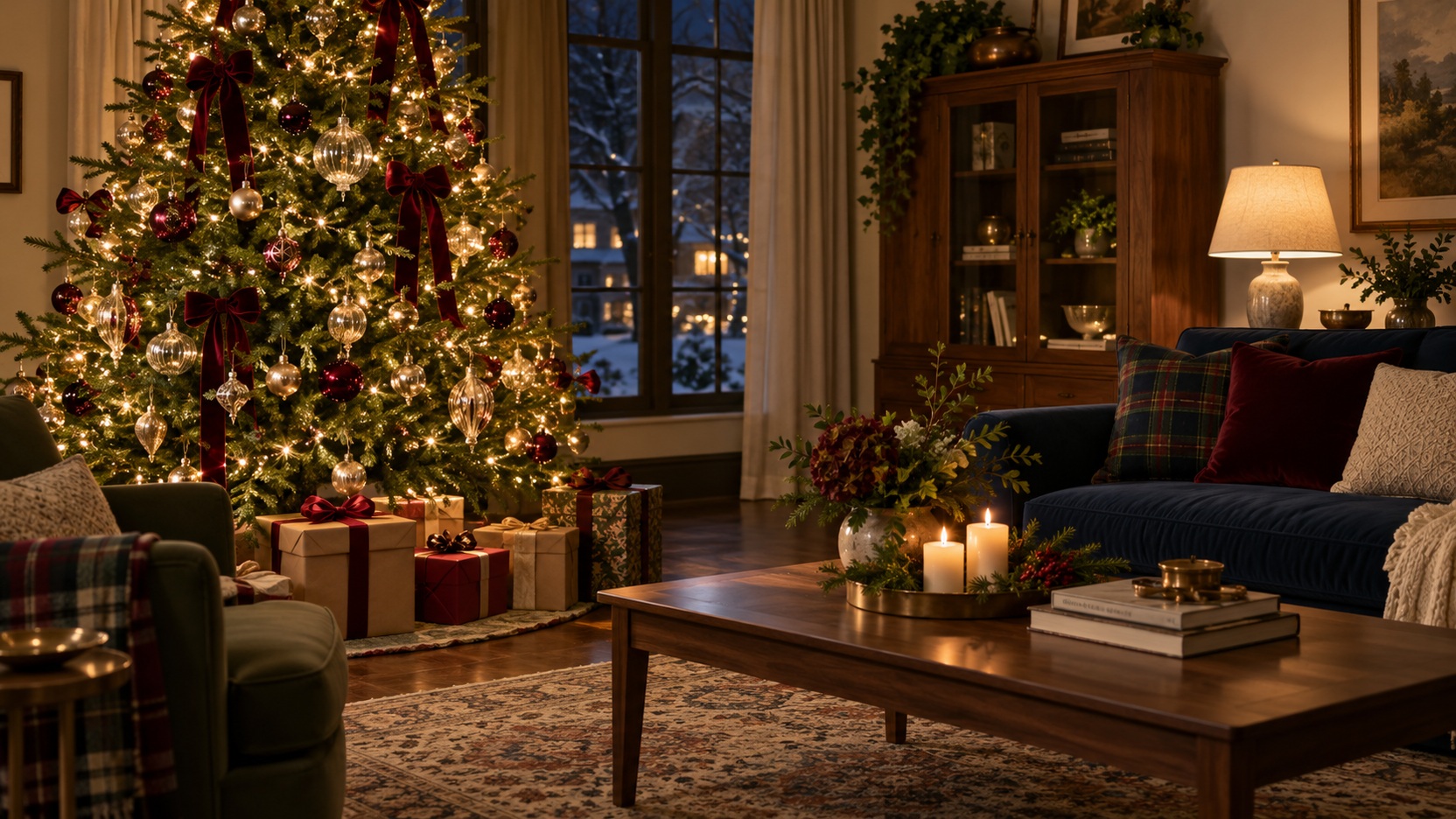
If candlelight is part of your autumn routine, use stable holders and keep flames away from combustible decorations, loose fabric, and overhanging branches. Leave enough clear space around each holder so ordinary movement cannot bring nearby materials into contact with the flame. Flameless options can provide a similar decorative effect where open flames are unsuitable. Dried branches and fabric belong away from heaters and other heat sources regardless of whether a candle is present.
Give the Bedroom Warmth in Adjustable Layers
Bedrooms can shift toward fall through a coverlet, a different cushion cover, or a blanket folded at the foot of the bed. Think in adjustable layers, especially where warm afternoons and cool nights alternate. A thick decorative stack can look inviting but make the bed cumbersome to use. Keep the layers you actually want at night easy to reach and the extra display pieces few enough to put away simply.
Color can do part of the work without increasing warmth. A deep olive cover or muted terracotta throw may change the room’s mood even in a climate where heavy bedding is unnecessary. Check care labels before mixing new textiles into your laundry routine. Seasonal comfort becomes much easier to maintain when the chosen fabrics suit the cleaning habits and storage space you already have.
Set an Autumn Table That Can Stay in Use
For a dining table, begin with the space you need for everyday meals rather than the largest centerpiece that will fit. A short runner, a low vessel, and a restrained group of seasonal objects can establish the mood while leaving room for plates. Choose a setup that can stay for ordinary dinners or move easily to a sideboard. That flexibility is especially valuable in a home where the table also supports homework, projects, or working from home.
Bring warmth through materials already compatible with the room. Wooden serving pieces, plain ceramic dishes, or fabric napkins can feel autumnal without carrying a leaf motif. If you want pumpkins, consider their scale beside the tableware rather than automatically buying several sizes. A small number of well-positioned shapes may give the table more character than a continuous row that interrupts conversation or serving.
Look at the arrangement from the actual seats. Tall stems can obscure faces, and a beautiful bowl may occupy the easiest place to pass dishes. Shift decorative pieces toward the ends or use a tray to gather them for quick removal. A fall table feels welcoming when guests can settle in naturally and the person serving does not have to dismantle the display around them.
Keep the Collection Personal and Manageable
Before buying autumn decorations, bring together the pieces you already own that could suit the mood. A pottery bowl from another room, a brown cushion stored with winter textiles, or an old landscape print may be more distinctive than a new themed accessory. Set out only what contributes something different. Repetition can create rhythm, but several objects performing exactly the same role often make a small room feel busy.
Give new purchases a clear destination and a realistic storage plan. A large seasonal wreath needs protection when it is put away, while cushion covers can occupy very little space if they fit existing inserts. It is reasonable to choose fewer decorations when storage is tight. The goal is an autumn home you enjoy living in, with comfortable places to sit and familiar belongings made newly visible by a thoughtful change around them.
Build a Weekend Refresh Around What Is Missing
For a manageable first refresh, choose the room where you spend the most evening time and remove the accessories that no longer feel right there. Clean the exposed surfaces before trying new arrangements. Then identify a specific gap: perhaps the chair lacks a blanket, the table needs a lower centerpiece, or the corner is poorly lit. A defined problem gives your effort a useful direction.
Bring in one change at a time and view it from across the room. A rust throw may supply all the warmth the seating area needs, leaving the shelves free of additional seasonal objects. If the room still feels flat, try a different material before introducing another strong color. Slow additions make it easier to recognize the point where the room feels complete.
One fall arrangement could pair a blue sofa with camel cushions, an olive throw, and a broad pottery bowl holding a few gourds. The camel links the cool upholstery to existing timber, while olive supplies depth without another large orange surface. A reading lamp beside the sofa makes the textile change useful after dark. Elsewhere, an ordinary coat hook and a suitable shoe tray welcome the practical arrival of cooler weather. This is a complete autumn direction built from a few connected choices, rather than a demand to decorate every available shelf.