Make Christmas Feel Like Your Home
There is a particular pleasure in seeing the house after the Christmas lights come on for the first time: familiar furniture looks different, treasured ornaments return, and an ordinary evening takes on a sense of occasion. That feeling rarely depends on decorating every available surface. It comes from a few choices working together—the tree’s position, the color of the lights, a welcoming entrance, and details that mean something to the people who live there. A magical Christmas home can be quiet or exuberant, traditional or unexpected, but it should still make space for meals, conversation, pets, children, and the routines that continue through December. Plan the atmosphere first, then let the decorations support it, so the finished rooms feel inviting throughout the season rather than impressive for only one photograph.
A: Yes, if you enjoy the combined effect; test them together in the actual room first.
A: Use their variety as the story and connect them with a recurring color or ribbon.
A: Choose a position that preserves exits, heat clearances, and the normal seating route.
A: It can coordinate through a few shared colors while keeping distinctive seasonal pieces.
A: A cabinet or sideboard can perform the same visual role with suitable clearance.
A: Keep its main mass low enough for seated guests to see one another comfortably.
A: No. Tree lights, shaded lamps, and flameless candles can create an inviting glow.
A: Only if the household enjoys them; quieter rooms can remain restful.
A: Make room for inherited, handmade, and memory-filled objects you enjoy seeing each year.
A: Save useful layout photographs and practical changes you want to remember next season.
Decide What Kind of Christmas You Want to See
Before opening the storage boxes, choose a few words for the feeling you want. Perhaps it is candlelit and nostalgic, cheerful and colorful, or woodland-inspired and relaxed. These descriptions are more useful than a rigid shopping theme because they help you assess what you already own. An old collection of mismatched ornaments may fit a nostalgic room beautifully, even if it would never appear together in a coordinated retail display.
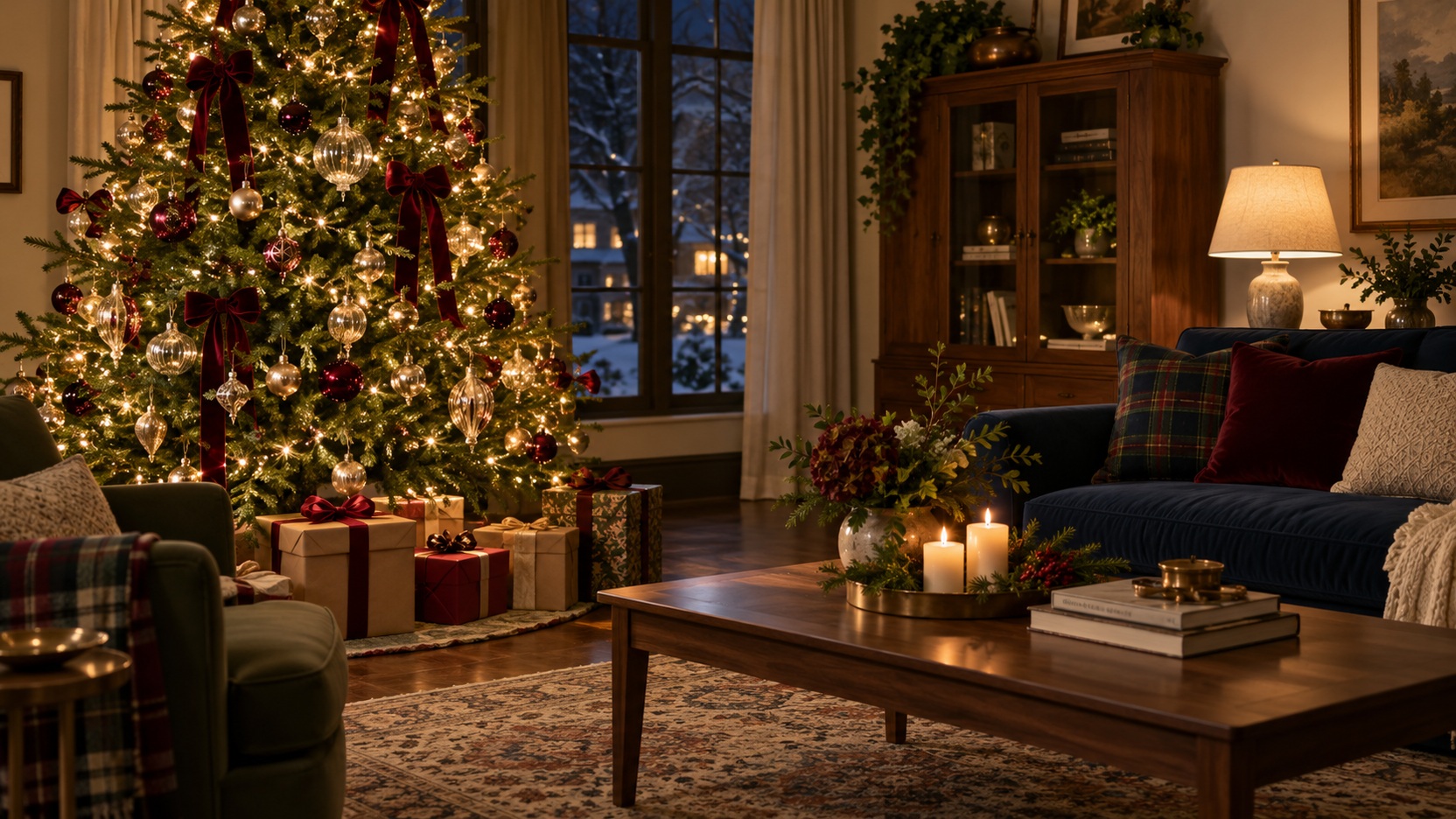
Look at the room’s permanent colors before choosing the decorative palette. Deep green can work with blue upholstery, while burgundy may sit comfortably beside warm brown furniture. Metallic finishes can link otherwise different pieces, but they do not need to match perfectly. Choosing one dominant direction gives you room to include sentimental exceptions without making the room feel accidental.
Consider how Christmas will actually be spent at home. A household hosting long dinners may want to concentrate on the table and dining-room lighting. A family that gathers for films might care more about the tree and comfortable seating. Put the most time and money into the views and spaces people will enjoy repeatedly, rather than decorating an unused room simply because it has an empty corner.
Give the Tree a Position That Works After Decorating
Measure the tree’s intended space before buying or assembling it. Allow for its full width, the stand, the topper, nearby furniture, and the route people use to cross the room. A tree that technically fits can still make a room awkward if branches press into seating or gifts spill into a doorway. Test the layout with a simple floor marker and sit in the usual seats to check the view.
Safety belongs in that placement decision. Keep a Christmas tree at least three feet from heat sources, inspect decorative light strands before using them, and discard any with damaged wiring. A tree also needs to remain clear of exits, with enough surrounding space for people to move comfortably through the room. For a real tree, arrange the skirt and gifts so watering remains straightforward; a beautiful setup is less successful if caring for it becomes difficult.
Build the Glow Before Adding More Ornaments
Lighting changes how the whole display feels, so establish it early. Choose the character of the tree lights deliberately: soft white may suit a restrained room, while colored lights can be central to a playful or nostalgic Christmas. View a small illuminated section in the room before committing to the entire arrangement. Two products described similarly can still look different beside each other, especially when the room’s existing lamps are on.
Distribute tree lights so the glow has depth instead of sitting only on the outer tips. Follow the light and tree manufacturers’ directions for installation and connections, and stop to inspect the effect as you work. The goal is a balanced impression from the seats and doorway where the tree will be seen. There is no decorative benefit in forcing an arrangement that strains cables or makes connections hard to inspect.
Then consider the surrounding room. A reading lamp beside the sofa and a small lamp on a cabinet can keep the space comfortable when overhead lighting feels too strong. Flameless candles may provide the visual rhythm of candlelight where an open flame would be unsuitable. Whatever lighting you choose, preserve a practical way to switch it off when leaving the room or going to bed.
Mix Treasured Ornaments With a Clear Visual Rhythm
Sort ornaments loosely by size and visual weight rather than insisting on identical groups. Larger pieces establish the tree’s main rhythm, while smaller objects and sentimental keepsakes add interest at closer range. Place a few strong ornaments where they can be seen from the main seating area. If every striking piece ends up at eye level in the same small area, the rest of the tree may look unfinished even when it is densely decorated.
Use ribbon or a recurring color to connect an eclectic collection, but leave space for distinctive objects. A handmade ornament or an inherited decoration can become the reason someone pauses to look more closely. Hang fragile or small detachable pieces with the household in mind, and avoid arrangements that invite children or pets to pull at the lower branches. The display should work for the people living with it, not require constant correction.
Create a Welcome That Survives Daily Arrivals
The entrance is an effective place for a strong Christmas gesture because it is seen often and introduces the atmosphere inside. A wreath, a suitable outdoor light arrangement, or a container of greenery may be sufficient. Check that the door opens completely, the handle remains easy to use, and the welcome mat still lies flat. If you add decorations outside, choose products intended for the exposure they will receive.
Inside, make the entry console useful as well as festive. Leave a clear landing place for keys and avoid filling the walking route with gift stacks, baskets, or freestanding ornaments. You can repeat one color from the tree in a ribbon or small arrangement without copying the entire living-room scheme. That connection helps the house feel coherent while allowing the entrance to remain simple.
Think about arrivals after dark and in bad weather. Decorations should not obscure the lighting people need to see steps or the place where wet footwear is removed. Cords need suitable routing rather than being run across a threshold. The most welcoming entrance is one guests can use naturally, without navigating a decorative obstacle course before they have taken off their coats.
Let the Mantel or Cabinet Become a Second Focal Point
A mantel can balance the tree across the room, but it does not need to rival it in complexity. Start with one strong shape, such as a garland, a collection of ceramic houses, or a broad arrangement in a vessel. Then add a smaller number of supporting pieces at different heights. Step back frequently; a display that looks detailed at arm’s length may read as a crowded strip from the sofa.
Where there is a working fireplace, follow its required clearances and keep combustible decorations away from heat and flames. A decorative mantel in an inspiration photograph may not show a safe arrangement for your particular fireplace. If the suitable space is limited, move the festive display to a nearby cabinet instead. The visual role can be preserved without making the fireplace harder to use safely.
Dress the Table for Conversation as Well as Celebration
Plan the Christmas table around the meal and the people sharing it. Set out the plates, glasses, and serving dishes before deciding how much space the centerpiece can occupy. A narrow runner and several low objects may work better than a large central arrangement. Look across the table from a seated position to check that people can see one another without leaning around branches or tall decorations.
Repeat familiar materials to make the table belong to the rest of the home. Ribbon that echoes the tree, a ceramic bowl already used in the living room, or napkins in the room’s accent color can provide that link. Everyday dishes can look festive with thoughtful placement and a restrained decorative layer. Buying a complete seasonal tableware collection is unnecessary if the pieces you own already serve the meal well.
Make the setup adaptable for the way you host. A centerpiece on a tray can move to a sideboard when serving dishes arrive, while a separate drinks station can free space at the table. If children are joining, choose placements and objects suited to their reach and movement. The table should look welcoming before dinner and remain comfortable once everyone is actually eating.
Add Small Christmas Moments Where They Will Be Enjoyed
A bedroom does not need a second large tree to acknowledge Christmas. A cushion, a small unlit arrangement, or a ribbon tied around a familiar object can be enough. Preserve the bedside space and nighttime lighting that make the room comfortable. Where extra decorative lights are used, consider whether their glow will disturb sleep or make it harder to settle down after a busy evening.
In the kitchen, keep festive objects outside food preparation areas and away from heat. A small display on a shelf can be visible without consuming the counter space needed for holiday cooking. Let some rooms remain comparatively quiet. The contrast can make the main decorated space feel more special and gives household members somewhere restful when the season becomes busy.
Leave Room for Traditions to Accumulate
The decorations people remember often carry a story: an ornament chosen on a trip, a paper chain made together, or a particular arrangement that appears every year. Give those pieces a role even if they do not fit the current palette perfectly. Build a collection gradually, replacing only what no longer works or has become damaged, and store fragile pieces carefully after the season. Record practical improvements for next year, such as a better tree position or a shorter garland. A Christmas home becomes more personal as its useful traditions settle into place, combining atmosphere, familiarity, and space for people to enjoy being together.
Decorate in an Order That Leaves Room to Adjust
Give yourself a workable sequence instead of opening every box at once. Start with the furniture arrangement and tree, then complete the lighting before placing delicate ornaments. This lets you change the tree’s position or redistribute light without repeatedly handling fragile pieces. Keep the unused decorations together until the main focal point is finished, so you can judge what the rest of the room actually needs.
Next, add the entrance and whichever secondary surface matters most to your household. Pause before filling the smaller spaces. Once the main decorations are illuminated, a bare cabinet may look restful rather than incomplete. Viewing the room in daylight and after dark helps identify where another accent would contribute and where it would only add visual noise.
For a nostalgic Christmas scheme, let the family tree carry the greatest variety. Repeat its burgundy ribbon on the entry wreath, then use plain cream napkins and one low arrangement on the dining table. The mismatched ornaments remain the personal center of the room rather than a problem to correct. A handmade decoration can sit where its maker will see it during the meal. With the color connection already established, spare shelves can stay undecorated and the kitchen can remain a working space for the gathering.