Fit a Wardrobe Around the Clothes and the Room
A wardrobe earns its place in a small bedroom when it provides the right kind of clothing storage without making the rest of the room difficult to use. The most compact-looking cabinet is not always the most efficient one. A shallow unit may be unsuitable for conventional hanging, while a tall one may place too much capacity beyond easy reach. Begin with the garments you need to store, the wall space available, and the routes around the bed. Then compare wardrobe forms according to those specific constraints. The strongest choice gives everyday clothes a reachable home, makes occasional storage manageable, and leaves enough room to open, dress, and clean without negotiating the cabinet at every step.
A: No. Its usable interior must still suit the actual garments and hangers.
A: Separate long hanging, short hanging, folded clothing, and smaller accessories.
A: Yes, when the interior suits the clothing and upper storage remains appropriate to reach.
A: Doors, back panels, and the hanging orientation reduce or change usable depth.
A: They are useful when the available adjustments serve your actual and likely future needs.
A: No. Its placement, reflection, visual weight, and practical fit all matter.
A: Door opening angles or the surrounding room may prevent full extension.
A: Some configurations require separately purchased fittings, handles, or installation services.
A: Follow the product's installation instructions rather than judging stability by weight.
A: Load the planned categories and rehearse reaching, opening, and moving in the room.
Count the Storage Jobs Before Choosing the Cabinet
Separate clothing into long hanging, short hanging, folded garments, and smaller accessories. These categories need different spaces, and a cabinet with the wrong balance can feel full while parts of its interior remain wasted. Measure a representative hanging group on the hangers you actually use. Include bulky coats or dresses if they must live in this wardrobe rather than elsewhere.
Look at the complete regular collection, including items temporarily in the laundry or being worn. A wardrobe planned around an unusually empty week may be crowded as soon as everything returns. Leave sensible working room between garments so selection and replacement remain easy. Storage capacity is useful only when clothes can be reached without removing a large group first.
Map the Full Wardrobe Position
Measure the intended wall section at the floor, through the main cabinet height, and near the top. Include skirting, ceiling slopes, switches, sockets, and nearby window treatments. A tall rectangular unit can meet an obstruction above a clear-looking floor gap. Check the final depth from the wall after any required rear allowance is included.
Mark the footprint and test the route around the bed. Then add the opening movement of the selected doors or drawers and the position where you will stand. A wardrobe that fits when closed may be uncomfortable during dressing. The appropriate form preserves a workable combination of storage access and room movement, rather than winning only on its external outline.
Reserve the space needed for assembly and safe installation. Some tall cabinets need room to be built upright or raised from a horizontal position, depending on their instructions. Required wall restraints also need suitable access and hardware. Check those details before choosing a unit that fills nearly all the available height or width.
Choose a Tall Narrow Wardrobe When Width Is Limited
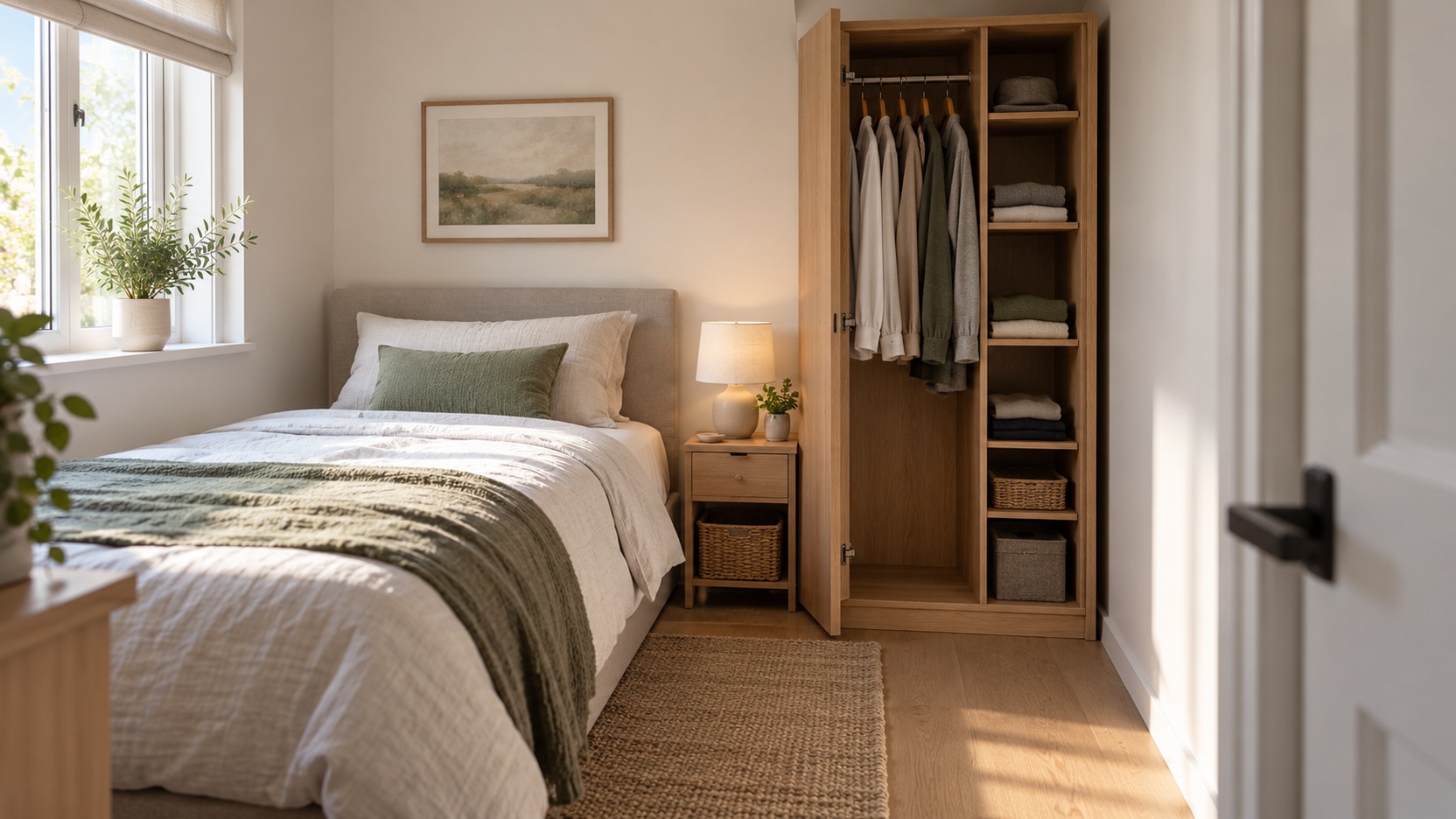
A tall narrow cabinet can make useful storage possible on a short wall section. It may preserve space for a doorway, a chair, or another essential piece of furniture. Its benefit depends on the internal arrangement, however. A single narrow hanging bay may suit one person’s limited collection while leaving another household without enough folded storage.
Evaluate the highest compartment honestly. Occasional items may belong there, but everyday clothing should remain comfortably reachable. If accessing the upper section would require unsuitable climbing or repeated awkward stretching, do not count it as equivalent to lower storage. A practical wardrobe uses its height deliberately rather than assuming every added shelf provides equally useful capacity.
Consider a Wider Shallow Form Only With Suitable Internals
A shallow wardrobe can protect the route beside a bed, but its hanging arrangement needs careful checking. Conventional side-facing hanging requires enough internal depth for the actual hangers and garments. Some shallow designs use a different rail orientation or concentrate on shelves. Confirm the intended system instead of assuming that any cabinet described as a wardrobe accommodates the same clothing layout.
Measure broad shoulders, thick coats, and the hangers that will be used. A nominal depth can be reduced by doors, back panels, hardware, and internal fittings. Clothes pressing against the front may interfere with closing and make the storage uncomfortable to maintain. Compare the usable interior with the collection before treating reduced external depth as a clear advantage.
Shelving may make a shallow design useful for folded clothing even when it is not the right hanging solution. That can work well alongside an existing rail elsewhere. Choose the combination intentionally rather than hoping the cabinet will somehow perform every role. A specialized unit can be efficient when its job is clear.
Value Adjustable Interiors Over Unnecessary Compartments
Adjustable shelves and rail positions can help the wardrobe accommodate the clothing you own now and changes later. Check the actual adjustment options and the loads supported by each fitting. A photograph showing many arrangements may not mean every arrangement is available with the selected package. Confirm what is supplied and what requires separate components.
Too many fixed small compartments can create wasted pockets, while a completely open interior may need additional organization. Aim for enough structure to separate the main categories without making every item fit a rigid cell. The best layout usually reflects a few large decisions: where hanging belongs, how folded clothes are grouped, and which occasional items use the less convenient space.
Keep Daily Clothing Within a Comfortable Access Zone
Place the most frequently used categories where you can see and reach them without strain. The exact zone depends on the user, the rail system, and the drawer arrangement. Test similar heights in your current storage where possible. A tall unit can still serve well when its upper capacity is reserved for suitable occasional belongings.
Drawers inside a wardrobe need both cabinet access and their own opening travel. Check whether the door opens far enough to clear them and whether you can stand comfortably while using the contents. A drawer behind a partially obstructed door may be difficult to extend fully. These interactions matter more than an impressive count of internal storage features.
Think about the items used together when assigning zones. Work clothing may benefit from a nearby accessory drawer, while exercise clothes might work better in a simple folded area. Avoid splitting a routine across several awkward corners merely to fill every compartment. The interior should make dressing clearer rather than create a treasure hunt through available spaces.
Compare Door Access in the Actual Layout
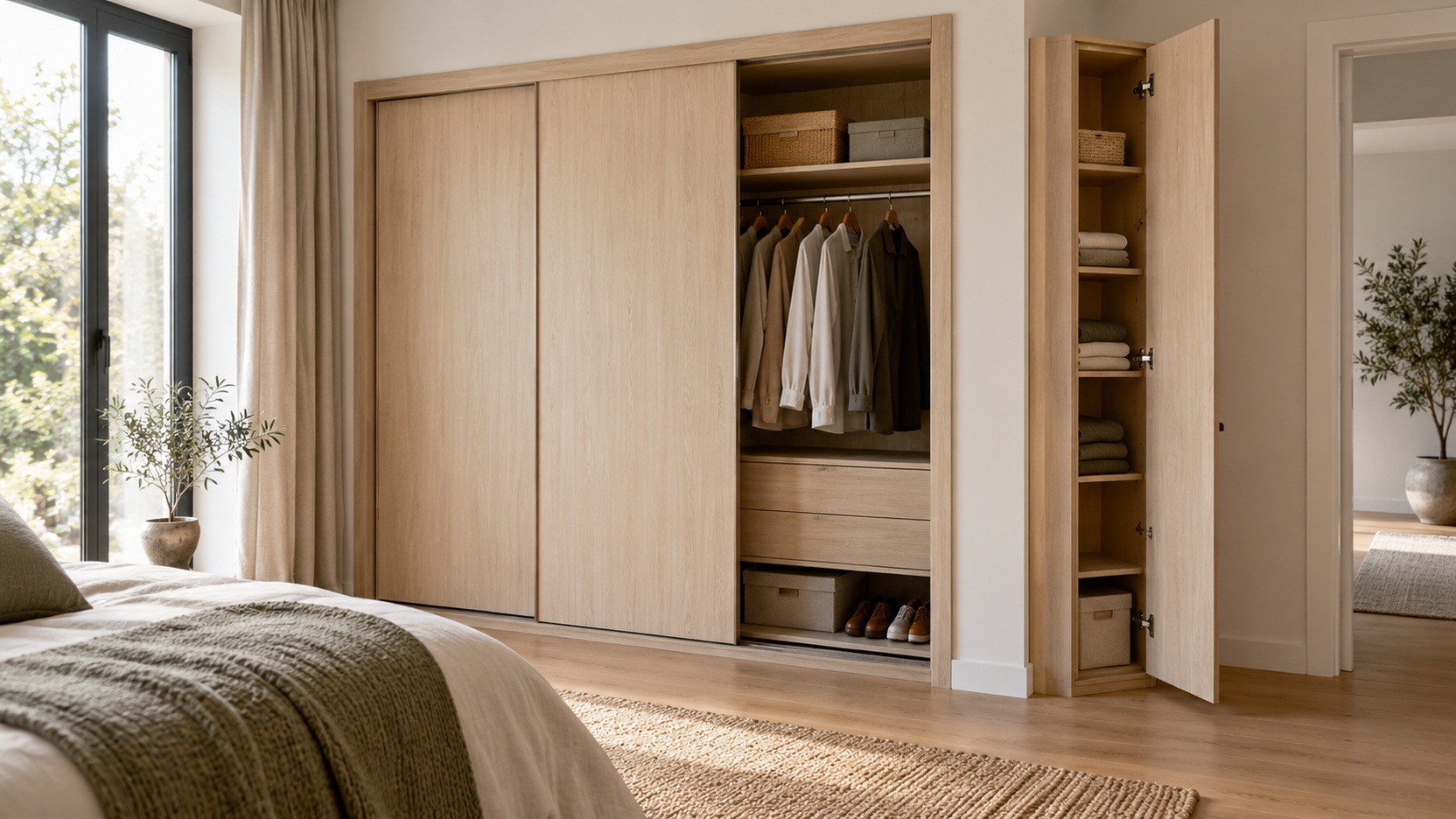
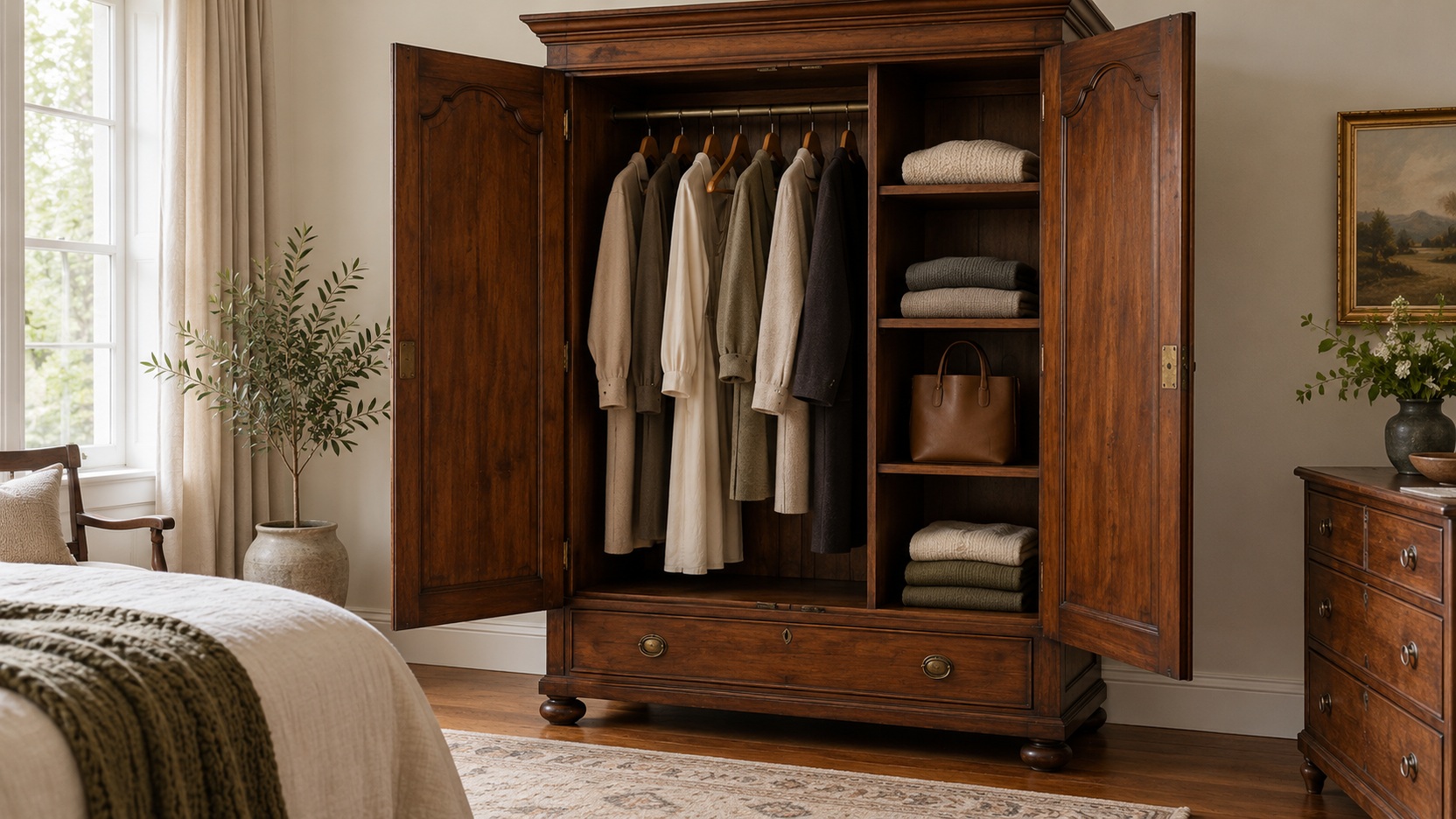
Hinged doors need an opening arc, while sliding doors avoid that arc but generally reveal only part of the cabinet at a time. Neither mechanism is automatically best for a small room. Compare what happens in the marked layout and how much of the interior you need to see together. The door system should cooperate with the room and storage configuration. Check hardware, handle projection, and any space needed at the sides. A cabinet placed close to another wall may limit a hinged door’s opening angle. Sliding tracks occupy part of the system and need appropriate maintenance. Assess these requirements alongside usable internal depth rather than treating door style as a purely visual choice.
Use Mirrors and Light Finishes Thoughtfully
A mirrored front can provide a dressing mirror without using another wall, but its usefulness depends on the available standing position and what it reflects. Check whether opening the wardrobe interrupts that function. The door’s weight and hardware still need suitable construction and installation. A mirror is a feature to assess, not a guarantee that the room will feel larger.
A pale or wall-related finish can make a substantial cabinet feel less visually prominent, while a darker finish may provide an intentional anchor. Compare the actual wardrobe with the bed, flooring, and light in the room. Handles and panel divisions also affect how busy the front appears. Simple proportions may be more useful than trying to disguise an oversized piece through color alone.
Keep visual judgments connected to physical fit. A cabinet that photographs lightly still occupies its real floor area and opening space. If the footprint creates a persistent obstacle, a different size or location deserves consideration. The most comfortable small-bedroom design balances appearance with the way people move around the furniture.
Check Stability, Loading, and Assembly Requirements
Follow the manufacturer’s assembly, restraint, and loading instructions using hardware suitable for the installation. Tall clothing storage deserves careful planning regardless of how heavy it feels. Do not omit anchoring because the unit stands in a narrow gap or appears stable when empty. The wardrobe needs to be installed appropriately before it is loaded and used.
Review rail and shelf limits, particularly where heavy garments or dense folded collections are involved. Distribute contents according to the product guidance rather than filling every available space indiscriminately. Keep wanted objects from creating reasons for children to climb. Appropriate use remains part of the storage solution after assembly is complete.
Compare the Complete Cost of a Working Interior
A low cabinet price may not include the shelves, rails, drawers, handles, or other fittings shown in inspiration photographs. Check the exact selected configuration and the parts supplied. Add delivery, assembly where needed, and suitable installation requirements to the comparison. A wardrobe is only good value when its complete usable arrangement meets the storage job.
Consider replacement and adjustment options as part of ownership. Available extra shelves or compatible fittings can make later changes easier, while a highly specialized fixed interior may be less flexible. This does not automatically favor a modular system; simplicity can also be valuable. Choose the level of adjustability that your likely needs justify.
Read return and delivery terms before ordering a large piece. Handling and repacking a wardrobe can be difficult, especially once assembled. Confirm package dimensions and the route into the bedroom while alternatives are still available. The best storage choice needs to arrive and be installed successfully as well as fit the final wall.
Choose the Configuration That Uses the Room Well
Compare the finalists using the same clothing inventory and the same room footprint. A narrow tall cabinet may protect wall width, a shallower shelf-led design may suit folded clothes, and a broader adjustable wardrobe may serve a mixed collection better. Choose the form whose useful interior and access pattern solve the actual problem with the fewest compromises.
After installation, check the arrangement with the bed made and the wardrobe normally loaded. You should be able to see daily clothes, open the needed storage, and move away comfortably. Make small interior adjustments where the fittings permit them rather than accepting avoidable frustration. A small-bedroom wardrobe succeeds when its capacity remains reachable and the rest of the room still works.
Compare Two Interiors With the Same Clothing Group
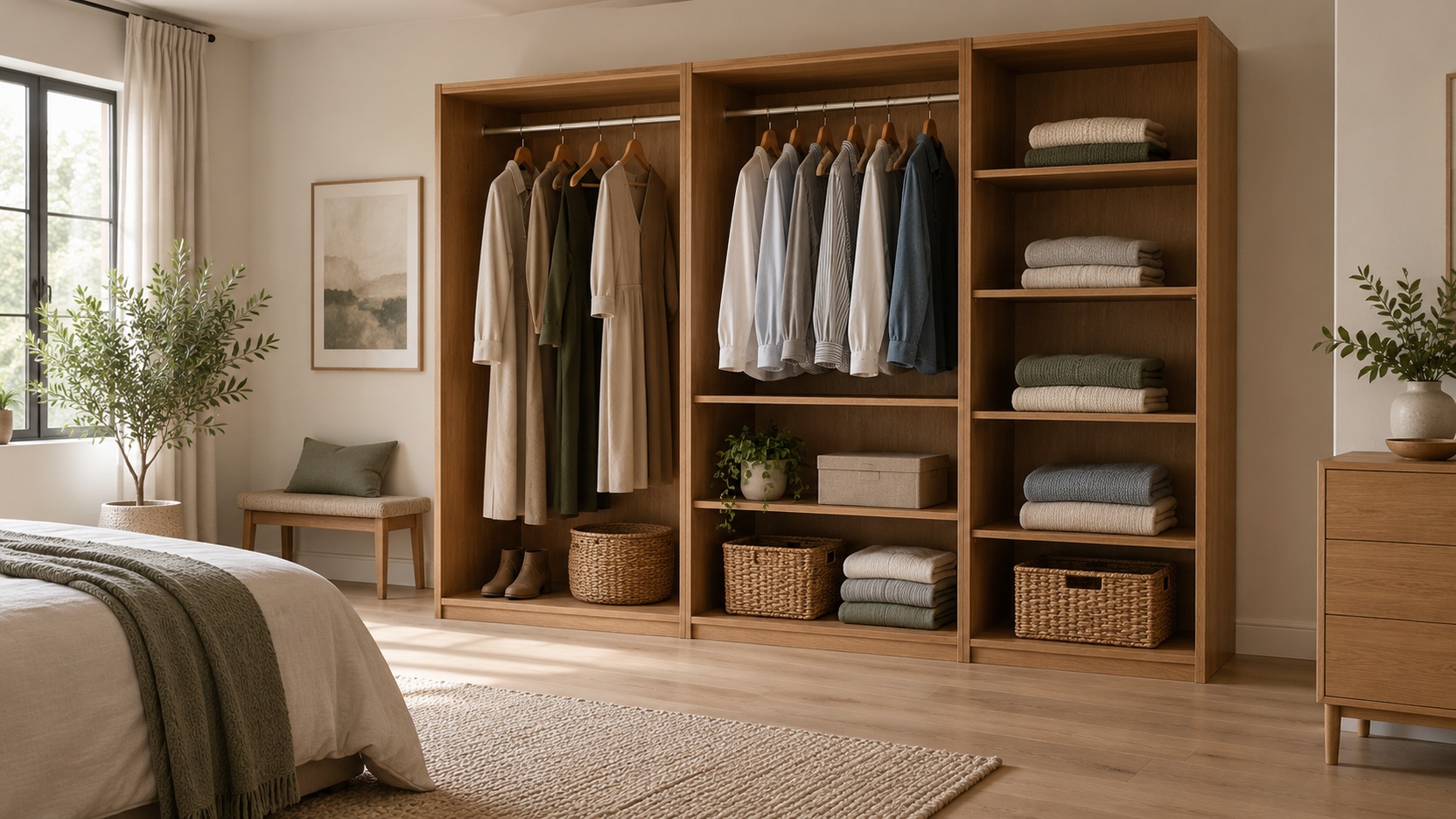
Imagine a collection dominated by shirts, folded knitwear, and a small number of long garments. One cabinet offers a large uninterrupted hanging bay, while another divides hanging and shelves. Measure both against the collection rather than judging the number of fittings. The mixed interior may use space more naturally, but only if the long garments still have an appropriate place.
If a small number of occasional pieces dictate the entire layout, consider whether they have another suitable storage location. This can preserve a more useful everyday arrangement without pretending those garments do not exist. Make the decision explicitly before buying. An efficient wardrobe plan accounts for the exceptions instead of discovering them after installation.
Imagine a wardrobe containing mostly shirts and folded trousers, plus three long coats. Giving every bay a full-height rail would preserve a great deal of unused drop beneath the shirts. A compatible mixed interior could instead reserve one uninterrupted long section and use another section for shorter hanging with accessible shelves below. The precise fittings still depend on the chosen cabinet. This inventory-led brief explains why an adjustable interior might be worth paying for: it converts a particular imbalance into usable storage instead of supplying flexibility that the owner never uses.