Give a Closet-Free Bedroom a Complete Clothing Home
An armoire can make a bedroom without a closet feel intentionally furnished rather than temporarily improvised. Behind a pair of doors, it can combine hanging space, shelves, and sometimes drawers in a freestanding piece that belongs to the room’s design. Its usefulness depends on the interior, though: an attractive cabinet intended for folded linens or media equipment may not accommodate everyday clothing in the way you expect. Start with the wardrobe that needs a home, then decide which functions the armoire must provide and which can live elsewhere. The best choice creates a clear, maintainable clothing system while fitting the room, the delivery route, and the practical realities of living without built-in storage.
A: No. Verify that its interior and usable dimensions support the required clothing storage.
A: A collection with substantial garments that need hanging rather than folding.
A: When its actual proportions match a wardrobe containing several different storage categories.
A: Yes. Dividing the jobs can provide a better complete arrangement.
A: Shelves suited to folded clothes may not fit those bulkier shapes.
A: No. Store clothing appropriately dry and address unsuitable room conditions separately.
A: Yes. Follow its assembly and restraint guidance and assess access before loading.
A: Check the intended interior, condition, identification, safe setup, and usable garment space.
A: Its assembled or packaged size may not negotiate the home's doors, stairs, or turns.
A: Clear reachable clothing zones that remain easy to reset without crowding the room.
Distinguish a Clothing Armoire From a General Cabinet
The word armoire can describe several furniture formats. Some products provide a hanging rail, some emphasize shelving, and others were designed for equipment or general storage. Read the selected interior specification and look for usable measurements rather than relying on the name. A beautiful set of doors does not establish that the space behind them will accept your hangers or longer garments. Check whether the interior fittings are included, optional, or absent. Adding a rail to a cabinet is not automatically appropriate; the structure and intended load need to support the proposed use. Prefer a product designed for the clothing tasks you need unless a suitable modification has been properly assessed. This keeps the purchase grounded in a working storage arrangement rather than a hopeful conversion.
Make a Whole-Wardrobe Inventory
List the clothes and accessories that would normally live in a closet. Include coats, dresses, shirts, folded garments, shoes, bags, and any occasional items assigned to the bedroom. Then separate the categories that genuinely need hanging from those that can use shelves or drawers. This inventory reveals whether one armoire can serve the collection or whether a coordinated combination would work better.
Measure representative garments on the hangers you use and note their hanging length. A long coat or dress may determine the necessary clear drop, while short hanging can leave room for another zone. Avoid designing the whole cabinet around one unusual item without considering alternatives. The right arrangement supports the regular wardrobe while giving occasional pieces a deliberate home.
Count the complete collection rather than the temporarily reduced contents visible on laundry day. Allow some working space so clothes can be removed and returned easily. An interior filled without gaps can become frustrating even when everything technically fits. Closet replacement succeeds when the storage remains understandable and usable through a normal week.
Choose Hanging-First Storage for Garments That Need It
A hanging-first armoire suits a wardrobe dominated by shirts, jackets, dresses, or clothes that you prefer not to fold. Check the usable rail length, clear drop, and actual interior depth. The rail’s position matters too, particularly if a shelf sits above or below it. Compare those measurements with the clothing rather than assuming the cabinet’s external height becomes available hanging space.
Look at how the doors affect access to the rail. A wide opening can make selection easier, while hardware or a fixed center division may limit the view. Check whether sleeves or hangers could press into the closing doors. A clothing cabinet should let garments hang naturally without demanding constant adjustment before it can be closed.
Choose Mixed Storage When the Wardrobe Has Several Roles
An armoire with one hanging bay and a separate shelf section can provide a balanced home for a mixed collection. Its success depends on the proportions of those areas. A generous hanging section may be unnecessary if most clothing is folded, while several narrow shelves may not accommodate the objects you intend to place there. Compare the interior division with the inventory before judging the outside.
Drawers can contain small belongings and reduce the need for a separate dresser, but they introduce their own access requirements. A drawer behind a door needs sufficient opening clearance, and a drawer beneath the cabinet extends into the room. Check the movement with the surrounding furniture in place. Combining functions is useful only when each remains comfortable to use.
Adjustable fittings can help you refine the arrangement after living with it. Verify the available positions, compatible components, and stated loads rather than assuming all interiors can be rearranged freely. Keep a clear distinction between the parts supplied and accessories purchased separately. The complete functioning configuration is the relevant product, not the empty cabinet alone.
Plan Shoes, Bags, and Small Accessories Deliberately
A closet-free room can become cluttered when clothing has a cabinet but accessories have no assigned place. Decide which shoes and bags belong inside the armoire and which can use another suitable location. Measure bulky items before giving them a shelf. A shallow space that works for folded shirts may not accommodate a larger bag or the footwear you actually wear.
Keep frequently used accessories easy to see without consuming the best hanging space unnecessarily. A small removable container can group loose belongings when it fits the shelf and can be lifted comfortably. Avoid filling the cabinet with organizers before testing the basic categories. A few useful boundaries are often easier to maintain than a collection of specialized fittings.
Use the Room Layout to Choose Door Access
Mark the cabinet footprint and the door opening movement together. Include a place to stand while selecting clothing and the route around the bed. Hinged doors can provide a broad view but need a clear arc; sliding designs avoid that arc while limiting the open area. Judge the available products in the actual room rather than treating one mechanism as universally superior.
Consider how you dress, not just how you retrieve one item. If the armoire is the main clothing home, you may need to compare garments or access more than one category during the same routine. A restricted opening could be acceptable or irritating depending on the interior and your habits. The right access pattern supports that fuller activity.
Check handle projection and side-wall restrictions. A cabinet placed beside a wall may not allow a hinged door to reach the angle needed for internal drawers. A handle can also narrow a tight bedside route. These modest details can make the difference between a wardrobe that fits on paper and one that feels comfortable every day.
Choose a Visual Presence That Belongs in the Bedroom
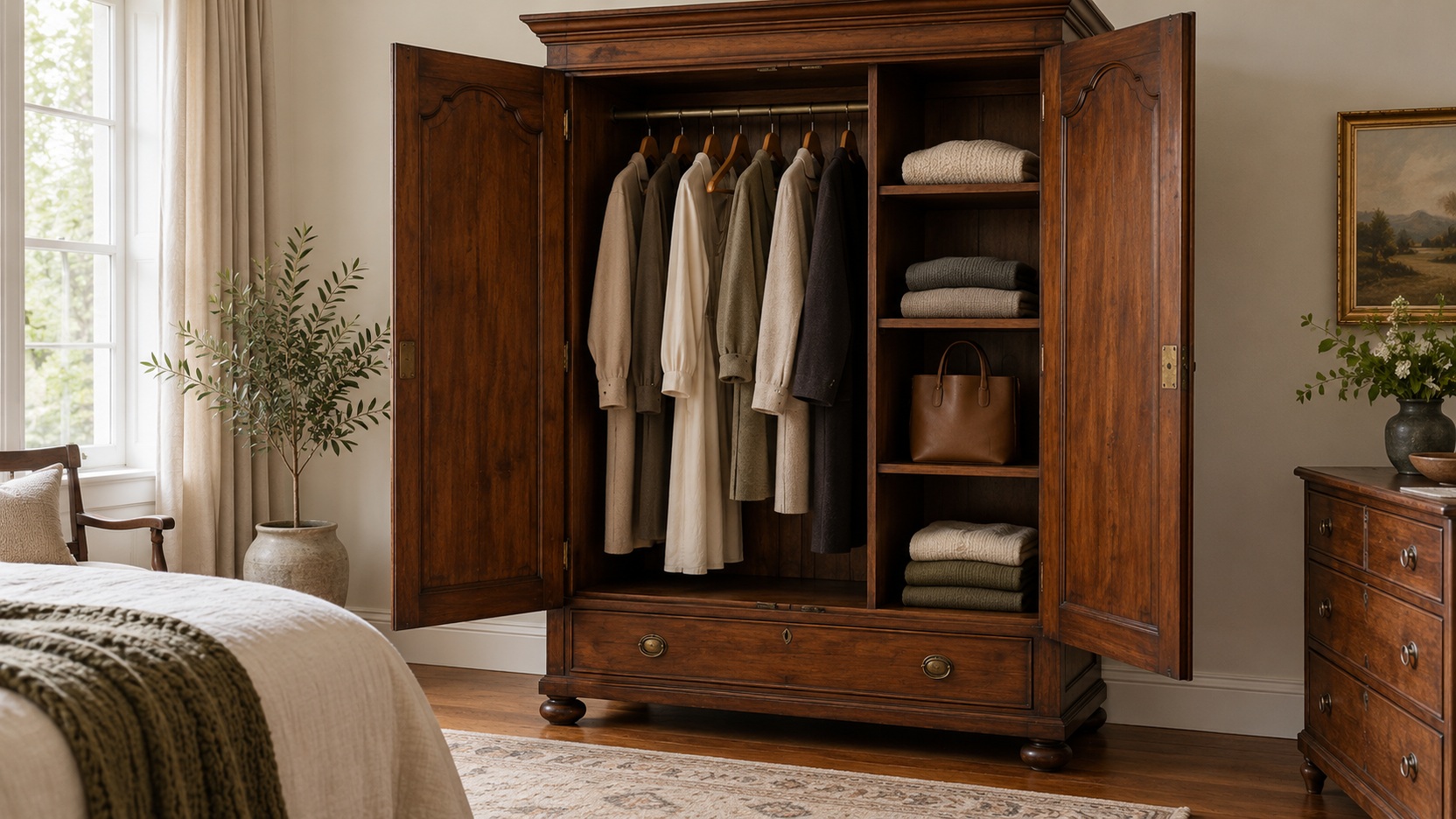
An armoire is often one of the room’s largest upright forms, so its finish and proportions influence the atmosphere. A freestanding furniture appearance can provide character in an older room, while a simpler front may sit more quietly beside modern pieces. Relate the choice to the bed, floor, and other substantial furniture. A matching set is unnecessary if the materials and shapes have a considered relationship. Look at panel divisions, feet, top trim, and hardware as well as color. Decorative details can make a cabinet feel substantial even when its dimensions are modest. A plain front can reduce visual busyness, but it cannot compensate for a footprint that obstructs the room. Choose the physical fit first, then refine how the piece participates in the overall design.
Assess Ventilation and Clothing Care
Store clothing clean and appropriately dry, and avoid turning the armoire into a holding place for damp garments. Follow material and furniture care guidance for the actual products. If the room has an underlying moisture problem, adding closed storage is not a solution to that condition. Address the environment rather than expecting a new cabinet to protect clothes from unsuitable surroundings.
Leave garments enough room to move and be inspected. Extremely compressed storage can hide forgotten items and make routine care more difficult. Review occasional clothing periodically so the cabinet does not become an archive of unresolved belongings. A clear inventory is useful for garment care as well as for everyday selection.
Choose finishes and interior materials with maintenance in mind. Smooth surfaces may be easier to wipe, while fabric-lined or elaborately detailed interiors can require different care. Consider whether the cabinet has lingering odors or damage if buying secondhand. The interior experience matters because it is the environment where the clothing will spend much of its time.
Confirm Stability Before Treating It as Ready to Use
Install and restrain the armoire according to the manufacturer’s instructions using suitable wall hardware. A freestanding appearance does not mean restraint requirements can be ignored. Check that the intended location allows the necessary fitting access before placing or loading the cabinet. Appropriate installation is part of making the storage usable.
Respect rail, shelf, and drawer loading limits, and keep the arrangement within its intended use. Do not create reasons for children to climb to reach wanted items. For an older or secondhand armoire, investigate identification, condition, missing parts, and relevant recalls. Resolve uncertainty about safe setup before relying on the furniture for daily storage.
Check the Journey Into the Room
Armoires can be difficult to move because of their height, depth, weight, and decorative projections. Obtain the package or assembled dimensions and compare them with doors, stairs, landings, and turns. A cabinet that fits its final wall may still be unable to reach it by the available route. Include handling and installation in the plan while the purchase can still be changed.
For furniture assembled in the room, read the required sequence and clearances. Some units need more temporary space than their final footprint suggests. Confirm what the delivery or assembly service includes and what remains your responsibility. A realistic complete cost includes the help and fittings required to get the cabinet into appropriate use.
Think about future moves without letting hypothetical flexibility override the current need. A modular cabinet may be easier to adapt, while a traditional assembled armoire may offer the appearance you want. Repeated disassembly is not suitable for every design. Choose with a clear understanding of how settled the room and household are likely to be.
Build a Closet Replacement That Remains Simple
One armoire does not have to perform every storage job. A hanging-focused cabinet paired with an existing dresser may serve better than a mixed cabinet whose compartments fit nothing particularly well. Likewise, a well-configured mixed armoire can eliminate the need for another bulky piece. Compare complete room arrangements rather than assuming all storage must fit behind one set of doors.
After installation, assign straightforward zones and test the routine from clean laundry to getting dressed. Make permitted shelf adjustments where they improve access. Keep the system simple enough that belongings return naturally to their places. A successful armoire gives a closet-free bedroom a dependable clothing home while allowing the room to remain a comfortable place to live.
Make Rental Constraints Part of the Choice
In a rented bedroom, confirm what installation changes are permitted before ordering an armoire that requires wall restraints. A portable-looking cabinet may still need those fittings. Resolve the installation method rather than treating a rental as a reason to omit required setup.
Consider delivery access and likely moves alongside the current storage need. An assembled antique may be attractive but difficult to carry through another narrow staircase later. A simpler construction may be easier to manage if its instructions support the planned handling.
A closet-free bedroom does not necessarily need one cabinet to hold everything. An armoire with a confirmed garment rail can accommodate coats and hanging shirts while a retained dresser handles folded clothing. Shoes can stay in a separate suitable destination rather than occupy the valuable hanging drop. This division may allow a smaller armoire whose doors work comfortably in the room. It also makes a decorative linen cabinet easier to reject: an attractive facade is not a closet replacement if it cannot perform the specific hanging job left after the dresser is retained.