Choose Wardrobe Doors by the Space They Need in Use
Sliding wardrobe doors save an opening arc, while hinged doors can provide a broader view of the interior. That familiar comparison is only the beginning of a useful choice. The bed’s position, available standing space, internal drawers, nearby walls, and the way you select clothes can make either mechanism feel convenient or awkward. Compare complete wardrobe systems rather than treating the door as an interchangeable finish. A sliding front may add depth or limit the open area, and a hinged front may need more side clearance than expected. The right choice is the one whose movement and access suit your room and routine, with installation and maintenance requirements you can realistically support.
A: No. Standing space, full depth, installation, and interior access still need checking.
A: Only if the selected panels can open sufficiently in the actual room.
A: Door position, overlap, or hinge angle can prevent full drawer extension.
A: Compare the saved swing arc with the complete depth and usable opening of the actual systems.
A: No. Hardware, installation, condition, and operation affect either mechanism.
A: No. Accessories must be compatible with the panel movement and permitted loads.
A: Only when their location and moving-panel behavior serve the room's dressing needs.
A: Follow the care guidance and investigate the cause instead of forcing it.
A: Include the selected panels, hardware, compatible configuration, delivery, and required setup.
A: Test access to their actual storage zones during the shared routine.
Map the Open Door Before Comparing Styles
Draw or mark the wardrobe’s final footprint, including the selected door system and any required rear allowance. Then represent the movement of each proposed door. A hinged panel sweeps into the room, while sliding panels travel across the cabinet front. Include handles and other projecting details. This gives a more useful comparison than measuring the cabinet box alone.
Test the plan with the bed made and nearby furniture in position. You need enough room to approach the wardrobe, stand comfortably, and move a garment out of storage. A door that just clears the bed may still leave an awkward position for the user. Evaluate the whole activity rather than deciding that a technically unobstructed hinge arc settles the choice.
Consider the room door and other opening storage too. A dresser drawer, bed drawer, or chair may occupy the same area at different times. Some sequencing is reasonable in a compact room, but constant furniture negotiation can become tiresome. Choose the arrangement that makes the normal routine manageable rather than allowing every feature to fit only when everything else is closed.
Understand What Sliding Doors Actually Save
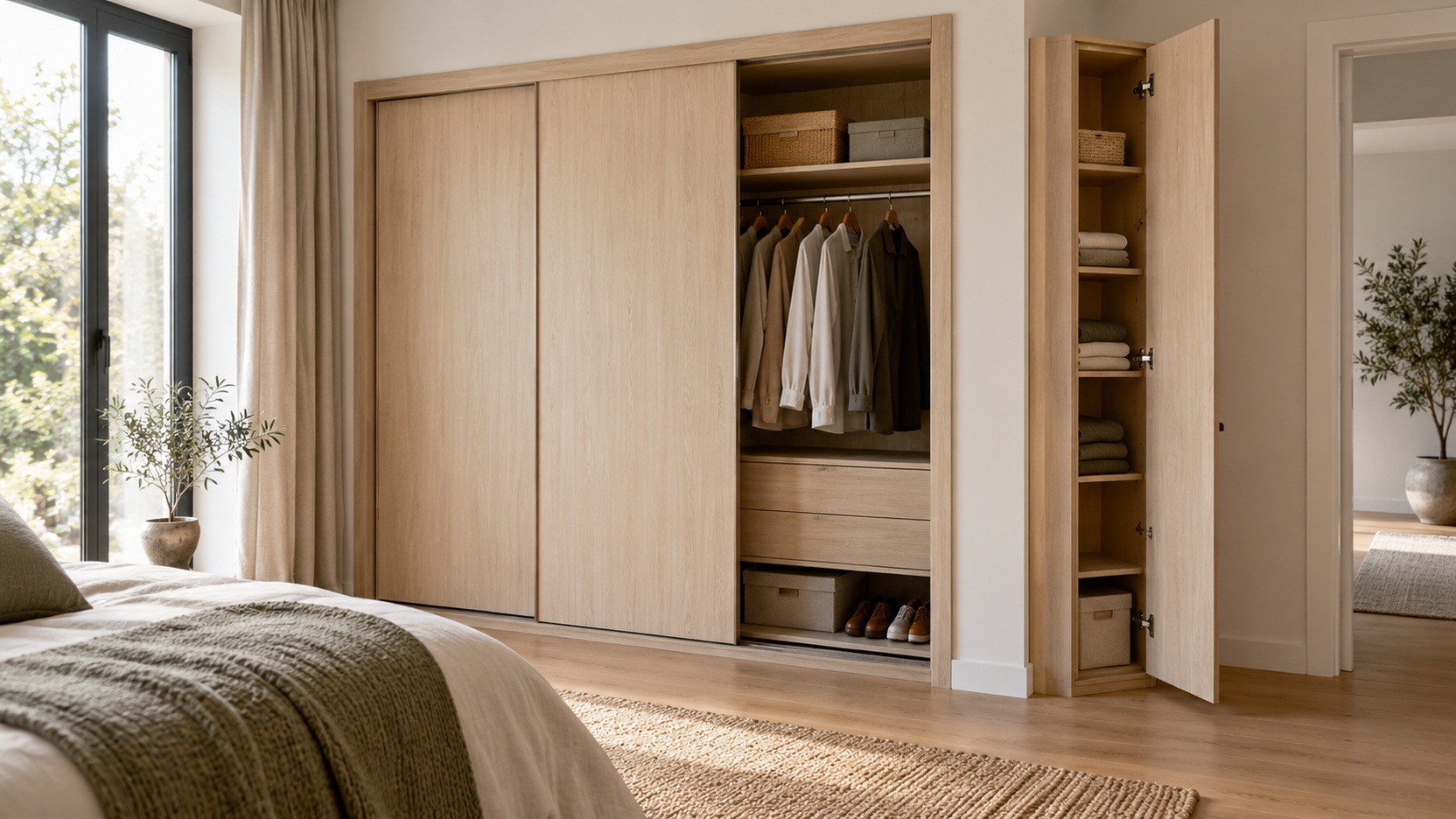
Sliding panels avoid swinging into the floor area in front, which can be valuable where a bed sits close to the wardrobe. They do not eliminate the need for standing space, and the selected track system may affect the complete external depth and usable interior. Compare the full manufacturer’s dimensions. A smaller opening arc is an advantage only when the resulting cabinet and access still work.
Check How Much Interior Is Visible at Once
Overlapping sliding doors normally reveal only part of the wardrobe at a time. The exact opening depends on the number of panels and the system’s design. Think about which storage zones sit behind each section. A limited opening may be perfectly adequate for a clearly divided wardrobe, but less convenient when you like to see several outfit options together.
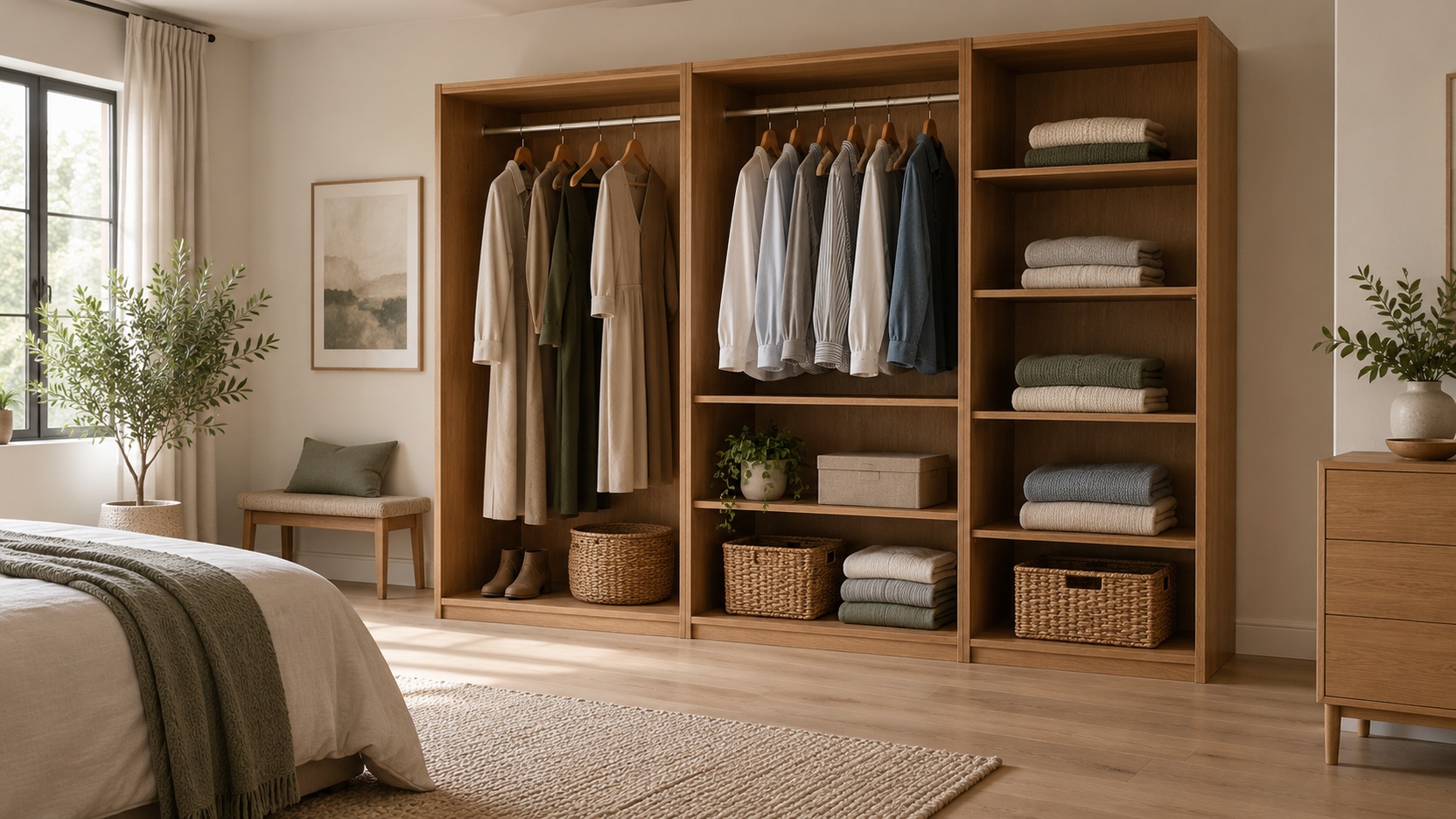
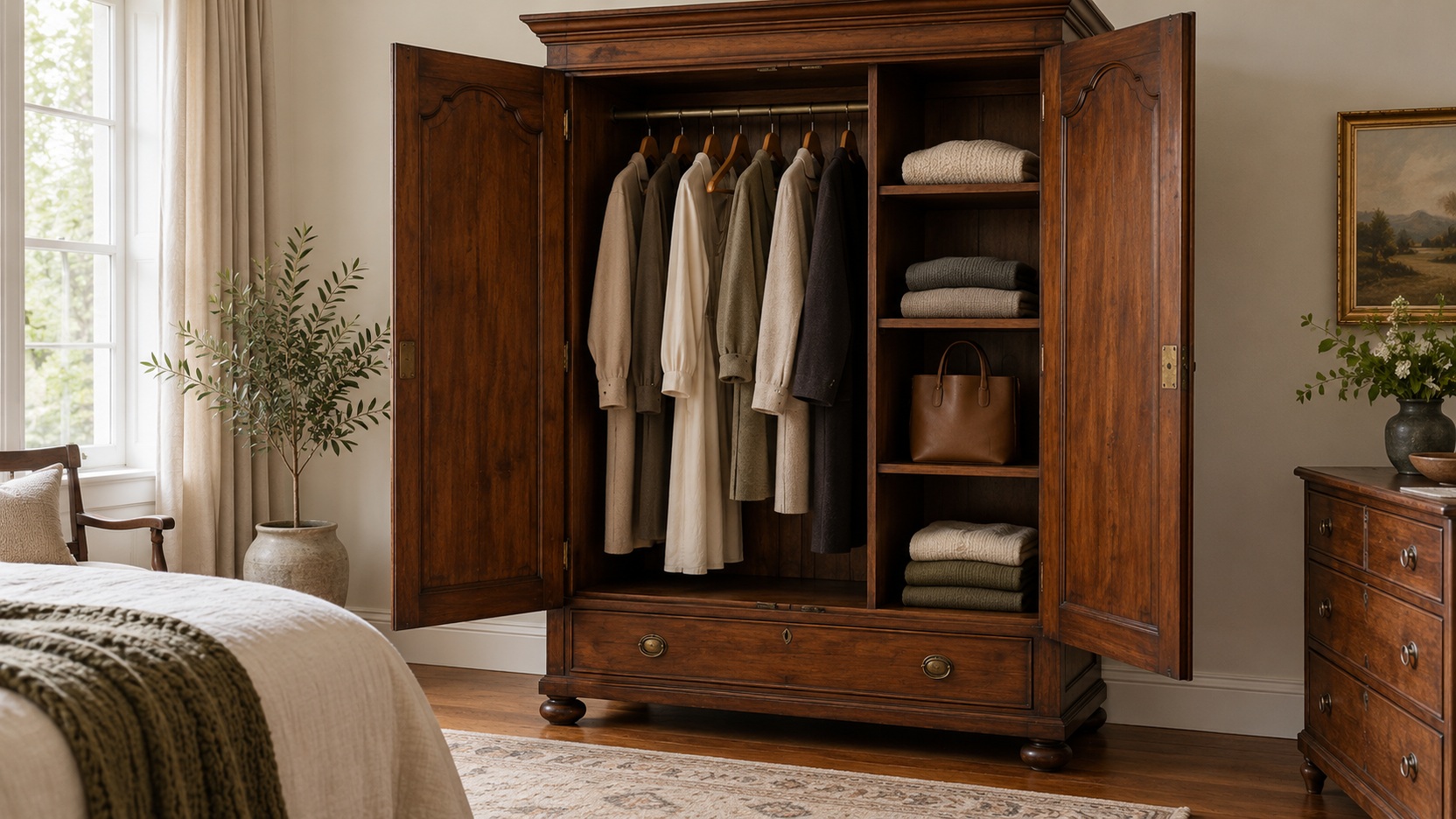
Hinged doors can offer a broader view when the panels open sufficiently. Nearby walls, furniture, and hinge geometry can limit that opening, so verify the real arrangement rather than assuming full access. The comparison is between the actual clear openings of the selected systems. A familiar category name does not establish how much of your particular interior will be reachable.
Coordinate the Doors With Internal Drawers
An internal drawer needs a clear path past the door or panel before it can extend. With sliding systems, a drawer placed behind a panel overlap may need a particular door position. With hinged systems, the hinge angle and hardware can determine whether the drawer clears. Follow the wardrobe system’s compatibility and placement guidance rather than mixing components on assumption.
Check the intended interior layout before committing to the front. Shelves, pull-out trays, and hanging sections may have different access needs. If one frequently used feature can only operate after several adjustments, consider a different arrangement. The door system and interior should be selected together so their movements support one another.
Where more than one person uses the wardrobe, test access from both sides. One person may need a drawer while another uses a hanging bay. A sliding panel can temporarily cover the other person’s zone, while an open hinged door may occupy shared floor space. Neither behavior is inherently wrong, but it deserves attention in a shared morning routine.
Look at Corners and Nearby Walls
A hinged door beside a side wall may need additional clearance or a particular hinge arrangement to reach its intended angle. Handles can meet the wall before the panel opens enough for the interior. Check the supplied installation guidance and the actual projecting details. Do not assume the cabinet can be placed tightly into a corner without affecting access.
Sliding systems have their own edge and installation requirements. Track access, stops, trim, and the alignment of the cabinet can influence operation. A tight alcove needs measurements at several heights because walls may not be square or parallel. Choose a system that can be installed appropriately in the available space rather than relying on a visually close fit.
Compare the Effort of Daily Operation
Door weight, handles, rollers, hinges, and soft-close mechanisms all contribute to how the wardrobe feels. A well-installed sliding panel may move smoothly, while an unsuitable or poorly aligned system may be frustrating. Hinged doors can also feel easy or awkward depending on the hardware and opening method. Evaluate the actual product rather than assuming one mechanism is always lighter or quieter.
Consider the user’s hand position and strength where those needs are relevant. Recessed grips, edge pulls, and projecting handles require different actions. A neat appearance can be less valuable if the opening method is difficult to use. Test a comparable mechanism when possible and seek clear information about the selected product’s operation.
Soft closing can reduce abrupt movement, but it is not a substitute for correct installation or suitable hardware. Check whether the feature is included and how it works with the chosen panels. Avoid treating it as proof that the entire system is durable. The useful question is how the full arrangement performs throughout repeated everyday use.
Decide Whether Door-Mounted Storage Is Important
Some hinged systems can accommodate compatible organizers or mirrors on the inside of a door. Their suitability depends on the panel, hardware, clearances, and allowed loads. Use accessories intended for the system rather than adding heavy fittings indiscriminately. Extra storage should not interfere with clothing, shelves, or the door’s normal movement.
Sliding panels generally offer a different relationship to door-mounted accessories because the panels move past one another. Do not assume an organizer used on a hinged door can transfer to a sliding front. If those accessories are central to your storage plan, check compatibility early. A small feature can influence the practical choice between otherwise suitable systems.
Judge Mirrors as Part of the Moving Panel
A mirrored front can provide a full-length dressing view while saving another wall location. Its value depends on where you can stand and what the mirror reflects. Opening or sliding the panel may change that view. Check the complete arrangement rather than selecting mirrors solely for a general impression of spaciousness.
Mirrored panels also make the suitability of hardware, handling, and installation especially important. Follow the product’s instructions and do not improvise modifications. Consider how visible fingerprints and routine cleaning will fit your household. A reflective front can be attractive and useful, but it remains a substantial moving component with practical care needs.
Where a separate wall mirror has a better position, plain wardrobe doors may offer a simpler solution. This can free the choice of door system from the mirror requirement. Compare both complete room arrangements before deciding. Combining two functions is worthwhile only when their shared position serves each function well.
Allow for Cleaning and Adjustment
Sliding tracks and running components need the care specified for the product. Debris, misalignment, or wear can affect operation, so keep the relevant areas accessible. Hinges and handles may also require appropriate adjustment or maintenance over time. Neither system should be chosen on the assumption that it will never need attention.
Read the care instructions before applying lubricants or making adjustments. A familiar household product may not be appropriate for the particular mechanism or finish. If operation changes noticeably, investigate the cause rather than forcing the door. Knowing how the system is supported can make ownership more manageable.
Compare Complete Installed Costs
Include panels, tracks or hinges, handles, compatible interiors, delivery, and installation requirements in the total. Different door systems may be offered only with certain cabinet sizes or configurations. A starting price can therefore describe a different product from the one you need. Compare selected complete systems rather than isolated panel prices.
Consider service access and replacement parts as well as purchase cost. A system with identifiable components and clear support may be easier to maintain than one with uncertain replacements. This does not make complexity automatically worthwhile. Choose the mechanism whose benefits justify both its complete cost and its likely ownership demands.
For rented or frequently changing rooms, include installation restrictions and future handling. Some systems need precise fitting and may not be simple to move or alter. Confirm what changes are allowed and follow all cabinet restraint requirements. A freestanding wardrobe with either door type still needs appropriate setup.
Use a Close-to-the-Bed Example
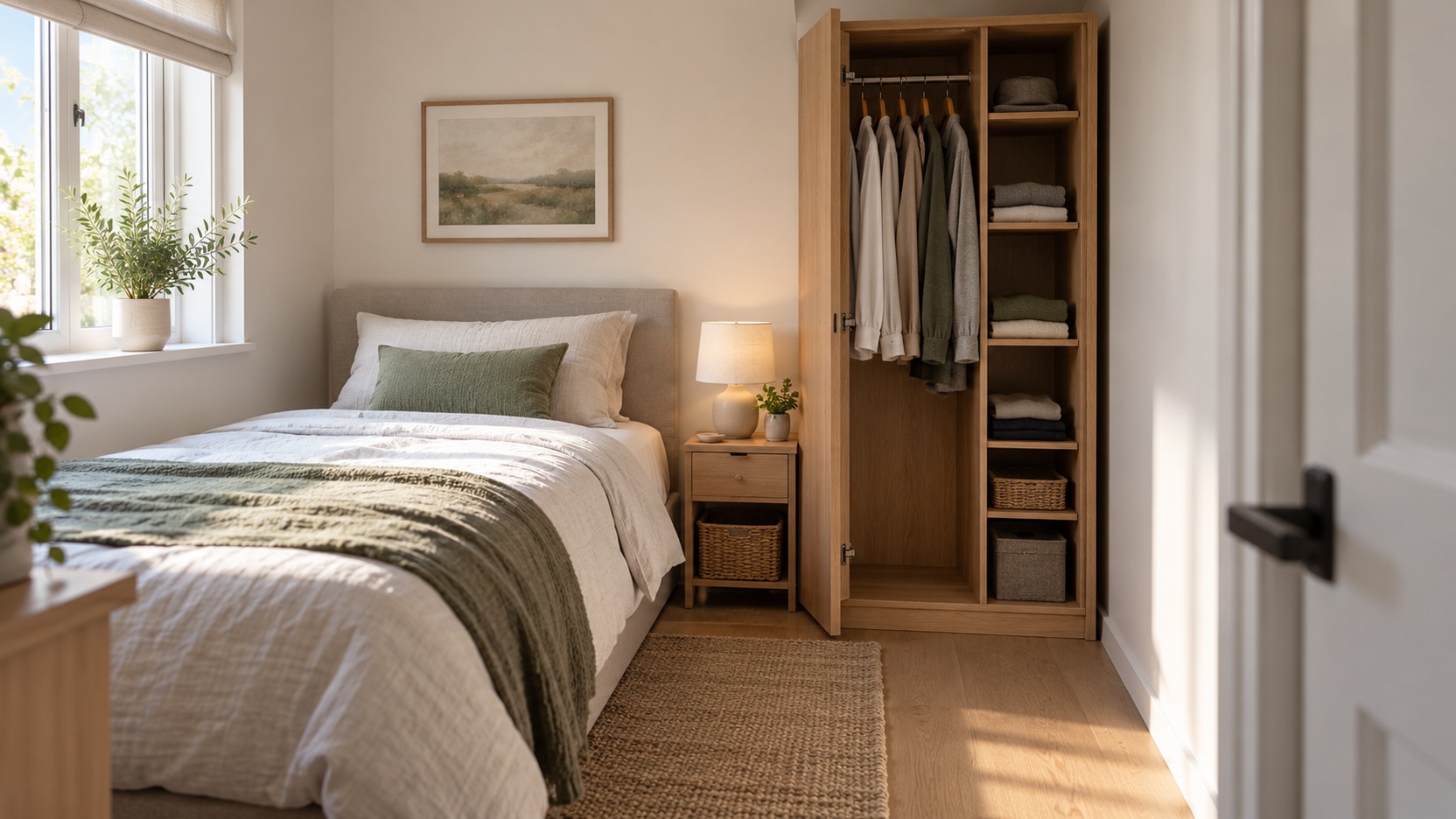
If a bed leaves little room for a hinged panel, sliding doors may protect the opening route. Before deciding, check the full wardrobe depth and the access to the internal drawers. A sliding front that saves the arc but adds an inconvenient projection may not solve the whole problem. Test both complete arrangements with the same interior needs.
If the room has enough swing space but the wardrobe serves two people, hinged access may make simultaneous selection easier. The available hinge angle and standing positions still need checking. Let the actual routine settle the comparison. A door system is successful when its movement feels natural in the room rather than requiring repeated workarounds.
Choose the Access Tradeoff You Prefer
Choose sliding doors when avoiding the swing arc is valuable and the limited opening suits the interior. Choose hinged doors when their opening space is available and the broader access or compatible accessories improve use. Confirm dimensions, installation, and hardware for the particular product in either case. The strongest decision accepts a clear tradeoff instead of expecting one mechanism to remove every spatial constraint.
Check the Choice Before Ordering a Replacement Front
If you already own a wardrobe frame, do not assume another door type will attach to it. Different systems may require particular frame dimensions, fittings, clearances, and interior arrangements. Confirm the exact compatibility rather than using external width as the only test. A replacement project can become much larger if the desired front requires changes to the cabinet or the way it is installed. Compare that complete project with retaining the existing mechanism and improving the storage layout.
The decisive tradeoff becomes clear in a room shared by two people who dress at the same time. Hinged doors can be useful when the room permits both people to see their assigned sections together. Sliding fronts may protect a narrow bedside route, but a closed panel can interrupt that simultaneous access. Compare the actual interior with one person choosing a shirt and the other opening a drawer. A front that looks tidier when closed may make the morning slower. The appropriate choice is the access pattern the household prefers after both complete arrangements have been considered.