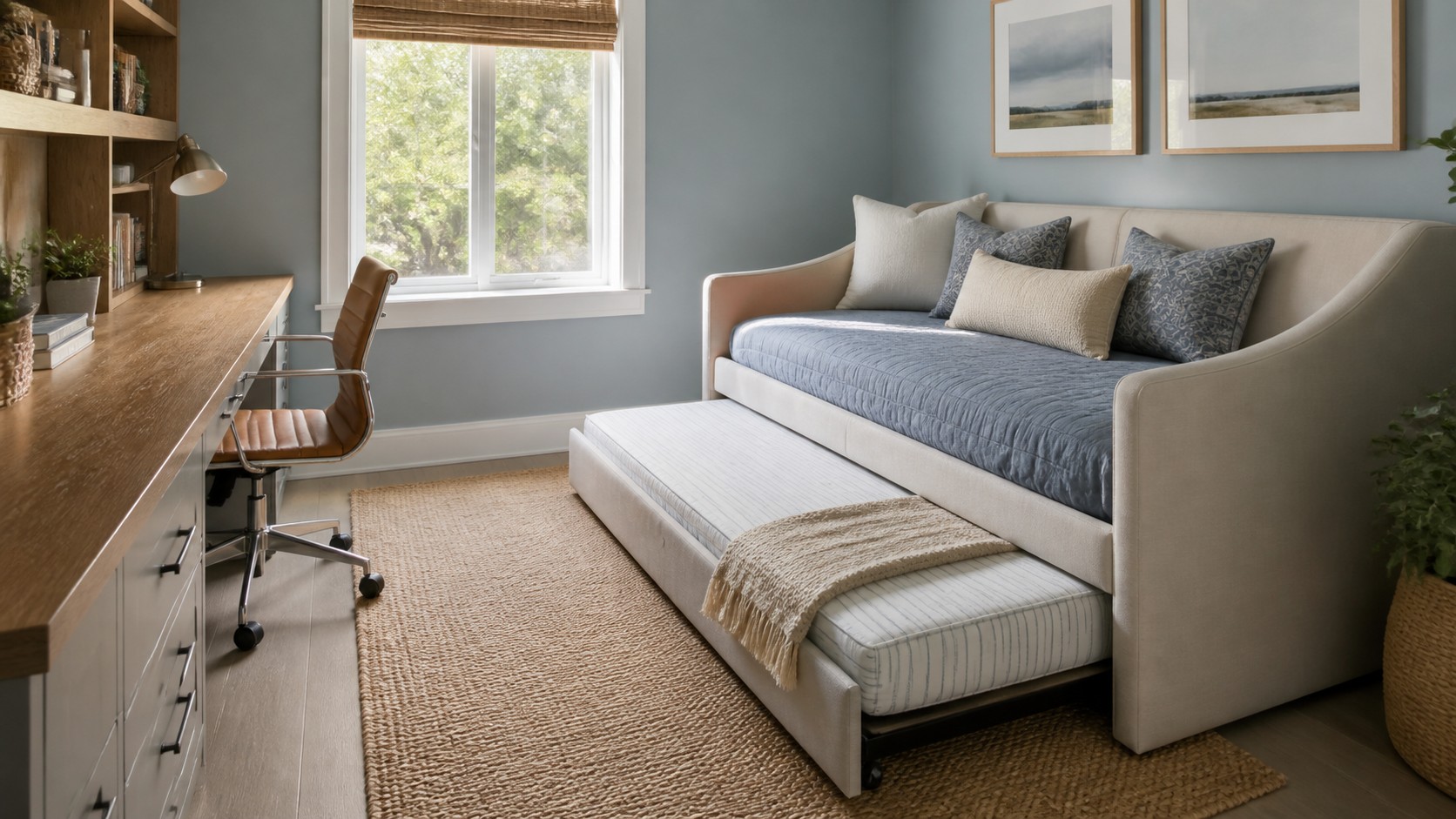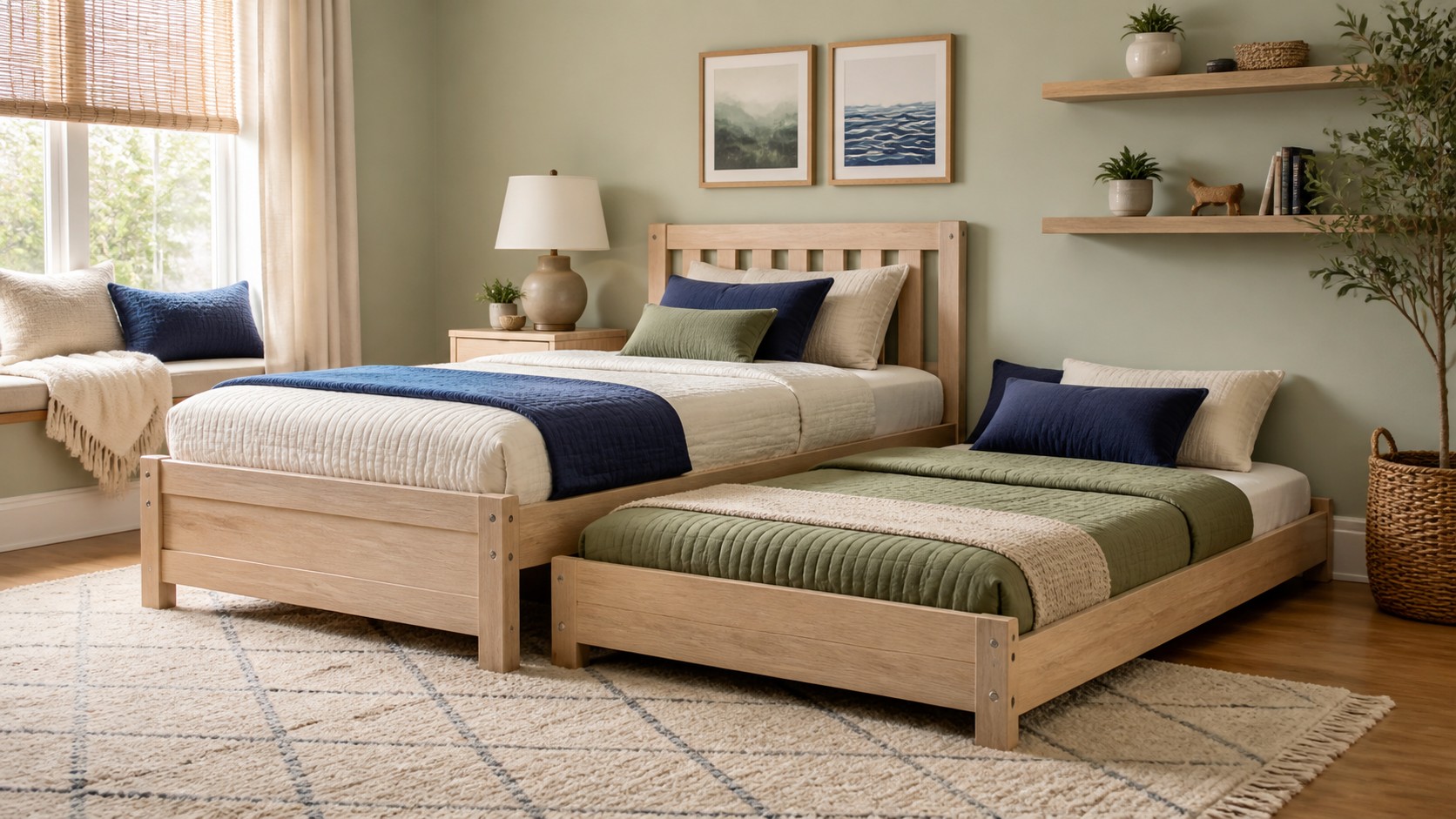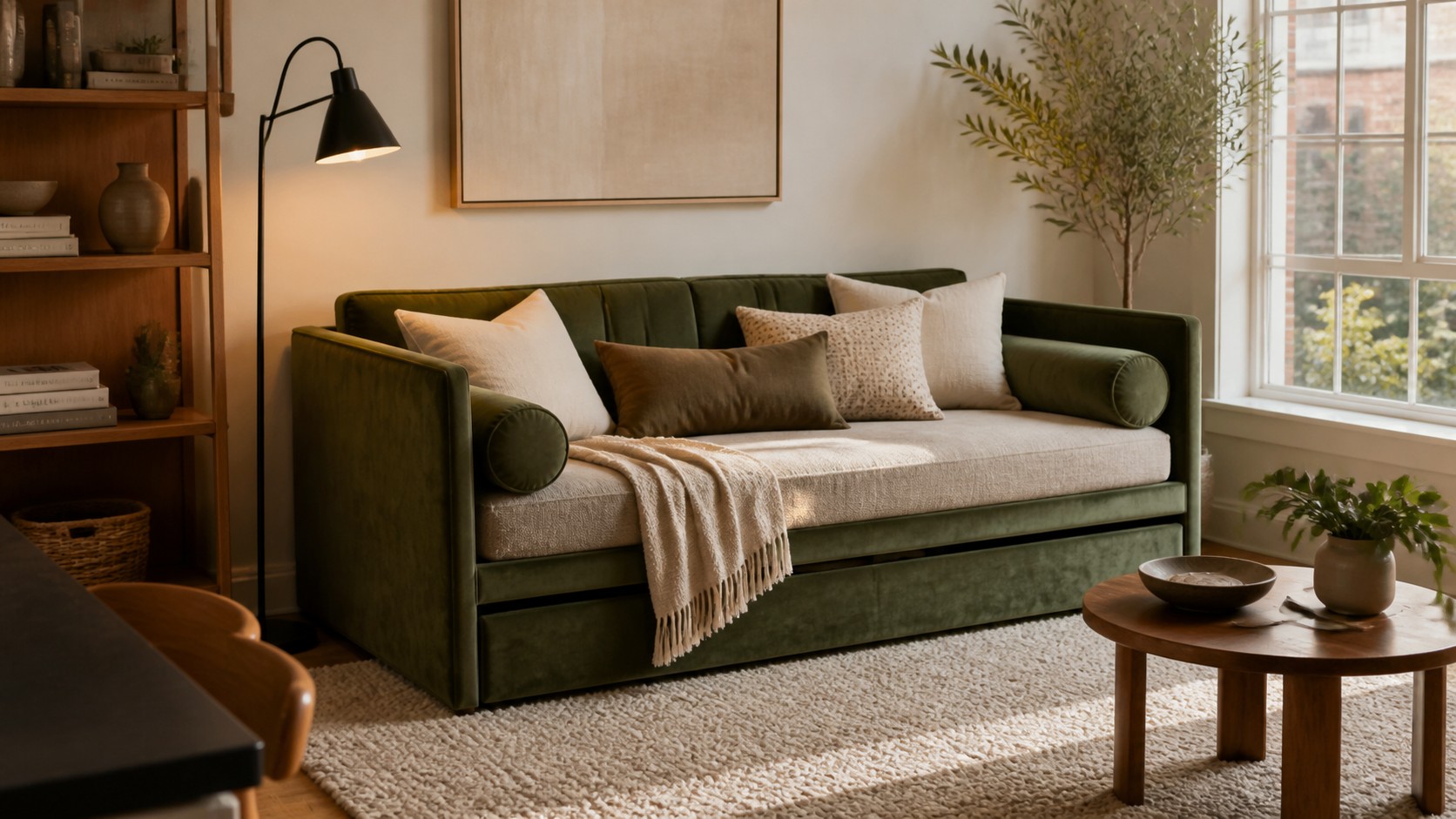
Top Daybeds That Double as Sofas: Space-Saving Picks becomes much easier to evaluate when the bed is treated as working furniture rather than a photograph. This guide takes using a daybed as credible seating without sacrificing sleep comfort, then follows the decision from room measurements and mattress support through daily use, maintenance, and long-term value. It is written to help people creating flexible guest space in offices, studios, children's rooms, or multipurpose rooms choose with confidence.
A: Yes, especially in small rooms when styled with back pillows and bolsters.
A: Most use a twin mattress, though full-size options are available.
A: It can be, as long as the mattress is supportive and the pillows create a good backrest.
A: Usually no; many include slats or a platform-style support system.
A: Yes if you need occasional extra sleeping space without adding another bed.
A: Upholstered daybeds with arms and a back panel look the most sofa-like.
A: Yes, they combine seating, sleeping, and sometimes storage in one footprint.
A: Use a fitted cover, large back pillows, side bolsters, and decorative throws.
A: Yes, if the frame is sturdy and the mattress offers enough support.
A: Against a wall, in a corner, or under a window usually works best.
The Difference Between a Daybed and a Deep Sofa
The practical way to evaluate bolster cushions is to translate the specification into a bedroom outcome. Ask whether it keeps the mattress supported, makes storage reachable, improves a sleeping position, protects a child, or helps the furniture fit the architecture. That question keeps top daybeds that double as sofas: space-saving picks grounded in use rather than novelty. It also reduces the chance of insufficient floor clearance, one of the common reasons a promising bed begins to feel like an expensive compromise after assembly.
A confident decision does not require furniture-industry vocabulary. It requires accurate measurements, a clear picture of who will use the bed, and an honest list of tasks the furniture must perform. Imagine changing sheets, vacuuming, opening drawers, getting up in darkness, hosting a guest, or moving the frame to another room. If a feature makes those scenes harder, its visual appeal may not compensate for the friction it adds.
For people creating flexible guest space in offices, studios, children's rooms, or multipurpose rooms, the difference between a daybed and a deep sofa should be connected to the ordinary moments that happen every night and every morning. The right bed makes those moments steadier without asking for constant adjustment or special care. In the case of top daybeds that double as sofas: space-saving picks, notice how thin uncomfortable mattresses affects support, noise, usable floor area, bedding, and the way a person moves around the room. A frame can look convincing in a cropped product photograph yet become frustrating when its dimensions or construction do not match the household.
Back Support Through Bolsters and Cushion Scale
The practical way to evaluate roll-out trundles is to translate the specification into a bedroom outcome. Ask whether it keeps the mattress supported, makes storage reachable, improves a sleeping position, protects a child, or helps the furniture fit the architecture. That question keeps top daybeds that double as sofas: space-saving picks grounded in use rather than novelty. It also reduces the chance of difficult deployment, one of the common reasons a promising bed begins to feel like an expensive compromise after assembly.
A confident decision does not require furniture-industry vocabulary. It requires accurate measurements, a clear picture of who will use the bed, and an honest list of tasks the furniture must perform. Imagine changing sheets, vacuuming, opening drawers, getting up in darkness, hosting a guest, or moving the frame to another room. If a feature makes those scenes harder, its visual appeal may not compensate for the friction it adds.
For people creating flexible guest space in offices, studios, children's rooms, or multipurpose rooms, back support through bolsters and cushion scale should be connected to the ordinary moments that happen every night and every morning. The right bed makes those moments steadier without asking for constant adjustment or special care. In the case of top daybeds that double as sofas: space-saving picks, notice how daybeds affects support, noise, usable floor area, bedding, and the way a person moves around the room. A frame can look convincing in a cropped product photograph yet become frustrating when its dimensions or construction do not match the household.
Fabrics and Frames That Read as Living-Room Furniture
The practical way to evaluate bolster cushions is to translate the specification into a bedroom outcome. Ask whether it keeps the mattress supported, makes storage reachable, improves a sleeping position, protects a child, or helps the furniture fit the architecture. That question keeps top daybeds that double as sofas: space-saving picks grounded in use rather than novelty. It also reduces the chance of thin uncomfortable mattresses, one of the common reasons a promising bed begins to feel like an expensive compromise after assembly.
A confident decision does not require furniture-industry vocabulary. It requires accurate measurements, a clear picture of who will use the bed, and an honest list of tasks the furniture must perform. Imagine changing sheets, vacuuming, opening drawers, getting up in darkness, hosting a guest, or moving the frame to another room. If a feature makes those scenes harder, its visual appeal may not compensate for the friction it adds.
For people creating flexible guest space in offices, studios, children's rooms, or multipurpose rooms, fabrics and frames that read as living-room furniture should be connected to the ordinary moments that happen every night and every morning. The right bed makes those moments steadier without asking for constant adjustment or special care. In the case of top daybeds that double as sofas: space-saving picks, notice how sofas affects support, noise, usable floor area, bedding, and the way a person moves around the room. A frame can look convincing in a cropped product photograph yet become frustrating when its dimensions or construction do not match the household.
Seat Height, Mattress Firmness, and Everyday Comfort
The practical way to evaluate roll-out trundles is to translate the specification into a bedroom outcome. Ask whether it keeps the mattress supported, makes storage reachable, improves a sleeping position, protects a child, or helps the furniture fit the architecture. That question keeps top daybeds that double as sofas: space-saving picks grounded in use rather than novelty. It also reduces the chance of a daybed that never feels like seating, one of the common reasons a promising bed begins to feel like an expensive compromise after assembly.
A confident decision does not require furniture-industry vocabulary. It requires accurate measurements, a clear picture of who will use the bed, and an honest list of tasks the furniture must perform. Imagine changing sheets, vacuuming, opening drawers, getting up in darkness, hosting a guest, or moving the frame to another room. If a feature makes those scenes harder, its visual appeal may not compensate for the friction it adds.
For people creating flexible guest space in offices, studios, children's rooms, or multipurpose rooms, seat height, mattress firmness, and everyday comfort should be connected to the ordinary moments that happen every night and every morning. The right bed makes those moments steadier without asking for constant adjustment or special care. In the case of top daybeds that double as sofas: space-saving picks, notice how picks affects support, noise, usable floor area, bedding, and the way a person moves around the room. A frame can look convincing in a cropped product photograph yet become frustrating when its dimensions or construction do not match the household.
Styling the Bed Without a Mountain of Pillows
The practical way to evaluate bolster cushions is to translate the specification into a bedroom outcome. Ask whether it keeps the mattress supported, makes storage reachable, improves a sleeping position, protects a child, or helps the furniture fit the architecture. That question keeps top daybeds that double as sofas: space-saving picks grounded in use rather than novelty. It also reduces the chance of insufficient floor clearance, one of the common reasons a promising bed begins to feel like an expensive compromise after assembly.
A confident decision does not require furniture-industry vocabulary. It requires accurate measurements, a clear picture of who will use the bed, and an honest list of tasks the furniture must perform. Imagine changing sheets, vacuuming, opening drawers, getting up in darkness, hosting a guest, or moving the frame to another room. If a feature makes those scenes harder, its visual appeal may not compensate for the friction it adds.
For people creating flexible guest space in offices, studios, children's rooms, or multipurpose rooms, styling the bed without a mountain of pillows should be connected to the ordinary moments that happen every night and every morning. The right bed makes those moments steadier without asking for constant adjustment or special care. In the case of top daybeds that double as sofas: space-saving picks, notice how pop-up frames affects support, noise, usable floor area, bedding, and the way a person moves around the room. A frame can look convincing in a cropped product photograph yet become frustrating when its dimensions or construction do not match the household.
Turning the Room Back Into a Bedroom Quickly
The practical way to evaluate roll-out trundles is to translate the specification into a bedroom outcome. Ask whether it keeps the mattress supported, makes storage reachable, improves a sleeping position, protects a child, or helps the furniture fit the architecture. That question keeps top daybeds that double as sofas: space-saving picks grounded in use rather than novelty. It also reduces the chance of difficult deployment, one of the common reasons a promising bed begins to feel like an expensive compromise after assembly.
A confident decision does not require furniture-industry vocabulary. It requires accurate measurements, a clear picture of who will use the bed, and an honest list of tasks the furniture must perform. Imagine changing sheets, vacuuming, opening drawers, getting up in darkness, hosting a guest, or moving the frame to another room. If a feature makes those scenes harder, its visual appeal may not compensate for the friction it adds.
For people creating flexible guest space in offices, studios, children's rooms, or multipurpose rooms, turning the room back into a bedroom quickly should be connected to the ordinary moments that happen every night and every morning. The right bed makes those moments steadier without asking for constant adjustment or special care. In the case of top daybeds that double as sofas: space-saving picks, notice how thin uncomfortable mattresses affects support, noise, usable floor area, bedding, and the way a person moves around the room. A frame can look convincing in a cropped product photograph yet become frustrating when its dimensions or construction do not match the household.
Where Sofa-Like Daybeds Fall Short
The practical way to evaluate bolster cushions is to translate the specification into a bedroom outcome. Ask whether it keeps the mattress supported, makes storage reachable, improves a sleeping position, protects a child, or helps the furniture fit the architecture. That question keeps top daybeds that double as sofas: space-saving picks grounded in use rather than novelty. It also reduces the chance of thin uncomfortable mattresses, one of the common reasons a promising bed begins to feel like an expensive compromise after assembly.
A confident decision does not require furniture-industry vocabulary. It requires accurate measurements, a clear picture of who will use the bed, and an honest list of tasks the furniture must perform. Imagine changing sheets, vacuuming, opening drawers, getting up in darkness, hosting a guest, or moving the frame to another room. If a feature makes those scenes harder, its visual appeal may not compensate for the friction it adds.
For people creating flexible guest space in offices, studios, children's rooms, or multipurpose rooms, where sofa-like daybeds fall short should be connected to the ordinary moments that happen every night and every morning. The right bed makes those moments steadier without asking for constant adjustment or special care. In the case of top daybeds that double as sofas: space-saving picks, notice how daybeds affects support, noise, usable floor area, bedding, and the way a person moves around the room. A frame can look convincing in a cropped product photograph yet become frustrating when its dimensions or construction do not match the household.
Choosing a Design That Performs Both Jobs
The practical way to evaluate roll-out trundles is to translate the specification into a bedroom outcome. Ask whether it keeps the mattress supported, makes storage reachable, improves a sleeping position, protects a child, or helps the furniture fit the architecture. That question keeps top daybeds that double as sofas: space-saving picks grounded in use rather than novelty. It also reduces the chance of a daybed that never feels like seating, one of the common reasons a promising bed begins to feel like an expensive compromise after assembly.
A confident decision does not require furniture-industry vocabulary. It requires accurate measurements, a clear picture of who will use the bed, and an honest list of tasks the furniture must perform. Imagine changing sheets, vacuuming, opening drawers, getting up in darkness, hosting a guest, or moving the frame to another room. If a feature makes those scenes harder, its visual appeal may not compensate for the friction it adds.
The Bedroom Street Verdict on Top Daybeds That Double as Sofas
The best answer to top daybeds that double as sofas: space-saving picks is the one that fits the room, supports the mattress correctly, and remains pleasant to use after the initial excitement fades. Prioritize sound construction, honest dimensions, understandable warranties, and details that make sheets, storage, cleaning, or adjustments easier. When those pieces line up, the bed becomes a dependable part of the room rather than a design decision that must be worked around.