Every Room Needs Lighting Matched to Its Job
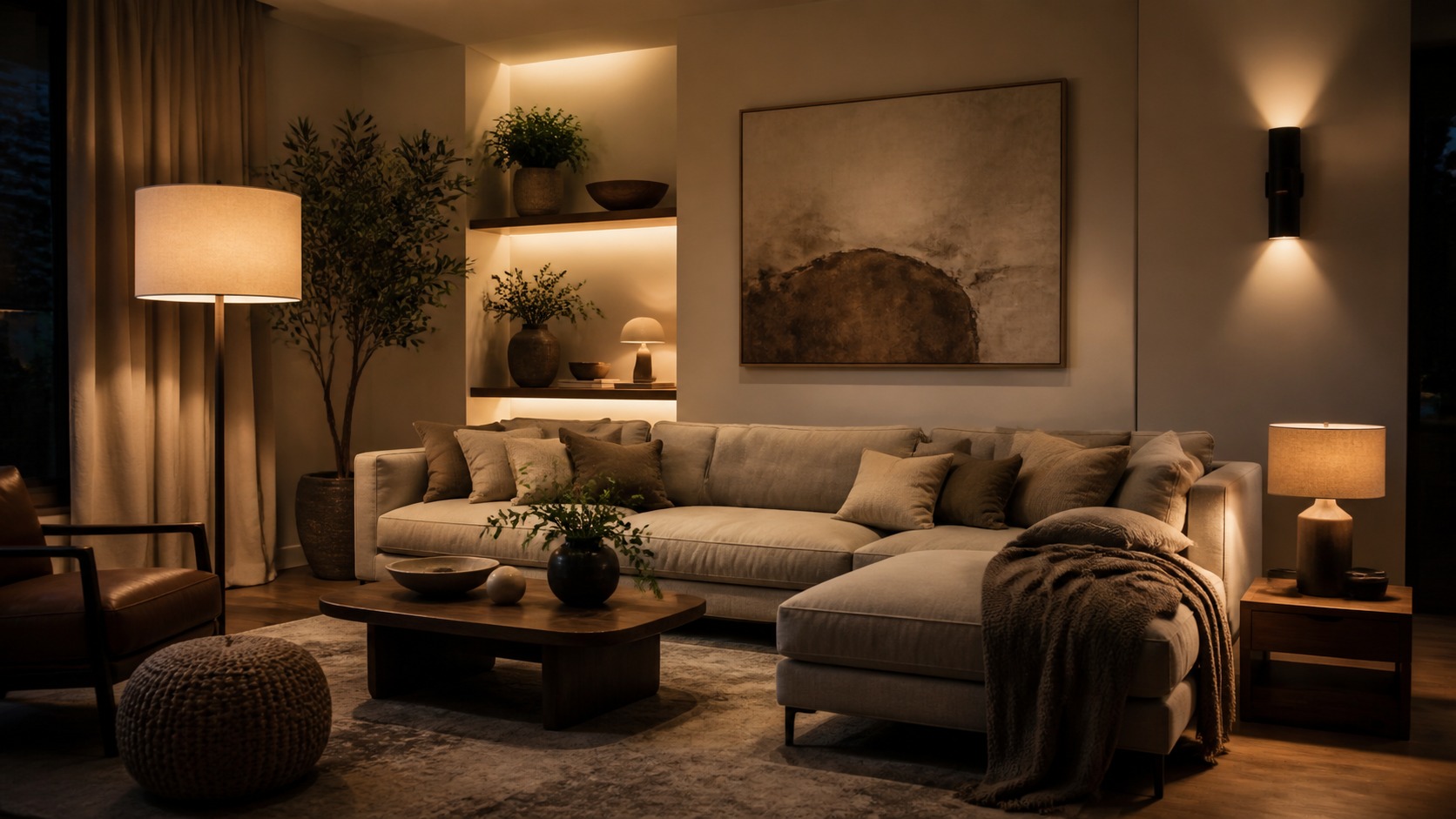
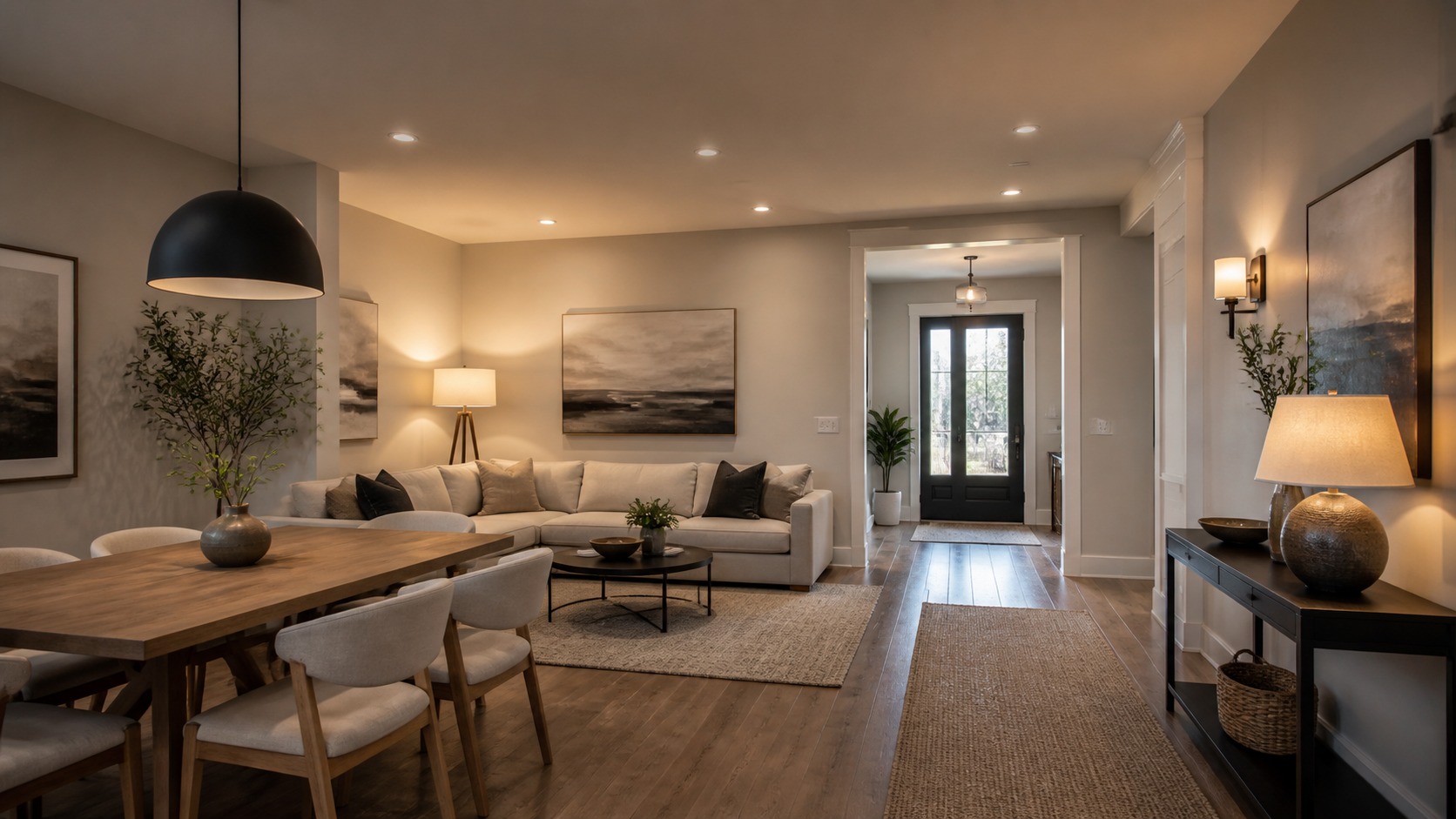
How to Choose the Right Lighting for Every Room in Your Home depends on more than choosing an attractive fixture. A room usually needs ambient light for general visibility, task light for reading or work, and accent light for depth. When those layers work together, the room feels flexible instead of flat.
1. Light Layers for whole-home lighting - ceiling wash should solve a real room need before it becomes a style choice.
2. Light Layers for whole-home lighting - table lamps changes how the room feels from the main viewing angle.
3. Light Layers for whole-home lighting - floor lamps deserves a day-and-night check before the setup is final.
4. Light Layers for whole-home lighting - sconces should connect to nearby furniture, finishes, or daily routines.
5. Light Layers for whole-home lighting - shelf glow works best when it improves function without adding clutter.
6. Light Layers for whole-home lighting - picture lights should solve a real room need before it becomes a style choice.
7. Light Layers for whole-home lighting - pendants changes how the room feels from the main viewing angle.
8. Light Layers for whole-home lighting - recessed dimming deserves a day-and-night check before the setup is final.
9. Light Layers for whole-home lighting - cove lighting should connect to nearby furniture, finishes, or daily routines.
10. Light Layers for whole-home lighting - window light works best when it improves function without adding clutter.
1. Fixture Role for whole-home lighting - task lamp should solve a real room need before it becomes a style choice.
2. Fixture Role for whole-home lighting - reading sconce changes how the room feels from the main viewing angle.
3. Fixture Role for whole-home lighting - statement pendant deserves a day-and-night check before the setup is final.
4. Fixture Role for whole-home lighting - bedside lamp should connect to nearby furniture, finishes, or daily routines.
5. Fixture Role for whole-home lighting - entry lantern works best when it improves function without adding clutter.
6. Fixture Role for whole-home lighting - kitchen pendant should solve a real room need before it becomes a style choice.
7. Fixture Role for whole-home lighting - vanity light changes how the room feels from the main viewing angle.
8. Fixture Role for whole-home lighting - accent lamp deserves a day-and-night check before the setup is final.
9. Fixture Role for whole-home lighting - track head should connect to nearby furniture, finishes, or daily routines.
10. Fixture Role for whole-home lighting - flush mount works best when it improves function without adding clutter.
1. Warmth Level for whole-home lighting - 2700K bulbs should solve a real room need before it becomes a style choice.
2. Warmth Level for whole-home lighting - warm dimming changes how the room feels from the main viewing angle.
3. Warmth Level for whole-home lighting - shade color deserves a day-and-night check before the setup is final.
4. Warmth Level for whole-home lighting - cool daylight should connect to nearby furniture, finishes, or daily routines.
5. Warmth Level for whole-home lighting - amber glow works best when it improves function without adding clutter.
6. Warmth Level for whole-home lighting - bulb consistency should solve a real room need before it becomes a style choice.
7. Warmth Level for whole-home lighting - lamp height changes how the room feels from the main viewing angle.
8. Warmth Level for whole-home lighting - nighttime mood deserves a day-and-night check before the setup is final.
9. Warmth Level for whole-home lighting - task clarity should connect to nearby furniture, finishes, or daily routines.
10. Warmth Level for whole-home lighting - glare control works best when it improves function without adding clutter.
1. Control Plan for whole-home lighting - dimmers should solve a real room need before it becomes a style choice.
2. Control Plan for whole-home lighting - three-way switches changes how the room feels from the main viewing angle.
3. Control Plan for whole-home lighting - bedside reach deserves a day-and-night check before the setup is final.
4. Control Plan for whole-home lighting - smart plugs should connect to nearby furniture, finishes, or daily routines.
5. Control Plan for whole-home lighting - scene settings works best when it improves function without adding clutter.
6. Control Plan for whole-home lighting - motion sensors should solve a real room need before it becomes a style choice.
7. Control Plan for whole-home lighting - cord control changes how the room feels from the main viewing angle.
8. Control Plan for whole-home lighting - switch location deserves a day-and-night check before the setup is final.
9. Control Plan for whole-home lighting - lamp grouping should connect to nearby furniture, finishes, or daily routines.
10. Control Plan for whole-home lighting - guest controls works best when it improves function without adding clutter.
1. Room Mood for whole-home lighting - reading corner should solve a real room need before it becomes a style choice.
2. Room Mood for whole-home lighting - movie night changes how the room feels from the main viewing angle.
3. Room Mood for whole-home lighting - quiet bedroom deserves a day-and-night check before the setup is final.
4. Room Mood for whole-home lighting - dinner glow should connect to nearby furniture, finishes, or daily routines.
5. Room Mood for whole-home lighting - morning routine works best when it improves function without adding clutter.
6. Room Mood for whole-home lighting - soft hallway should solve a real room need before it becomes a style choice.
7. Room Mood for whole-home lighting - work focus changes how the room feels from the main viewing angle.
8. Room Mood for whole-home lighting - cozy nook deserves a day-and-night check before the setup is final.
9. Room Mood for whole-home lighting - entertaining should connect to nearby furniture, finishes, or daily routines.
10. Room Mood for whole-home lighting - wind-down time works best when it improves function without adding clutter.
What lighting layer comes first for whole-home lighting?
Start with comfortable ambient light, then add task and accent layers where people actually use the room.
What bulb warmth fits whole-home lighting best?
Warm bulbs around 2700K usually feel softer in bedrooms and living rooms.
Do dimmers matter for whole-home lighting?
Dimmers are one of the easiest ways to make one fixture work for different moments.
Where should task light go in whole-home lighting?
Place it beside reading chairs, beds, counters, desks, or any spot where focused activity happens.
How can whole-home lighting avoid glare?
Use shades, lower brightness, indirect light, and fixture placement that keeps bulbs out of direct sight.
Can lamps carry whole-home lighting without overhead light?
In many cozy rooms, several lamps can feel better than relying on one overhead fixture.
What makes whole-home lighting look designed?
Repeated finishes, balanced heights, and clear roles for each fixture make lighting feel intentional.
How many sources does whole-home lighting need?
Most rooms feel better with at least three useful sources, but the right number depends on size.
What should whole-home lighting avoid?
Avoid harsh overhead light as the only source and place controls within easy reach.
What is the final whole-home lighting test?
Use the room at night and see whether it feels comfortable without turning every light on.
Good Lighting Starts With Layers
How to Choose the Right Lighting for Every Room in Your Home depends on more than choosing an attractive fixture. A room usually needs ambient light for general visibility, task light for reading or work, and accent light for depth. When those layers work together, the room feels flexible instead of flat.
The best lighting plan lets the space shift from practical to cozy without changing the furniture. Dimmers, lamp placement, shade material, and bulb warmth often matter as much as the fixture style.
Ambient Light Sets the Base Mood
Ambient light should make the room usable without making it harsh. Ceiling fixtures, recessed lights, cove lighting, and shaded lamps can all create that base layer. The goal is comfortable visibility rather than a bright wash over every surface.
Task Light Belongs Where People Actually Sit
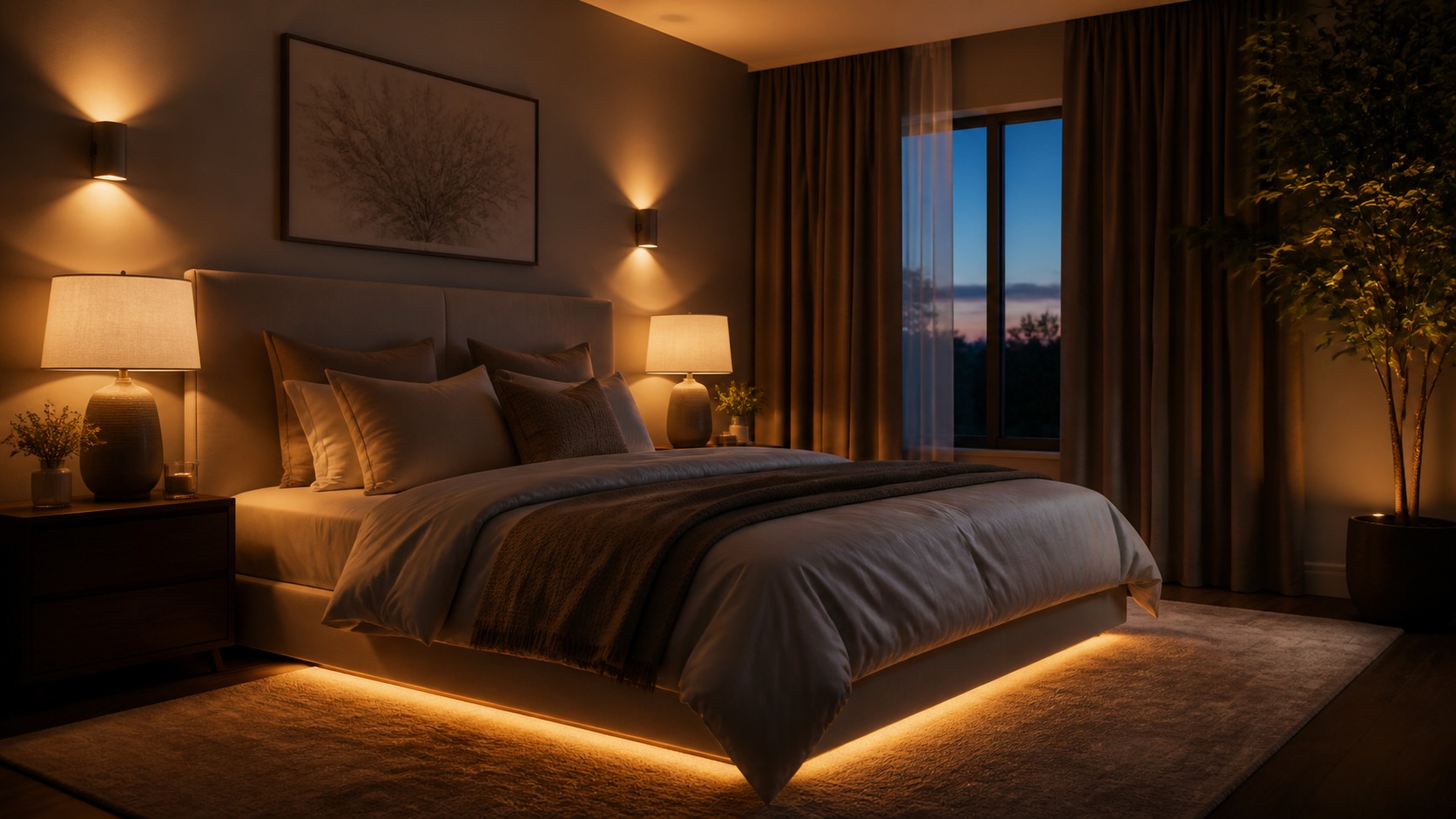
Reading chairs, bedside tables, kitchen counters, desks, and sofas all need light aimed at real activities. A beautiful lamp in the wrong place becomes decoration instead of function.
This is the point where practical fit should lead the design choice. The best option should make the room easier to use while still supporting the mood, scale, and daily habits already present.
Accent Light Adds Depth
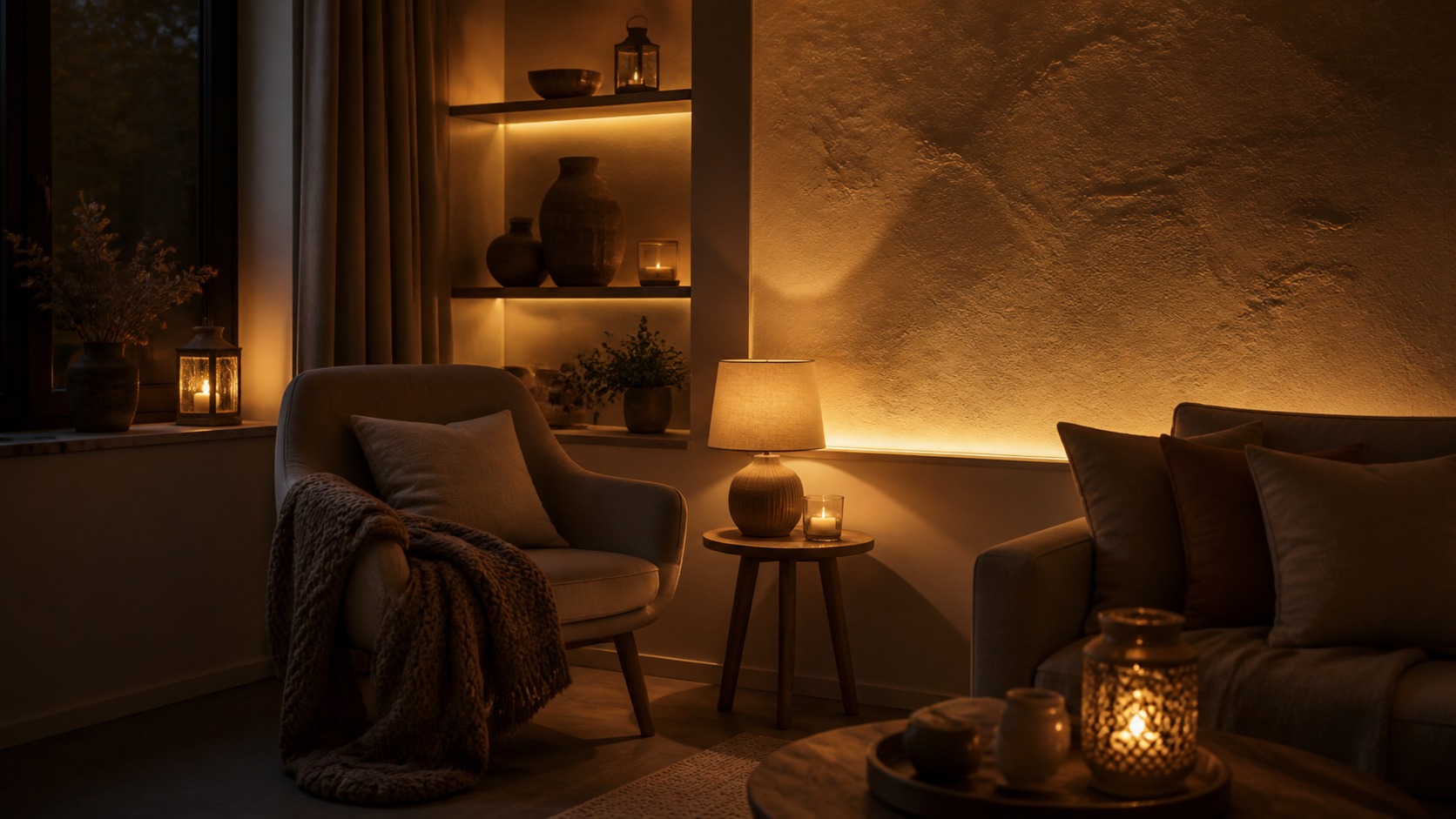
Accent lighting gives a room shape at night. Sconces, shelf lights, picture lights, and small lamps can highlight walls, plants, art, or architectural details. This layer prevents the room from feeling like one overhead source is doing all the work. Accent lighting should be subtle enough to support the room rather than compete with it.
Warmth and Dimming Make the Difference
Bulb color temperature strongly affects mood. Warmer light feels restful in bedrooms and living rooms, while clearer light may help kitchens, closets, and work areas. Dimmers add range so one fixture can serve several moments.
A second pass through the room usually reveals whether the choice is balanced or trying to solve too many problems at once.
Fixture Scale Should Match the Room
A tiny pendant over a large table can look accidental, while an oversized lamp can crowd a small nightstand. Scale should be judged against furniture, ceiling height, shade diameter, and walking paths.
The Best Plan Feels Easy at Night
Lighting should be easy to control when the room is actually being used. Switch locations, bedside reach, smart controls, and dimmer memory all affect whether the plan works in real life. If a lamp is inconvenient, it will not create ambience for long.
Choose lighting that makes the room calmer, easier to use, and more flattering after sunset.
Final Buying Perspective
How to Choose the Right Lighting for Every Room in Your Home should be judged by how naturally it improves the room after the first impression fades. The strongest choice fits the room’s scale, supports daily routines, and feels connected to the surrounding furniture, light, texture, and traffic flow. When two options look equally appealing, choose the one that will be easier to live with six months from now.