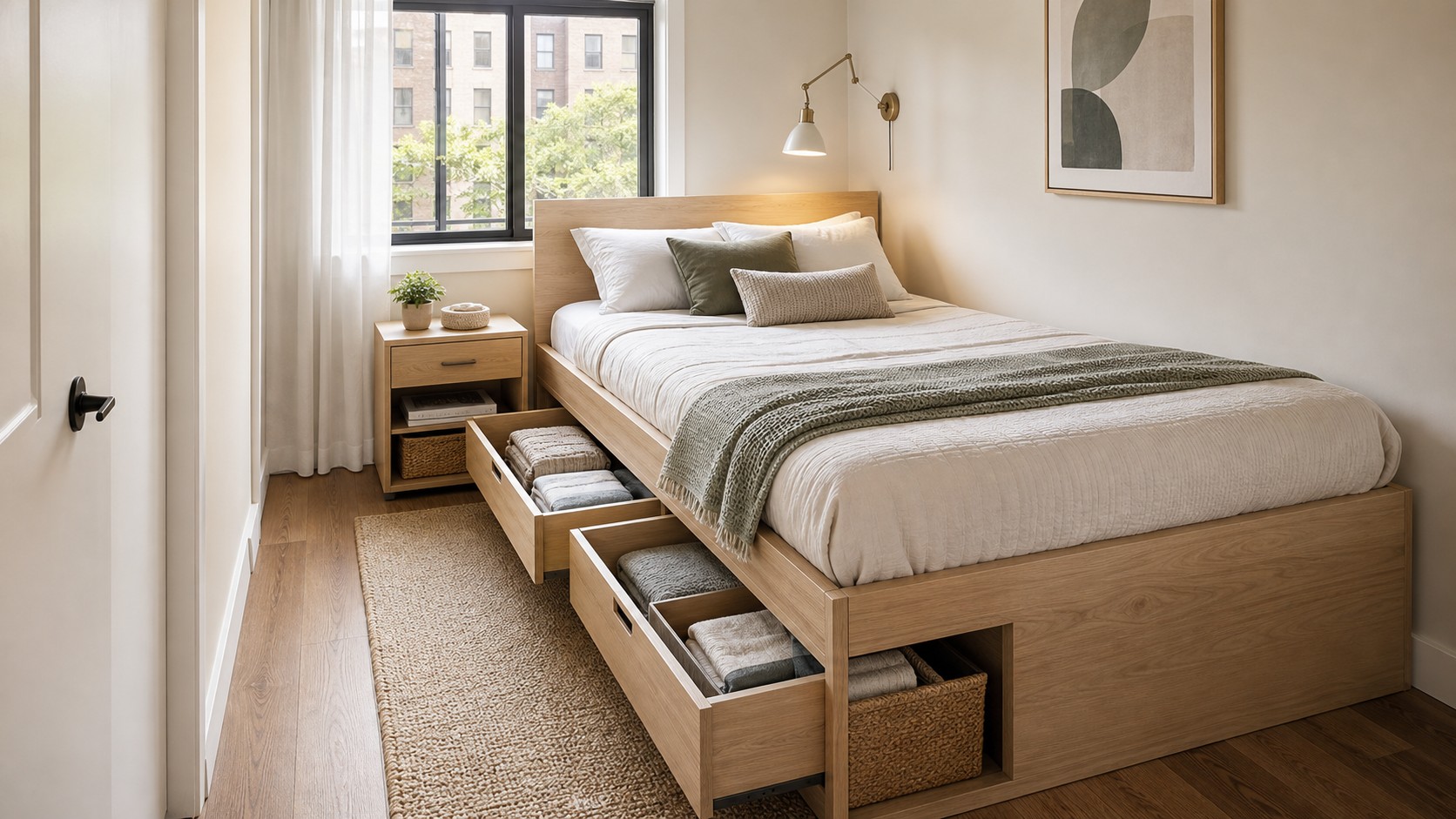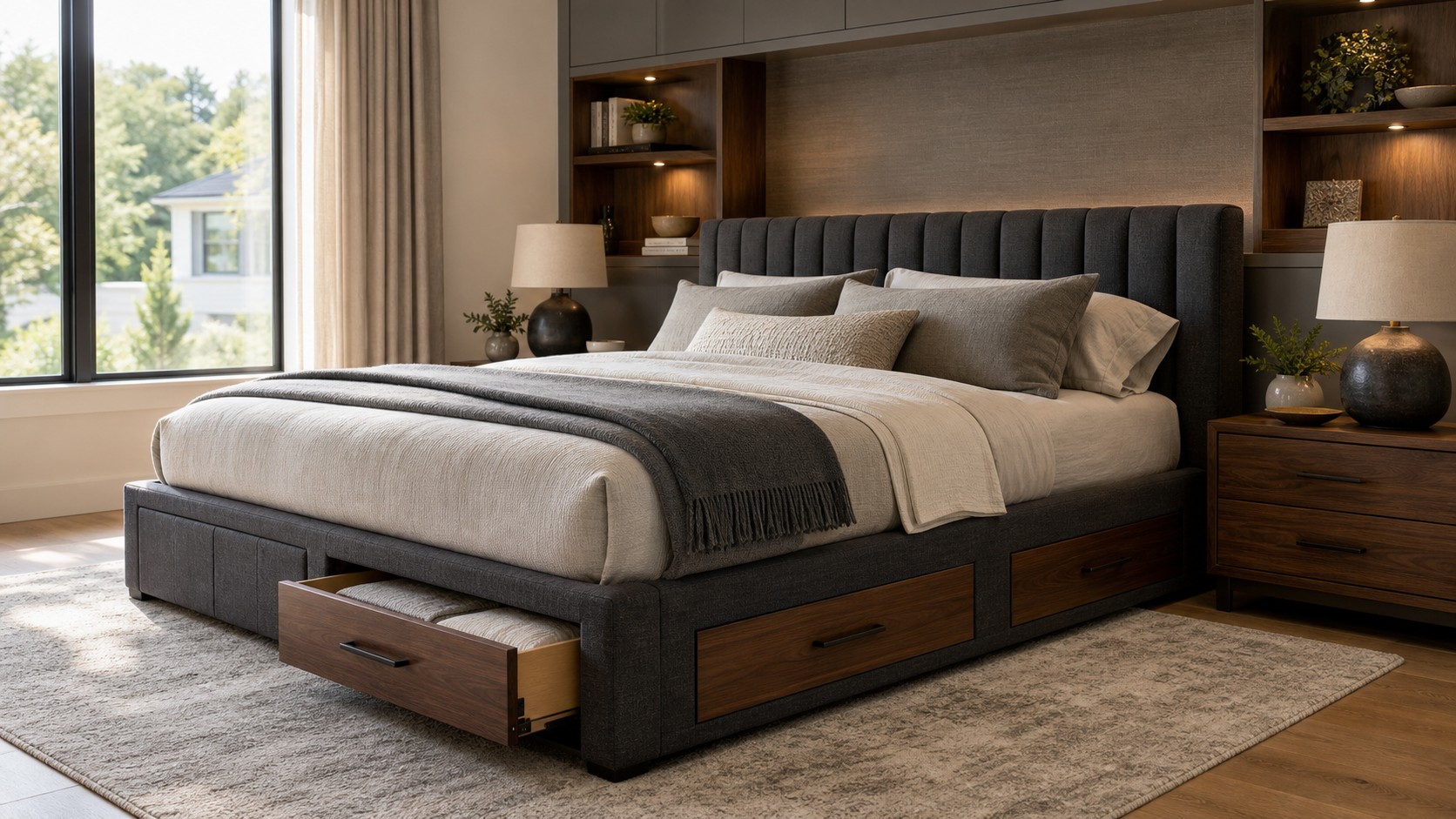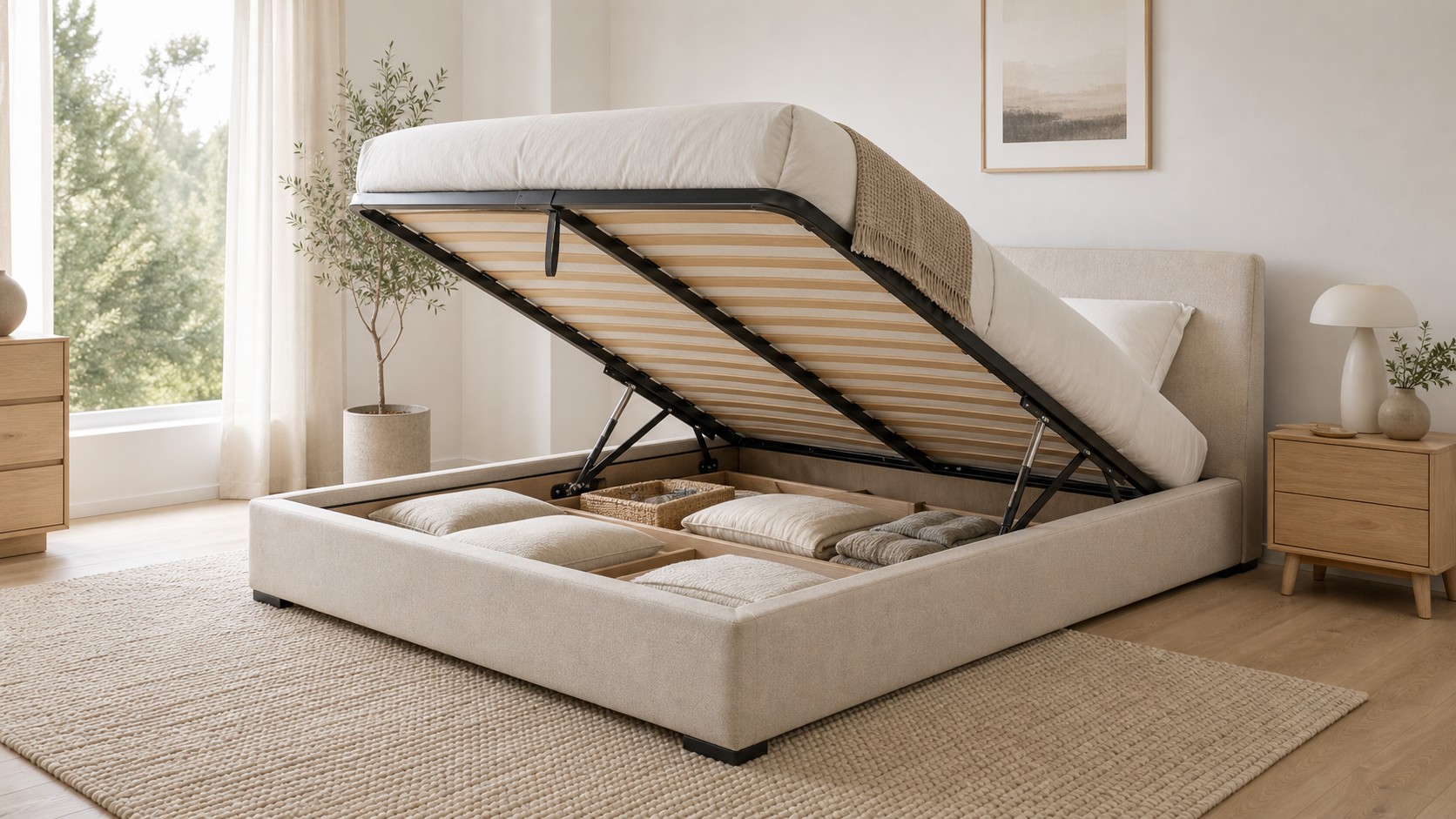
Best Lift-Up Storage Beds for Hidden Space Solutions becomes much easier to evaluate when the bed is treated as working furniture rather than a photograph. This guide takes hidden capacity, lift mechanisms, and safe daily operation, then follows the decision from room measurements and mattress support through daily use, maintenance, and long-term value. It is written to help households that need useful storage without crowding the bedroom with another cabinet choose with confidence.
A: Yes. They use vertical access, so you do not need extra side clearance for drawers.
A: Most platform lift beds do not, but always check the manufacturer’s instructions.
A: Good gas-lift systems make the mattress easier to raise and lower.
A: Bedding, pillows, winter clothes, luggage, shoes, and spare blankets work well.
A: Quality models are usually quiet, especially when the frame is assembled tightly.
A: Lift-up storage is better for tight spaces; drawers are better for quick daily access.
A: Usually yes, as long as the slat spacing and weight limits are compatible.
A: Yes, when assembled correctly and used within the recommended weight limits.
A: It depends on frame height, but many offer nearly the full area beneath the mattress.
A: Measure your room, mattress size, lift direction, frame height, storage depth, and weight capacity.
How Lift-Up Beds Create One Large Hidden Zone
A confident decision does not require furniture-industry vocabulary. It requires accurate measurements, a clear picture of who will use the bed, and an honest list of tasks the furniture must perform. Imagine changing sheets, vacuuming, opening drawers, getting up in darkness, hosting a guest, or moving the frame to another room. If a feature makes those scenes harder, its visual appeal may not compensate for the friction it adds.
For households that need useful storage without crowding the bedroom with another cabinet, how lift-up beds create one large hidden zone should be connected to the ordinary moments that happen every night and every morning. The right bed makes those moments steadier without asking for constant adjustment or special care. In the case of best lift-up storage beds for hidden space solutions, notice how gas struts affects support, noise, usable floor area, bedding, and the way a person moves around the room. A frame can look convincing in a cropped product photograph yet become frustrating when its dimensions or construction do not match the household.
The practical way to evaluate recessed pulls is to translate the specification into a bedroom outcome. Ask whether it keeps the mattress supported, makes storage reachable, improves a sleeping position, protects a child, or helps the furniture fit the architecture. That question keeps best lift-up storage beds for hidden space solutions grounded in use rather than novelty. It also reduces the chance of weak drawer bottoms, one of the common reasons a promising bed begins to feel like an expensive compromise after assembly.
Side-Lift Versus End-Lift Access
A confident decision does not require furniture-industry vocabulary. It requires accurate measurements, a clear picture of who will use the bed, and an honest list of tasks the furniture must perform. Imagine changing sheets, vacuuming, opening drawers, getting up in darkness, hosting a guest, or moving the frame to another room. If a feature makes those scenes harder, its visual appeal may not compensate for the friction it adds.
For households that need useful storage without crowding the bedroom with another cabinet, side-lift versus end-lift access should be connected to the ordinary moments that happen every night and every morning. The right bed makes those moments steadier without asking for constant adjustment or special care. In the case of best lift-up storage beds for hidden space solutions, notice how blocked drawer paths affects support, noise, usable floor area, bedding, and the way a person moves around the room. A frame can look convincing in a cropped product photograph yet become frustrating when its dimensions or construction do not match the household.
The practical way to evaluate lift-up decks is to translate the specification into a bedroom outcome. Ask whether it keeps the mattress supported, makes storage reachable, improves a sleeping position, protects a child, or helps the furniture fit the architecture. That question keeps best lift-up storage beds for hidden space solutions grounded in use rather than novelty. It also reduces the chance of shallow compartments, one of the common reasons a promising bed begins to feel like an expensive compromise after assembly.
Gas Struts, Mattress Weight, and Safe Operation
A confident decision does not require furniture-industry vocabulary. It requires accurate measurements, a clear picture of who will use the bed, and an honest list of tasks the furniture must perform. Imagine changing sheets, vacuuming, opening drawers, getting up in darkness, hosting a guest, or moving the frame to another room. If a feature makes those scenes harder, its visual appeal may not compensate for the friction it adds.
For households that need useful storage without crowding the bedroom with another cabinet, gas struts, mattress weight, and safe operation should be connected to the ordinary moments that happen every night and every morning. The right bed makes those moments steadier without asking for constant adjustment or special care. In the case of best lift-up storage beds for hidden space solutions, notice how best affects support, noise, usable floor area, bedding, and the way a person moves around the room. A frame can look convincing in a cropped product photograph yet become frustrating when its dimensions or construction do not match the household.
The practical way to evaluate recessed pulls is to translate the specification into a bedroom outcome. Ask whether it keeps the mattress supported, makes storage reachable, improves a sleeping position, protects a child, or helps the furniture fit the architecture. That question keeps best lift-up storage beds for hidden space solutions grounded in use rather than novelty. It also reduces the chance of blocked drawer paths, one of the common reasons a promising bed begins to feel like an expensive compromise after assembly.
Organizing a Deep Compartment Without Losing Things
A confident decision does not require furniture-industry vocabulary. It requires accurate measurements, a clear picture of who will use the bed, and an honest list of tasks the furniture must perform. Imagine changing sheets, vacuuming, opening drawers, getting up in darkness, hosting a guest, or moving the frame to another room. If a feature makes those scenes harder, its visual appeal may not compensate for the friction it adds.
For households that need useful storage without crowding the bedroom with another cabinet, organizing a deep compartment without losing things should be connected to the ordinary moments that happen every night and every morning. The right bed makes those moments steadier without asking for constant adjustment or special care. In the case of best lift-up storage beds for hidden space solutions, notice how beds affects support, noise, usable floor area, bedding, and the way a person moves around the room. A frame can look convincing in a cropped product photograph yet become frustrating when its dimensions or construction do not match the household.
The practical way to evaluate lift-up decks is to translate the specification into a bedroom outcome. Ask whether it keeps the mattress supported, makes storage reachable, improves a sleeping position, protects a child, or helps the furniture fit the architecture. That question keeps best lift-up storage beds for hidden space solutions grounded in use rather than novelty. It also reduces the chance of heavy lift mechanisms, one of the common reasons a promising bed begins to feel like an expensive compromise after assembly.
When a Lift Bed Beats Conventional Drawers
A confident decision does not require furniture-industry vocabulary. It requires accurate measurements, a clear picture of who will use the bed, and an honest list of tasks the furniture must perform. Imagine changing sheets, vacuuming, opening drawers, getting up in darkness, hosting a guest, or moving the frame to another room. If a feature makes those scenes harder, its visual appeal may not compensate for the friction it adds.
For households that need useful storage without crowding the bedroom with another cabinet, when a lift bed beats conventional drawers should be connected to the ordinary moments that happen every night and every morning. The right bed makes those moments steadier without asking for constant adjustment or special care. In the case of best lift-up storage beds for hidden space solutions, notice how solutions affects support, noise, usable floor area, bedding, and the way a person moves around the room. A frame can look convincing in a cropped product photograph yet become frustrating when its dimensions or construction do not match the household.
The practical way to evaluate recessed pulls is to translate the specification into a bedroom outcome. Ask whether it keeps the mattress supported, makes storage reachable, improves a sleeping position, protects a child, or helps the furniture fit the architecture. That question keeps best lift-up storage beds for hidden space solutions grounded in use rather than novelty. It also reduces the chance of weak drawer bottoms, one of the common reasons a promising bed begins to feel like an expensive compromise after assembly.
Ventilation and Moisture Under the Mattress
A confident decision does not require furniture-industry vocabulary. It requires accurate measurements, a clear picture of who will use the bed, and an honest list of tasks the furniture must perform. Imagine changing sheets, vacuuming, opening drawers, getting up in darkness, hosting a guest, or moving the frame to another room. If a feature makes those scenes harder, its visual appeal may not compensate for the friction it adds.
For households that need useful storage without crowding the bedroom with another cabinet, ventilation and moisture under the mattress should be connected to the ordinary moments that happen every night and every morning. The right bed makes those moments steadier without asking for constant adjustment or special care. In the case of best lift-up storage beds for hidden space solutions, notice how gas struts affects support, noise, usable floor area, bedding, and the way a person moves around the room. A frame can look convincing in a cropped product photograph yet become frustrating when its dimensions or construction do not match the household.
The practical way to evaluate lift-up decks is to translate the specification into a bedroom outcome. Ask whether it keeps the mattress supported, makes storage reachable, improves a sleeping position, protects a child, or helps the furniture fit the architecture. That question keeps best lift-up storage beds for hidden space solutions grounded in use rather than novelty. It also reduces the chance of shallow compartments, one of the common reasons a promising bed begins to feel like an expensive compromise after assembly.
Daily Access Versus Seasonal Storage
A confident decision does not require furniture-industry vocabulary. It requires accurate measurements, a clear picture of who will use the bed, and an honest list of tasks the furniture must perform. Imagine changing sheets, vacuuming, opening drawers, getting up in darkness, hosting a guest, or moving the frame to another room. If a feature makes those scenes harder, its visual appeal may not compensate for the friction it adds.
For households that need useful storage without crowding the bedroom with another cabinet, daily access versus seasonal storage should be connected to the ordinary moments that happen every night and every morning. The right bed makes those moments steadier without asking for constant adjustment or special care. In the case of best lift-up storage beds for hidden space solutions, notice how blocked drawer paths affects support, noise, usable floor area, bedding, and the way a person moves around the room. A frame can look convincing in a cropped product photograph yet become frustrating when its dimensions or construction do not match the household.
The practical way to evaluate recessed pulls is to translate the specification into a bedroom outcome. Ask whether it keeps the mattress supported, makes storage reachable, improves a sleeping position, protects a child, or helps the furniture fit the architecture. That question keeps best lift-up storage beds for hidden space solutions grounded in use rather than novelty. It also reduces the chance of blocked drawer paths, one of the common reasons a promising bed begins to feel like an expensive compromise after assembly.
The Final Mechanism and Warranty Checklist
A confident decision does not require furniture-industry vocabulary. It requires accurate measurements, a clear picture of who will use the bed, and an honest list of tasks the furniture must perform. Imagine changing sheets, vacuuming, opening drawers, getting up in darkness, hosting a guest, or moving the frame to another room. If a feature makes those scenes harder, its visual appeal may not compensate for the friction it adds.
For households that need useful storage without crowding the bedroom with another cabinet, the final mechanism and warranty checklist should be connected to the ordinary moments that happen every night and every morning. The right bed makes those moments steadier without asking for constant adjustment or special care. In the case of best lift-up storage beds for hidden space solutions, notice how best affects support, noise, usable floor area, bedding, and the way a person moves around the room. A frame can look convincing in a cropped product photograph yet become frustrating when its dimensions or construction do not match the household.
The Bedroom Street Verdict on Best Lift-Up Storage Beds for Hidden Space Solutions
The best answer to best lift-up storage beds for hidden space solutions is the one that fits the room, supports the mattress correctly, and remains pleasant to use after the initial excitement fades. Prioritize sound construction, honest dimensions, understandable warranties, and details that make sheets, storage, cleaning, or adjustments easier. When those pieces line up, the bed becomes a dependable part of the room rather than a design decision that must be worked around.