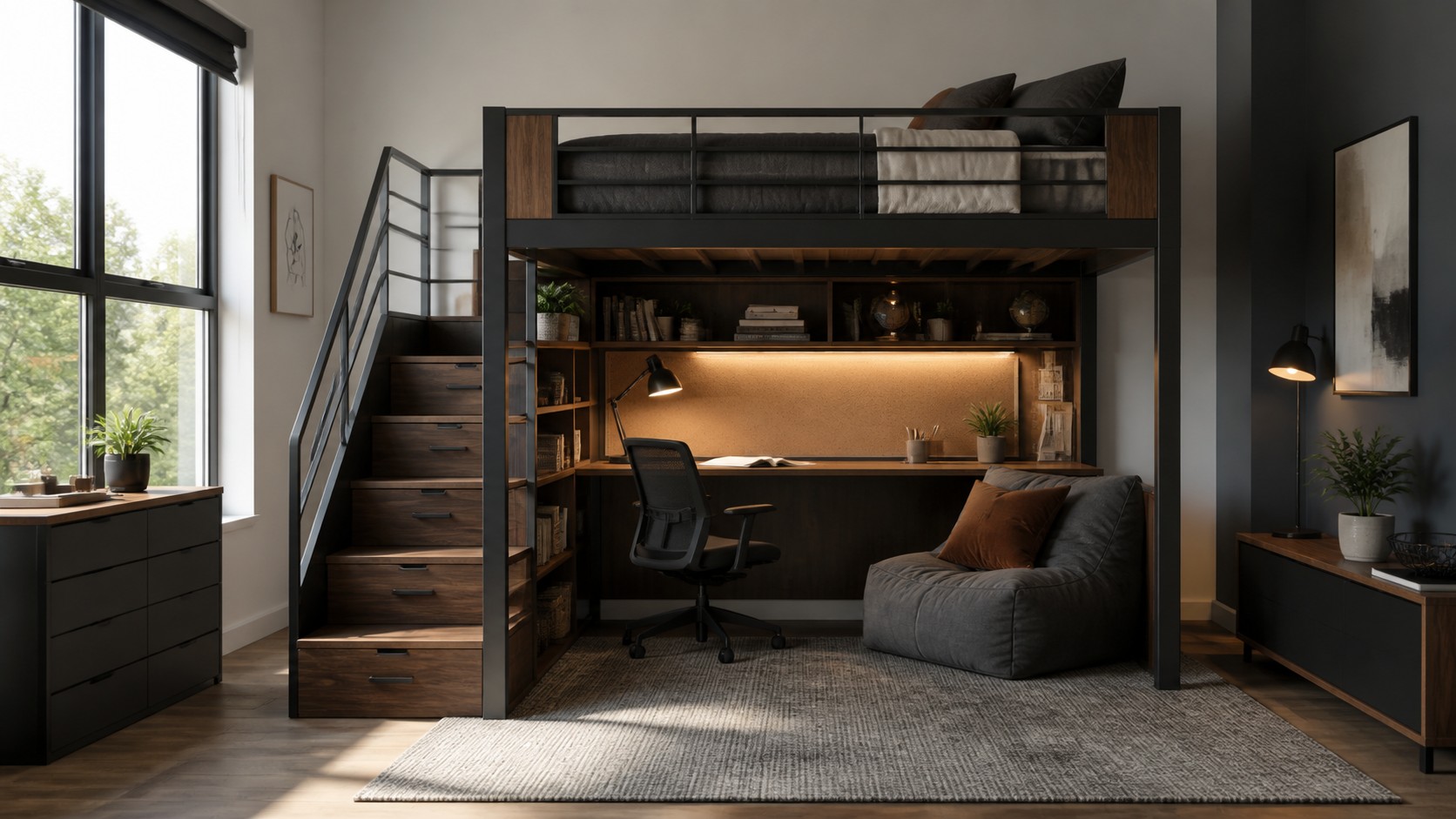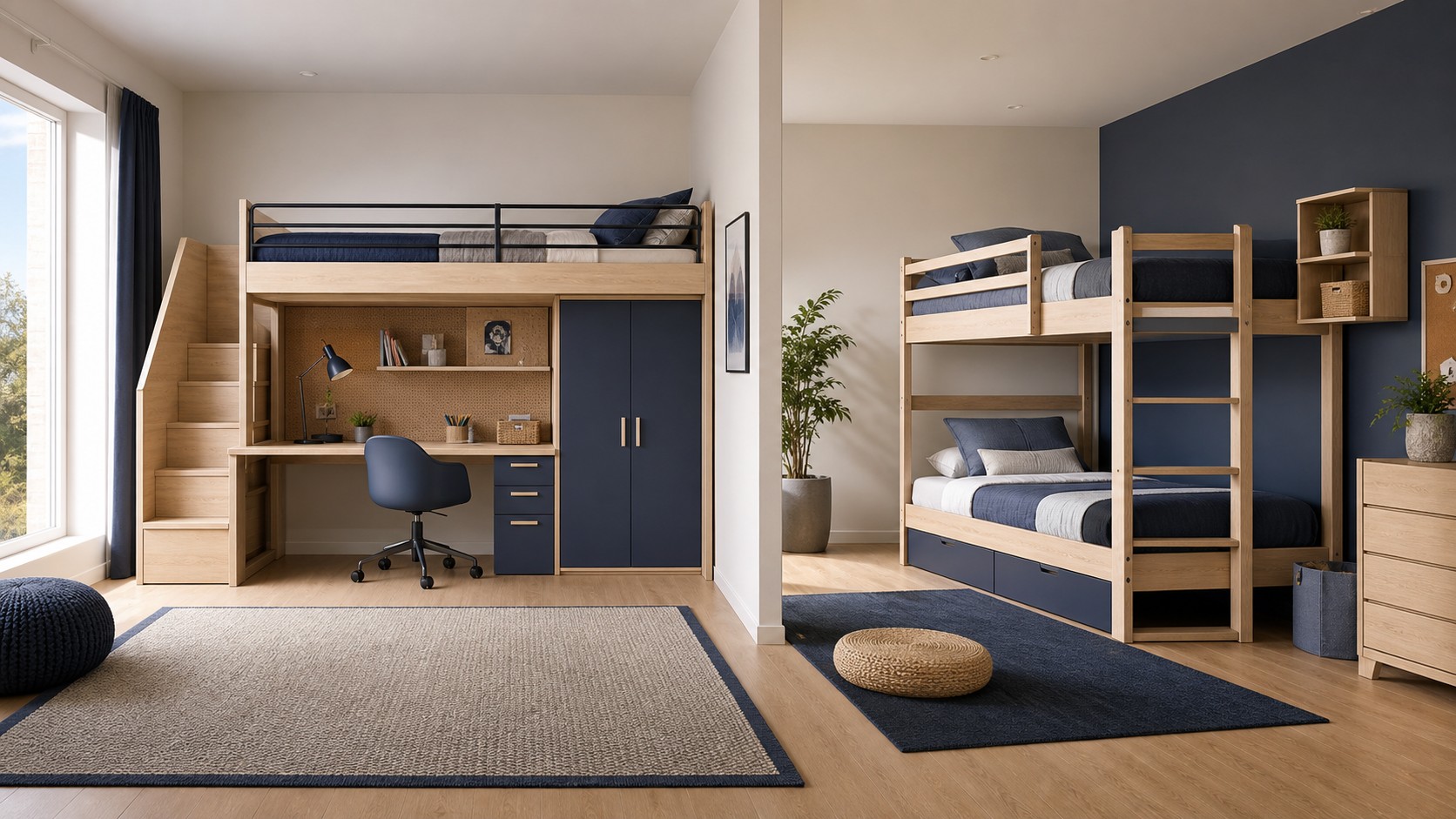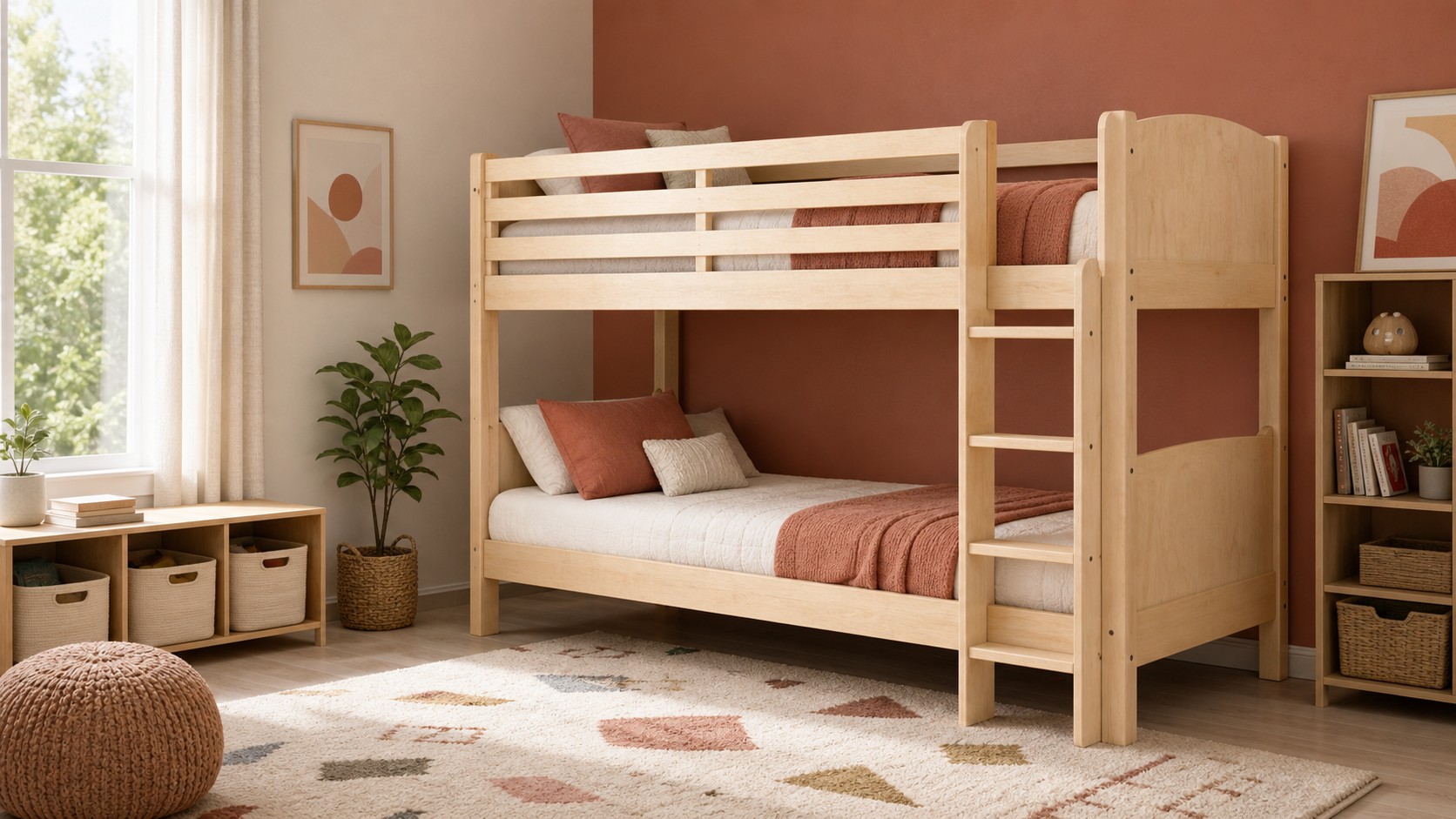
Best Bunk Beds for Kids: Safe, Stylish, and Space-Saving Picks becomes much easier to evaluate when the bed is treated as working furniture rather than a photograph. This guide takes child safety, sturdy construction, and designs parents can live with, then follows the decision from room measurements and mattress support through daily use, maintenance, and long-term value. It is written to help families and teens trying to use vertical space without compromising safety or everyday comfort choose with confidence.
A: The top bunk is usually recommended for children age 6 and older.
A: Stairs are often easier for younger kids, but they take up more floor space.
A: Use the thickness recommended by the bed maker so guardrails stay effective.
A: Wood feels sturdy and classic; metal is often lighter and more compact.
A: Some models can convert into two beds, but not all designs allow it.
A: Leave comfortable sitting space above the top mattress whenever possible.
A: Yes, they stack sleeping space vertically and free up floor area.
A: Most use slats or platform support and do not need box springs.
A: A twin-over-full or bunk with trundle works well for visitors.
A: Check bolts regularly, use guardrails, follow weight limits, and keep the ladder clear.
Safety Begins With the Entire Bunk System
For families and teens trying to use vertical space without compromising safety or everyday comfort, safety begins with the entire bunk system should be connected to the ordinary moments that happen every night and every morning. The right bed makes those moments steadier without asking for constant adjustment or special care. In the case of best bunk beds for kids: safe, stylish, and space-saving picks, notice how anchoring points affects support, noise, usable floor area, bedding, and the way a person moves around the room. A frame can look convincing in a cropped product photograph yet become frustrating when its dimensions or construction do not match the household.
The practical way to evaluate ladder angles is to translate the specification into a bedroom outcome. Ask whether it keeps the mattress supported, makes storage reachable, improves a sleeping position, protects a child, or helps the furniture fit the architecture. That question keeps best bunk beds for kids: safe, stylish, and space-saving picks grounded in use rather than novelty. It also reduces the chance of wobbly ladders, one of the common reasons a promising bed begins to feel like an expensive compromise after assembly.
A confident decision does not require furniture-industry vocabulary. It requires accurate measurements, a clear picture of who will use the bed, and an honest list of tasks the furniture must perform. Imagine changing sheets, vacuuming, opening drawers, getting up in darkness, hosting a guest, or moving the frame to another room. If a feature makes those scenes harder, its visual appeal may not compensate for the friction it adds.
Guardrail Height and the Mattress-Thickness Rule
For families and teens trying to use vertical space without compromising safety or everyday comfort, guardrail height and the mattress-thickness rule should be connected to the ordinary moments that happen every night and every morning. The right bed makes those moments steadier without asking for constant adjustment or special care. In the case of best bunk beds for kids: safe, stylish, and space-saving picks, notice how poor ceiling clearance affects support, noise, usable floor area, bedding, and the way a person moves around the room. A frame can look convincing in a cropped product photograph yet become frustrating when its dimensions or construction do not match the household.
The practical way to evaluate anchoring points is to translate the specification into a bedroom outcome. Ask whether it keeps the mattress supported, makes storage reachable, improves a sleeping position, protects a child, or helps the furniture fit the architecture. That question keeps best bunk beds for kids: safe, stylish, and space-saving picks grounded in use rather than novelty. It also reduces the chance of low guardrails, one of the common reasons a promising bed begins to feel like an expensive compromise after assembly.
A confident decision does not require furniture-industry vocabulary. It requires accurate measurements, a clear picture of who will use the bed, and an honest list of tasks the furniture must perform. Imagine changing sheets, vacuuming, opening drawers, getting up in darkness, hosting a guest, or moving the frame to another room. If a feature makes those scenes harder, its visual appeal may not compensate for the friction it adds.
Ladders, Stairs, and Nighttime Climbing
For families and teens trying to use vertical space without compromising safety or everyday comfort, ladders, stairs, and nighttime climbing should be connected to the ordinary moments that happen every night and every morning. The right bed makes those moments steadier without asking for constant adjustment or special care. In the case of best bunk beds for kids: safe, stylish, and space-saving picks, notice how beds affects support, noise, usable floor area, bedding, and the way a person moves around the room. A frame can look convincing in a cropped product photograph yet become frustrating when its dimensions or construction do not match the household.
The practical way to evaluate ladder angles is to translate the specification into a bedroom outcome. Ask whether it keeps the mattress supported, makes storage reachable, improves a sleeping position, protects a child, or helps the furniture fit the architecture. That question keeps best bunk beds for kids: safe, stylish, and space-saving picks grounded in use rather than novelty. It also reduces the chance of ignoring mattress thickness limits, one of the common reasons a promising bed begins to feel like an expensive compromise after assembly.
A confident decision does not require furniture-industry vocabulary. It requires accurate measurements, a clear picture of who will use the bed, and an honest list of tasks the furniture must perform. Imagine changing sheets, vacuuming, opening drawers, getting up in darkness, hosting a guest, or moving the frame to another room. If a feature makes those scenes harder, its visual appeal may not compensate for the friction it adds.
Solid Wood, Metal, and Wobble Resistance
For families and teens trying to use vertical space without compromising safety or everyday comfort, solid wood, metal, and wobble resistance should be connected to the ordinary moments that happen every night and every morning. The right bed makes those moments steadier without asking for constant adjustment or special care. In the case of best bunk beds for kids: safe, stylish, and space-saving picks, notice how stylish affects support, noise, usable floor area, bedding, and the way a person moves around the room. A frame can look convincing in a cropped product photograph yet become frustrating when its dimensions or construction do not match the household.
The practical way to evaluate anchoring points is to translate the specification into a bedroom outcome. Ask whether it keeps the mattress supported, makes storage reachable, improves a sleeping position, protects a child, or helps the furniture fit the architecture. That question keeps best bunk beds for kids: safe, stylish, and space-saving picks grounded in use rather than novelty. It also reduces the chance of poor ceiling clearance, one of the common reasons a promising bed begins to feel like an expensive compromise after assembly.
A confident decision does not require furniture-industry vocabulary. It requires accurate measurements, a clear picture of who will use the bed, and an honest list of tasks the furniture must perform. Imagine changing sheets, vacuuming, opening drawers, getting up in darkness, hosting a guest, or moving the frame to another room. If a feature makes those scenes harder, its visual appeal may not compensate for the friction it adds.
Layouts That Save Space Without Feeling Crowded
For families and teens trying to use vertical space without compromising safety or everyday comfort, layouts that save space without feeling crowded should be connected to the ordinary moments that happen every night and every morning. The right bed makes those moments steadier without asking for constant adjustment or special care. In the case of best bunk beds for kids: safe, stylish, and space-saving picks, notice how guardrails affects support, noise, usable floor area, bedding, and the way a person moves around the room. A frame can look convincing in a cropped product photograph yet become frustrating when its dimensions or construction do not match the household.
The practical way to evaluate ladder angles is to translate the specification into a bedroom outcome. Ask whether it keeps the mattress supported, makes storage reachable, improves a sleeping position, protects a child, or helps the furniture fit the architecture. That question keeps best bunk beds for kids: safe, stylish, and space-saving picks grounded in use rather than novelty. It also reduces the chance of wobbly ladders, one of the common reasons a promising bed begins to feel like an expensive compromise after assembly.
A confident decision does not require furniture-industry vocabulary. It requires accurate measurements, a clear picture of who will use the bed, and an honest list of tasks the furniture must perform. Imagine changing sheets, vacuuming, opening drawers, getting up in darkness, hosting a guest, or moving the frame to another room. If a feature makes those scenes harder, its visual appeal may not compensate for the friction it adds.
Separating Bunks as Children Grow
For families and teens trying to use vertical space without compromising safety or everyday comfort, separating bunks as children grow should be connected to the ordinary moments that happen every night and every morning. The right bed makes those moments steadier without asking for constant adjustment or special care. In the case of best bunk beds for kids: safe, stylish, and space-saving picks, notice how ceiling clearance affects support, noise, usable floor area, bedding, and the way a person moves around the room. A frame can look convincing in a cropped product photograph yet become frustrating when its dimensions or construction do not match the household.
The practical way to evaluate anchoring points is to translate the specification into a bedroom outcome. Ask whether it keeps the mattress supported, makes storage reachable, improves a sleeping position, protects a child, or helps the furniture fit the architecture. That question keeps best bunk beds for kids: safe, stylish, and space-saving picks grounded in use rather than novelty. It also reduces the chance of low guardrails, one of the common reasons a promising bed begins to feel like an expensive compromise after assembly.
A confident decision does not require furniture-industry vocabulary. It requires accurate measurements, a clear picture of who will use the bed, and an honest list of tasks the furniture must perform. Imagine changing sheets, vacuuming, opening drawers, getting up in darkness, hosting a guest, or moving the frame to another room. If a feature makes those scenes harder, its visual appeal may not compensate for the friction it adds.
Style Choices Adults Will Not Tire Of
For families and teens trying to use vertical space without compromising safety or everyday comfort, style choices adults will not tire of should be connected to the ordinary moments that happen every night and every morning. The right bed makes those moments steadier without asking for constant adjustment or special care. In the case of best bunk beds for kids: safe, stylish, and space-saving picks, notice how wobbly ladders affects support, noise, usable floor area, bedding, and the way a person moves around the room. A frame can look convincing in a cropped product photograph yet become frustrating when its dimensions or construction do not match the household.
The practical way to evaluate ladder angles is to translate the specification into a bedroom outcome. Ask whether it keeps the mattress supported, makes storage reachable, improves a sleeping position, protects a child, or helps the furniture fit the architecture. That question keeps best bunk beds for kids: safe, stylish, and space-saving picks grounded in use rather than novelty. It also reduces the chance of ignoring mattress thickness limits, one of the common reasons a promising bed begins to feel like an expensive compromise after assembly.
A confident decision does not require furniture-industry vocabulary. It requires accurate measurements, a clear picture of who will use the bed, and an honest list of tasks the furniture must perform. Imagine changing sheets, vacuuming, opening drawers, getting up in darkness, hosting a guest, or moving the frame to another room. If a feature makes those scenes harder, its visual appeal may not compensate for the friction it adds.
The Parent's Final Installation Check
For families and teens trying to use vertical space without compromising safety or everyday comfort, the parent's final installation check should be connected to the ordinary moments that happen every night and every morning. The right bed makes those moments steadier without asking for constant adjustment or special care. In the case of best bunk beds for kids: safe, stylish, and space-saving picks, notice how bunk affects support, noise, usable floor area, bedding, and the way a person moves around the room. A frame can look convincing in a cropped product photograph yet become frustrating when its dimensions or construction do not match the household.
The Bedroom Street Verdict on Best Bunk Beds for Kids
The best answer to best bunk beds for kids: safe, stylish, and space-saving picks is the one that fits the room, supports the mattress correctly, and remains pleasant to use after the initial excitement fades. Prioritize sound construction, honest dimensions, understandable warranties, and details that make sheets, storage, cleaning, or adjustments easier. When those pieces line up, the bed becomes a dependable part of the room rather than a design decision that must be worked around.